Can Mice Chew Through Wood: Damage Risks And Prevention Tips
Yes, mice can chew through wood using their strong, ever-growing incisors. This can cause structural damage and expose your home to risks like electrical fires.
They exploit tiny gaps in soft or damp wood and chew wiring, furniture, and insulation as well. To protect your home, seal entry points with materials like copper gauze or metal.
Also, reduce nesting spots by keeping areas clean and use effective traps. You can learn smart ways to identify and prevent ongoing damage too.
Key Takeaways
- Mice can chew through soft or damp wood using their strong, ever-growing incisors, causing structural damage over time.
- They exploit tiny gaps, including in wooden beams and drywall, to enter homes and widen openings for access.
- Mice cannot chew through hard materials like concrete, brick, or sheet metal, making these effective barriers against entry.
- Signs of wood damage include gnaw marks, oily smudge marks, shredded nesting materials, and small dark droppings nearby.
- Prevent infestations by sealing gaps with non-chewable materials, removing nesting sites, and using strategically placed traps baited with peanut butter.
How Mice Chew Through Wood and Why It Matters

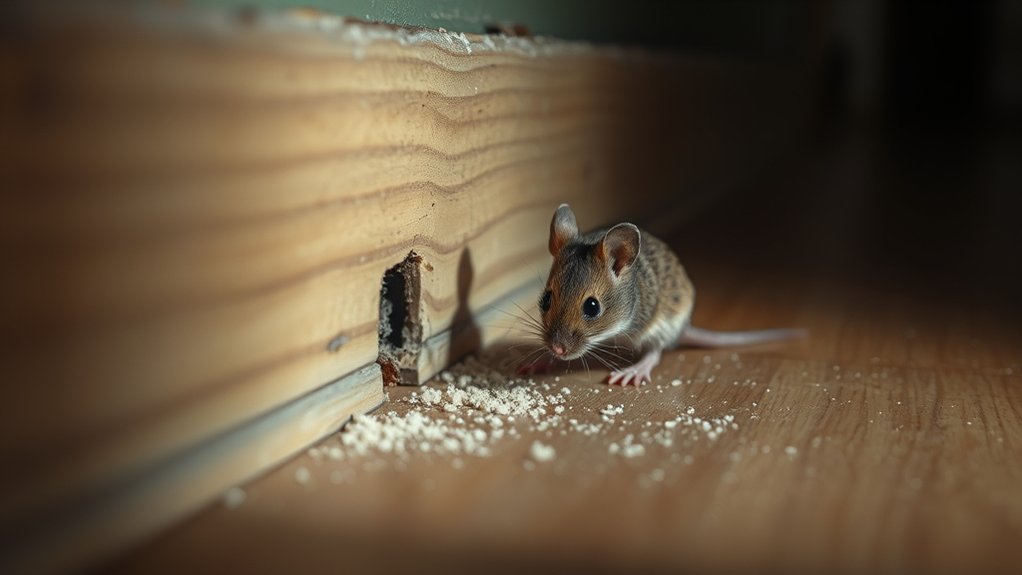
Mice chew through wood using their ever-growing incisors, which are coated in iron-rich enamel to stay sharp and durable. These chisel-like teeth let mice gnaw marks into wooden beams and softer, moisture-rich woods with ease.
Mice use iron-coated incisors to effortlessly gnaw through wood, leaving distinctive chew marks.
When mice chew, they not only keep their tooth length in check but also gather materials for nesting. This behavior contributes to structural damage.
If you notice gnaw marks, it’s a clear sign of a mouse infestation that needs immediate attention. Ignoring this can lead to weakened structures and costly repairs. So, it’s important to act quickly.
To protect your home, try sealing entry points and keeping up with routine rodent control. Understanding how mice chew through wood really helps you act fast to minimize damage and reduce health risks associated with a mouse infestation.
How Mice Chew Their Way Inside Your Home
You’ll often find mice going after tiny gaps in wooden structures, especially where the wood is softer or damp.
Their sharp, ever-growing teeth let them chew through these weak spots pretty quickly to get inside.
If you understand how they chew and know the common weak points in your home, it’s easier to keep them out and prevent infestations.
Entry Points Mice Target
Although small, rodents can exploit even the tiniest gaps in your home’s wooden structures. They gnaw through soft or moisture-weakened wood to create entry points. Mice can squeeze through openings as small as one-fourth inch, so don’t underestimate even tiny cracks.
They often target wooden beams and drywall, chewing to widen holes and gain easier access. This behavior not only allows them inside but also weakens your home’s structure over time.
To prevent mice, you must regularly inspect vulnerable areas and promptly seal any gaps with durable materials like metal flashing or heavy-duty caulk.
Chewing Behavior Explained
Understanding how rodents chew through wood can help you better protect your home from their persistent intrusion. Mice use their continuously growing, iron-enamel-coated incisors to gnaw through wood, especially softer or moisture-rich types.
This chewing behavior manages tooth length and creates entry points for shelter and nesting.
To prevent entry, focus on these key steps:
- Inspect and seal entry points larger than one-fourth inch to block access.
- Maintain cleanliness to reduce attractants that encourage chewing.
- Use natural repellents to discourage mice from targeting wood and other materials.
Common Home Vulnerabilities
Since mice have strong, ever-sharpening incisors, they can quickly exploit weak points in your home’s structure. They easily chew through soft wood, drywall, and insulation, creating openings as small as one-fourth inch wide to gain entry.
Mice don’t just find existing holes; they enlarge them, turning minor vulnerabilities into significant access points. Over time, their gnawing can damage wooden beams, threatening your home’s structural integrity.
To control this threat, you need to seal cracks and openings with durable materials like metal mesh or concrete. Wood and plastic patches won’t hold up against persistent mice.
Household Items Mice Damage Beyond Wood
When mice invade your home, they don’t just chew through wood. They target a wide range of household items that can cause serious damage.
As a homeowner, understanding these risks is key to effective rodent control and protecting your property.
Mice gnaw on electrical wiring, risking short circuits and fires. They also damage upholstery and furniture by chewing on fabric and creating nests.
Mice chewing on wires and furniture pose serious fire risks and damage valuable household items.
Plus, they go after insulation and soft materials, which reduces efficiency and increases fire hazards.
Beyond wood, these rodents can destroy clothing and personal belongings while searching for food or nesting materials.
Knowing what household items are vulnerable helps you take targeted preventive steps. That way, you can safeguard your home and valuables from costly repairs and health risks linked to mouse infestations.
What Materials Mice Cannot Chew and Why
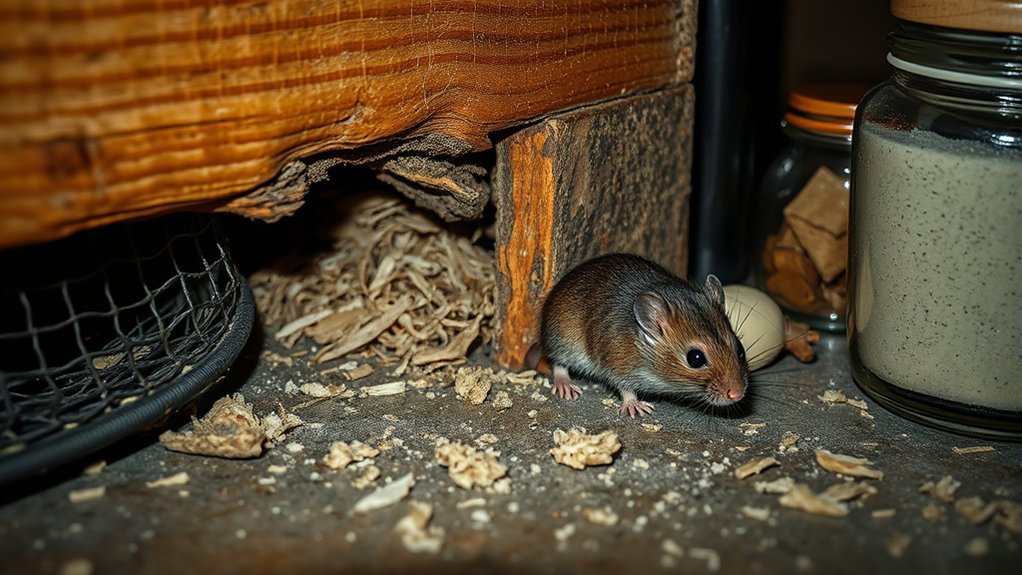
Although mice can chew through many materials, they hit a hard limit with tough, durable surfaces. Mice can’t chew through hard surfaces like concrete, brick, and sheet metal because their curved incisors aren’t designed to bite flat, resistant materials. For effective mouse control, sealing entry points with these materials is vital.
Small holes should be closed using copper gauze, which mice can’t gnaw through like softer materials such as wood or plastic. Since mice can squeeze through gaps as small as one-fourth inch wide, it’s essential to target these vulnerabilities with robust barriers.
Using materials mice can’t chew prevents infestations and protects your home from damage. It’s a practical step in any mouse control strategy.
Signs Your Home Has Wood Damage From Mice
How can you tell if mice are damaging the wood in your home? Identifying a mouse problem early is critical to prevent costly repairs. Here are three key signs to watch for:
Early detection of mice in your home is essential to avoid expensive wood damage and repairs.
- Gnaw marks. Look for visible chew marks on wooden beams, furniture, or drywall. These irregular, rough edges indicate active wood damage.
- Mouse droppings. Spot small, dark pellets near wooden surfaces. Mice can leave up to 75 droppings daily, which signals an infestation.
- Signs of nesting. Check hidden areas for shredded paper or fabric. This suggests mice are using wood for nests and worsening the damage.
Also, oily smudge marks along wood can indicate frequent mouse activity.
Recognizing these signs helps you address the mouse problem before the structural integrity suffers. So, keep an eye out and act quickly if you notice any of these clues.
How to Seal Wood and Block Mouse Entry Points
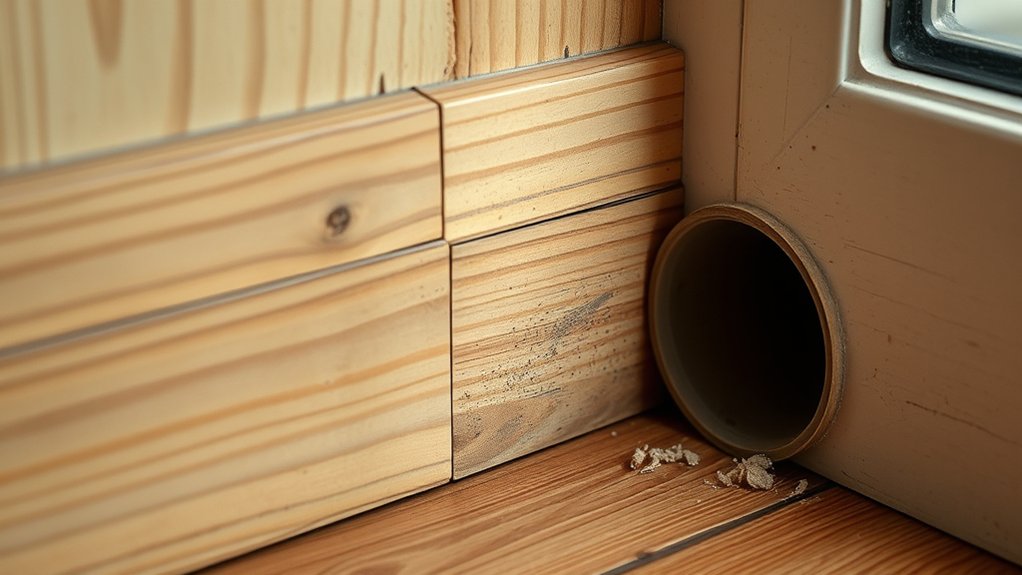
To effectively block mice from damaging your wood, you need to seal every potential entry point with materials they can’t easily chew through. Mice can squeeze through openings as small as one-fourth inch wide, so seal small holes and gaps with steel wool or copper gauze.
For larger gaps, apply concrete or sheet metal. Don’t forget to inspect windows, doors, and pipes regularly. Also, use non-toxic sealants on wood surfaces to discourage chewing.
| Entry Point Size | Recommended Material | Additional Tip |
|---|---|---|
| Openings as small as 1/4 inch | Steel wool or copper gauze | Seal small holes and gaps thoroughly |
| Larger gaps | Concrete, sheet metal | Use durable materials |
| Wooden surfaces | Non-toxic sealant | Apply protective barrier |
Store food in airtight containers to minimize attraction. It’s a simple step that really helps keep those rodents away.
How to Reduce Attractants That Encourage Mice to Chew
When you eliminate food sources and shelter around your home, you greatly reduce the chances that mice will decide to chew on your wood.
To reduce attractants that encourage mice to chew, follow these steps:
- Keep food stored in airtight containers and avoid leaving pet food out overnight. This denies mice easy access to nourishment that draws them indoors.
- Clean kitchen spills and crumbs promptly, and secure trash in sealed bins placed away from your house. This limits areas where mice can forage.
- Declutter storage spaces and remove debris outside to reduce nesting sites. This also helps protect electrical wires from being gnawed on.
Top Trapping Tips to Protect Your Home
You’ll want to use wood-based snap traps baited with peanut butter or dried fruit to attract mice effectively. It’s a simple trick that really works well.
Make sure to place traps along walls and in corners—these are the spots where mice tend to travel most. This way, you’ll have a better chance of catching them.
Also, try prebaiting the traps before you actually set them. This means leaving the bait on the trap without triggering it right away.
It helps build the mice’s confidence around the trap and can really boost your success rate. Give it a shot!
Effective Bait Choices
Choosing the right bait can make all the difference in trapping mice effectively. Mice often seek food and shelter, so your bait must be irresistible to lure them into traps.
Here are three proven effective bait choices to maximize your success:
- Peanut butter. Its strong scent and sticky texture attract mice and keep them engaged long enough to trigger the trap.
- Dried fruit. Sweet and aromatic, dried fruit appeals to mice’s natural cravings.
- Prebaiting. Place a small amount of bait on traps for several days without setting them. This familiarizes mice with a safe food source, increasing capture rates once traps are activated.
Using these bait choices in your traps will improve your chances of quickly eliminating mice and protecting your home from further damage.
Give them a try and see how much easier it’s to catch those pesky critters!
Optimal Trap Placement
Where should you place your traps to catch mice most effectively? Ideal trap placement is essential to prevent significant damage caused by mice chewing through wood.
Focus on setting traps along walls and in areas showing signs of mouse activity, like droppings or gnaw marks. Mice follow consistent pathways, so placing multiple traps in high-traffic areas boosts your chances of success.
Using live traps can be a humane option, but baiting remains key. Peanut butter or dried fruit works best.
Pre-bait traps without setting them for a few days to build trust and improve catch rates.
Always keep traps away from children and pets by using tamper-resistant bait stations.
Strategic trap placement combined with effective baiting helps protect your home efficiently.
Frequently Asked Questions
Can Mice Transmit Diseases Through Their Wood Chewing?
Yes, mice can transmit diseases through their wood chewing. When they gnaw on different wood types, they leave droppings and saliva behind, which can promote disease transmission.
You should watch for signs of infestation like wood shavings and droppings near wooden structures. These clues can help you catch a problem early.
To protect yourself, use prevention methods such as sealing cracks, removing food sources, and keeping areas clean.
Taking these steps reduces contamination risks and helps keep disease spread from mouse activity under control.
How Quickly Can Mice Cause Significant Wood Damage?
Don’t think mice nibble harmlessly. Your wood can suffer fast. Thanks to their relentless chewing habits, soft wood types can show noticeable damage within just 24 hours.
Over weeks, even harder woods weaken, increasing damage severity and structural risks.
To protect your home, act quickly with prevention strategies like sealing entry points and setting traps.
The sooner you respond, the less costly repairs you’ll face. So, don’t wait around—catch those mice early!
Are There Natural Predators That Help Control Mice Populations?
Yes, natural predators play a key role in controlling mice populations. You can rely on owl behavior, like barn owls hunting mice at night, to reduce numbers effectively.
Cat instincts also make them excellent hunters inside your home, while snakes use stealthy hunting techniques outdoors.
These predators maintain balance in natural ecosystems. So, encouraging their presence around your property can help manage mice without chemicals. It’s a natural way to keep things in check and avoid harsh solutions.
Can Wood Treatments Deter Mice From Chewing?
Did you know mice can gnaw through materials as hard as wood? They can cause up to 25% of structural damage in some cases. It’s a serious problem.
Wood treatment effectiveness depends on chemical deterrents and surface coatings that repel or discourage chewing. You should use treatments like borate and peppermint oils.
But don’t forget maintenance strategies. Regular reapplication and combining treatments with barriers and sanitation maximize protection. This reduces the risk of mice chewing through your wood.
Is Professional Pest Control Necessary for Severe Mouse Infestations?
Yes, professional pest control is necessary for severe mouse infestations. You’ll benefit from experts who recognize infestation signs you might miss and apply advanced baiting techniques to effectively reduce populations.
They also implement habitat modifications and prevention methods tailored to your home, making sure mice don’t come back.
Handling severe infestations yourself can lead to incomplete eradication, which means ongoing damage and health risks.
It’s best to trust licensed technicians for a thorough and lasting solution. They’ve got the experience and tools to get the job done right.
Conclusion
If you think mice can’t chew through wood, think again. They’re tiny but mighty destroyers. Protecting your home means sealing every crack, removing tempting food sources, and trapping intruders before damage spreads.
Remember, ignoring the signs is like leaving your door wide open for chaos. Stay vigilant and act swiftly. You’ll keep your wooden surfaces safe from these persistent pests. Don’t let mice turn your home into their playground.