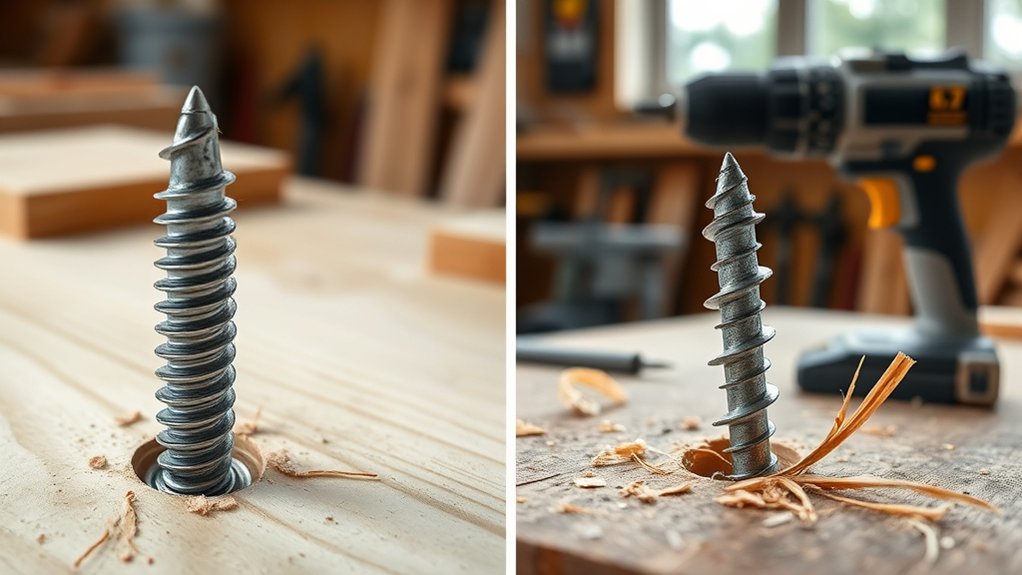
Can You Use Drywall Screws In Wood: When It Works And When It Doesn’t
You can use drywall screws in wood for light, low-stress projects like simple furniture or display cases, especially if you choose coarse-thread screws for better grip. They’re cost-effective and leave a smooth finish. But avoid them for structural or heavy-load tasks since their brittle shafts can snap. Plus, they don’t hold as securely as wood screws.
Proper pre-drilling and avoiding over-tightening helps prevent splitting and breakage. Keep exploring to understand when drywall screws fail and when wood screws or structural fasteners are a must.
Key Takeaways
- Drywall screws work for low-stress wood projects like display cases but are not suitable for heavy or structural applications.
- Coarse-thread drywall screws grip wood better and reduce splitting risk compared to fine-thread versions.
- Pre-drilling pilot holes in hardwood is essential to avoid splitting and screw snapping with drywall screws.
- Wood screws are preferable for hardwood and structural joints due to superior durability and grip.
- Avoid using drywall screws for load-bearing or critical connections, as they are brittle and prone to snapping.
What Are Drywall Screws and How Are They Used in Wood?
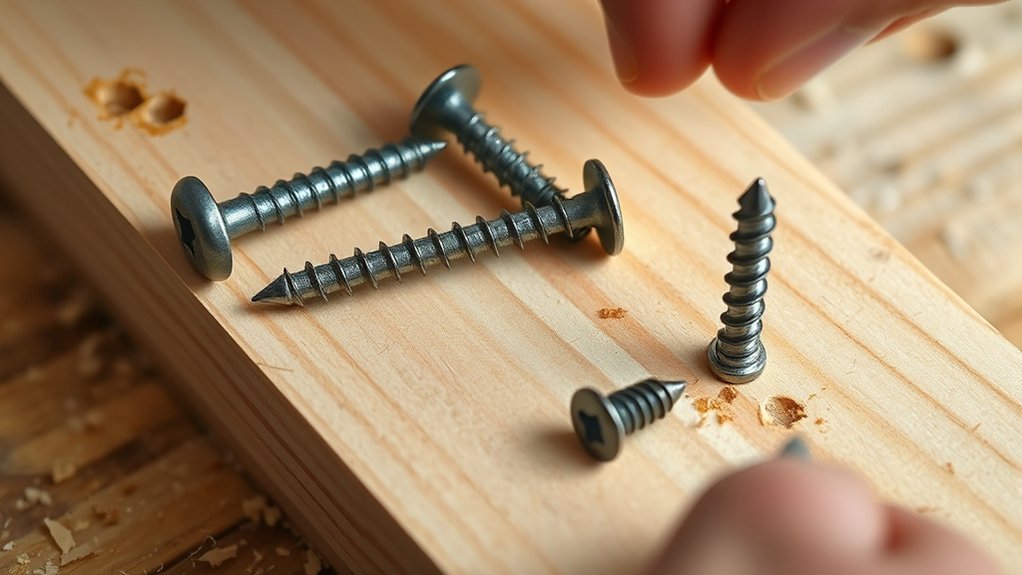
Drywall screws, originally designed for fastening drywall to metal studs, can be used in wood applications if you choose the right type and handle them carefully.
Unlike typical wood screws, drywall screws have a thinner, more brittle shaft and a bugle head that helps create a smooth finish without pulling through the wood.
You’ll find fine-thread drywall screws struggle to grip wood securely, which increases the chance of stripping or loosening over time.
For better results in wood, coarse-thread drywall screws are your go-to option. They offer improved holding strength and reduce common issues.
While drywall screws are cost-effective and widely available, remember they aren’t suited for high-stress tasks due to their tendency to snap under pressure.
When to Use Drywall Screws in Wood Projects
You’ll want to use drywall screws mainly for low-stress wood projects, like display cases or simple furniture, where strength isn’t a big deal.
They’re cost-effective and have a bugle head design, which makes them perfect for quick assembly with a smooth, flush finish.
Just make sure to pick coarse-threaded screws—they grip better in wood.
And definitely avoid using them in structural applications since they can snap under heavy loads.
Suitable Low-Stress Applications
Although they aren’t designed for heavy loads, drywall screws work well in low-stress wood projects like case assemblies and display cases where strength isn’t critical.
You can rely on these screws for case assemblies and display cases, where the joint doesn’t bear significant weight, and drywall screws hold parts securely.
Dado construction is another good use. Using coarse-threaded screws with glue improves joint strength without risking screw failure.
Aesthetic projects benefit too. The bugle head design allows screws to sit flush, giving a smooth finish that’s ideal for visible surfaces.
In these low-stress applications, drywall screws offer a cost-effective and readily available fastening option.
Just remember to avoid them in structural or high-pressure woodwork to prevent breakage.
Benefits of Drywall Screws
Screws with a bugle head design provide a smooth, flush finish that’s perfect for visible surfaces in wood projects.
Drywall screws, especially those with a coarse thread, offer several benefits when used appropriately. Their self-drilling feature cuts down on pre-drilling time in softer woods, speeding up your work.
They’re also more affordable and widely available than typical woodworking screws, making them a cost-effective choice for low-stress applications. Coarse-thread drywall screws hold well in lightweight assemblies and casework, where extreme holding power isn’t essential.
Plus, their ease of installation suits temporary fixtures or projects needing quick assembly.
Just remember, drywall screws perform best within these limits and aren’t designed for heavy structural loads or hardwoods.
So, if you’re working on something that needs serious strength or durability, you might want to look at other fasteners.
But for many quick, light jobs, drywall screws get the job done nicely.
Drywall vs Wood Screws: Strength and Design Differences
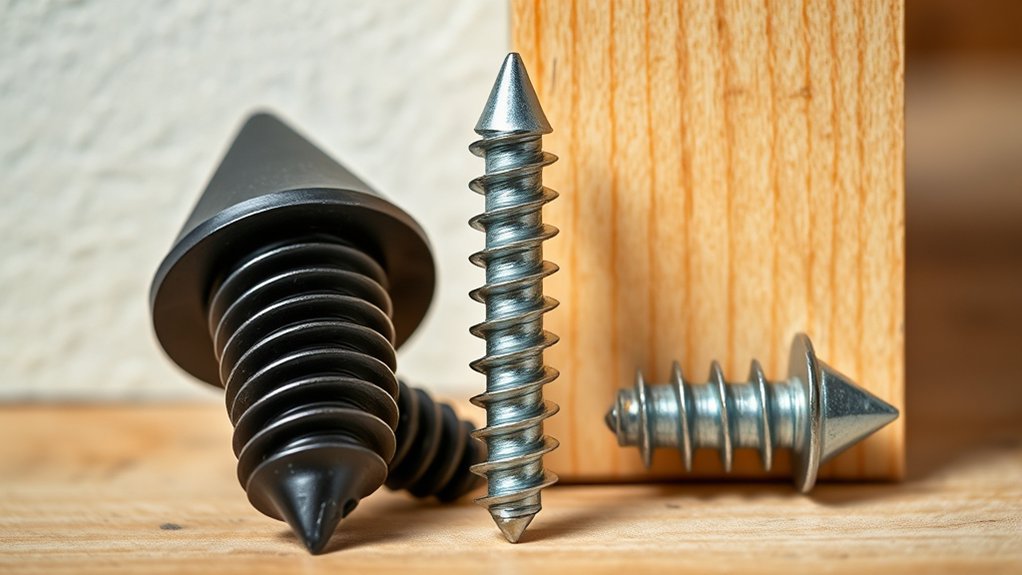
You’ll notice that drywall screws have sharp points and coarse threads, which help them penetrate quickly.
But here’s the thing—they don’t have the same strength or corrosion resistance as wood screws.
On the other hand, wood screws come with tighter threading and are made from tougher materials, so they hold wood firmly in place.
This makes them a better choice for structural work.
Knowing these differences makes it easier to pick the right screw for your project’s needs.
Threading And Material Differences
When choosing between drywall and wood screws, understanding their threading and material differences is essential for ensuring strength and proper function. Drywall screws with wood may not perform as expected because of these distinctions.
First, the thread design is different. Drywall screws have sharper points and coarser threads that extend all the way to the head. This can actually push wood apart instead of pulling it together.
Wood screws, on the other hand, have threads optimized to join wood securely.
Next, the material composition varies. Wood screws often use brass or durable steel. Drywall screws are made from heat-treated steel, which makes them more brittle and prone to snapping under stress.
Finally, the head shapes differ too. Wood screws have an 82-degree flat head that allows for a flush finish.
Drywall screws come with bugle heads that can create craters if they’re not properly countersunk.
Knowing these differences helps you pick the right screw for your project and avoid any frustration down the line.
Performance In Structural Applications
Understanding the differences in threading, material, and head design sets the stage for evaluating how drywall and wood screws perform in structural settings.
When comparing drywall screws vs wood screws, you’ll find drywall screws have thinner shanks and bugle heads, which favor a flush finish but lack the holding power of wood screws’ flat heads and coarse threads.
Drywall screws handle tension reasonably well but often snap under shear stress, making them unreliable for structural loads.
Wood screws, on the other hand, bend or pull loose rather than fail suddenly, providing safer performance under lateral forces.
Fine-thread drywall screws can strip out wood fibers more easily, risking long-term durability.
For structural applications, choosing wood screws guarantees stronger, more resilient connections than drywall screws.
Why Drywall Screws Fail in High-Stress Woodwork
Although drywall screws might seem like a convenient option, they often fail in high-stress woodwork due to their brittle construction and fine-thread design. When you use drywall screws in high-stress applications, you risk structural failure because their brittleness causes them to snap under excessive pressure, unlike wood screws that bend or pull loose.
Also, the fine threads can strip out holes in wood, leading to loose, unreliable joints. The fully threaded shank tends to push wood pieces apart instead of pulling them together, which weakens tension joints.
Drywall screws are engineered for fastening drywall to metal studs, not for the dynamic loads in woodworking. So, relying on them in critical woodwork can compromise your project’s strength and safety.
Pre-Drilling and Lubrication Tips for Drywall Screws
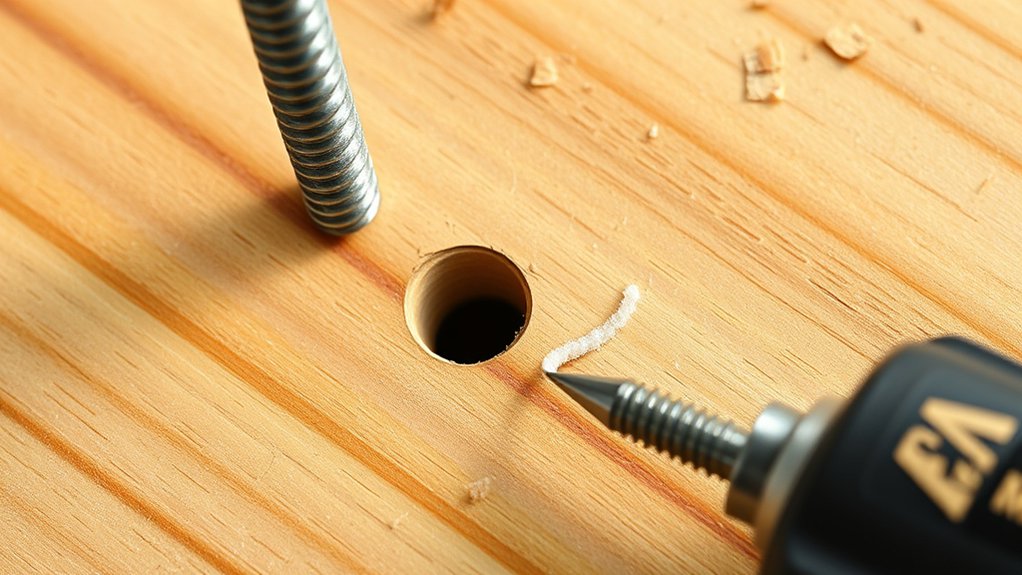
Since drywall screws can be prone to splitting wood, especially in hardwoods, pre-drilling holes is essential to guarantee clean, easy insertion. When using drywall screws, match the pre-drilling diameter to the screw size to maintain a secure fit without weakening the wood. This step reduces resistance, prevents splitting, and speeds up installation.
Furthermore, applying a lubricant like paraffin on the screws can make driving smoother and enhance holding strength.
It’s worth experimenting with different pre-drilling sizes to find the right balance between grip and wood integrity for your specific project.
By combining careful pre-drilling with lubrication, you’ll improve the performance of drywall screws in wood and avoid common issues like breakage or excessive effort during installation.
Give it a try, and you’ll likely notice the difference right away.
Safe and Effective Installation Tips
Pre-drilling and lubricating your drywall screws set a solid foundation for installation.
But making sure everything is safe and effective goes beyond just these steps. It’s also important to know when drywall screws should be used. Following safe and effective installation tips will really boost your project’s durability.
Use coarse-thread drywall screws for wood framing. They grip better and help reduce the risk of splitting compared to fine-thread types.
Countersink bugle heads carefully to avoid damaging the surface and to create a nice, professional finish.
Make sure to match your screw choice to the project.
Drywall screws work well for low-stress wood applications, but they can fail if you’re dealing with heavy loads or forces that move around a lot.
Common Drywall Screw Mistakes to Avoid
When working with drywall screws in wood, you need to steer clear of several common mistakes that can compromise your project’s integrity. One major error is over-tightening drywall screws. They snap easily because they’re brittle, which makes removal tough and risks damage.
Avoid using drywall screws for heavy loads. They aren’t designed for significant weight and may fail under stress.
Another frequent mistake is skipping pilot holes in hardwood. This increases the chance of splitting and makes insertion harder.
Using fine-thread drywall screws carelessly can strip holes or loosen over time since they’re meant mainly for metal studs.
And don’t misuse drywall screws in structural spots like door hinges. Their holding strength just doesn’t match up to wood screws.
Recognizing these common mistakes will help guarantee your project’s success. It’s all about choosing the right screw for the right job and handling them carefully.
When to Use Wood Screws or Structural Fasteners Instead
Although drywall screws might seem convenient, you should opt for wood screws or structural fasteners whenever strength and durability are critical.
Wood screws provide superior grip and minimize splitting, especially in hardwood or thick wood joints.
Structural fasteners like lag screws or bolts handle heavy loads and resist shear forces better than drywall screws.
Use wood screws or structural fasteners instead when:
- You’re working with thick or hardwood pieces that require a secure hold without splitting.
- The joint must bear significant weight or dynamic loads, demanding high load capacity.
- You need to connect critical structural components where failure isn’t an option.
Choosing the right fastener guarantees your project’s integrity and longevity.
It also helps prevent costly repairs down the line.
Frequently Asked Questions
Can Drywall Screws Be Painted Over Without Issues?
Yes, you can paint over drywall screws without any issues if you make sure the paint will stick well. Their bugle head design actually helps create a smooth surface, which makes the paint adhere better.
For the best results, use a primer. It boosts paint adhesion and also protects against rust, especially if you’re working in a moist environment.
Also, keep in mind the screw compatibility with your project materials. This helps avoid corrosion or any structural problems.
With proper preparation, you’ll get a clean, uniform finish every time.
Do Drywall Screws Cause Wood Splitting More Than Wood Screws?
Yes, drywall screws can cause more wood splitting than wood screws, especially if you don’t pre-drill. Their sharp, deep threads and fully threaded shank increase stress on the wood, which can reduce its durability.
Wood screws, on the other hand, have a tapered point that guides the screw smoothly, helping to minimize splitting.
When you care about wood durability and tight joins, it’s better to use wood screws with the right screw drive.
This way, you avoid damaging the wood during installation and keep everything strong and secure.
Are Drywall Screws Magnetic for Easy Removal?
Yes, drywall screws are magnetic, which helps with easy removal and handling.
Their steel composition gives them magnetic properties, making it simpler to use magnetic screwdrivers or tools to position and extract them quickly.
These drywall screw characteristics make installation and removal more convenient.
But just so you know, they don’t enhance holding strength in wood.
How Does Screw Length Affect Drywall Screw Performance in Wood?
Think of screw length as the handshake between drywall and wood. The firmer the grip, the better the hold. If your drywall screw is too short, it won’t grip the wood firmly and might loosen over time.
On the other hand, if the screw is too long, you could split the wood or damage whatever is beneath it. Your screw gauge and thread design work best when the screw goes at least an inch into the wood. This ensures a solid hold without going too deep.
Pre-drilling can really help, especially with dense wood. It makes driving the screw easier and reduces the chance of splitting.
Can Drywall Screws Be Used With Hardwoods Effectively?
You can use drywall screws with hardwoods, but hardwood density demands careful attention to screw torque. Too much torque can snap the brittle screws, so pre-drilling helps reduce resistance and prevent splitting.
They hold well in low-stress situations but aren’t ideal for heavy loads or shear forces.
For best results, adjust torque settings and consider alternative screws designed for hardwood. This way, you ensure a secure, durable connection without damaging the wood or fastener.
Conclusion
Think of drywall screws like a delicate key. They’re great for simple wood tasks but not built for heavy-duty doors. You can use them in light wood projects, but relying on them where strength matters is like trusting a paper boat in a storm.
Choose wood screws or structural fasteners when the pressure mounts. By knowing their limits and applying them wisely, you’ll build with confidence. This way, you avoid costly mistakes and make sure your work stands strong.