How to Sharpen a Chainsaw Blade With a File – Step by Step Tutorial
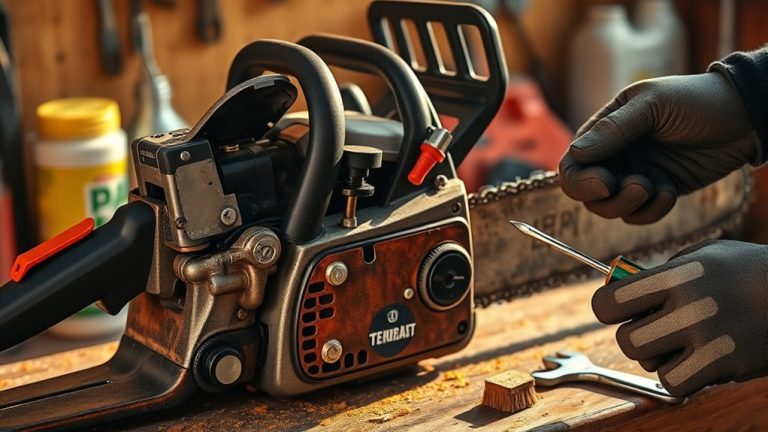
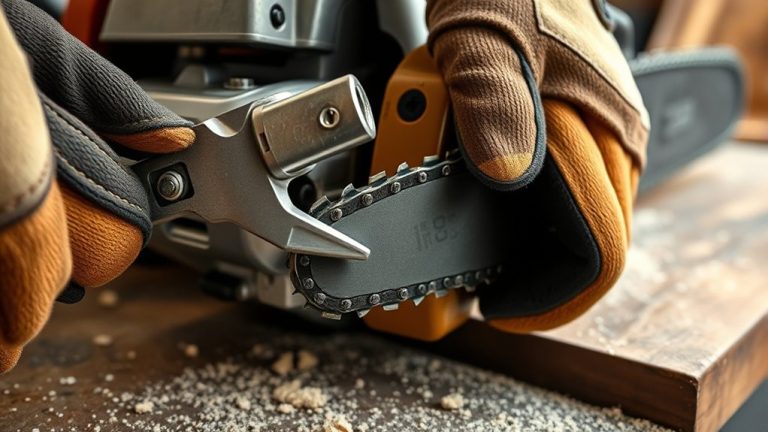
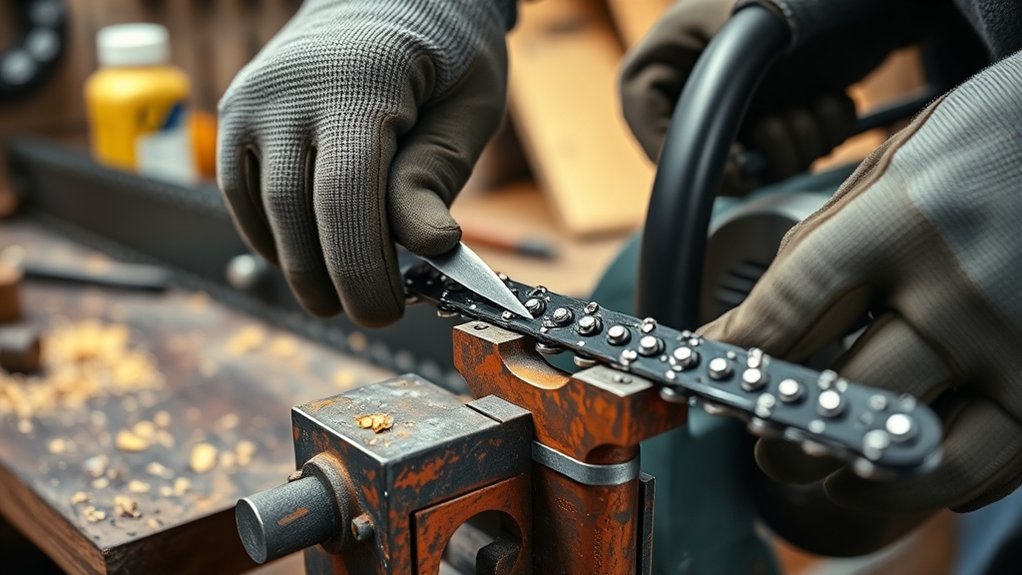
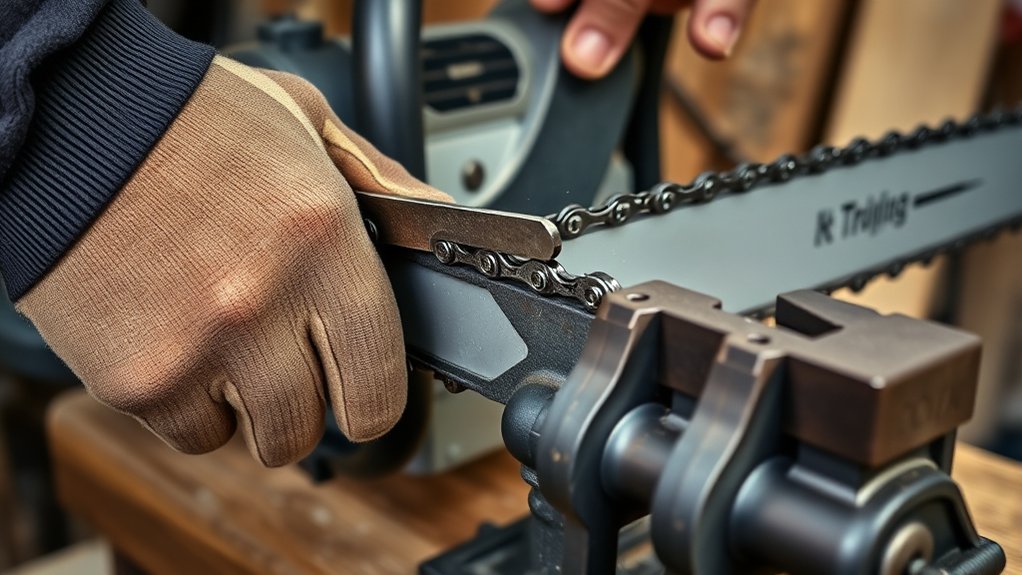
To sharpen your chainsaw blade with a file, first secure the saw powered off and brake engaged on a stable surface. Focus on the cutting links facing you, using a rounded file matching their size to file each cutter’s curved edge at a consistent angle with steady pressure.
Flip the chain to sharpen the opposite side evenly. Maintain knuckles for proper cutting depth, and sharpen regularly after every few hours of use.
Keep following for detailed guidance on optimizing this process.
Which Chainsaw Chain Links Need Sharpening
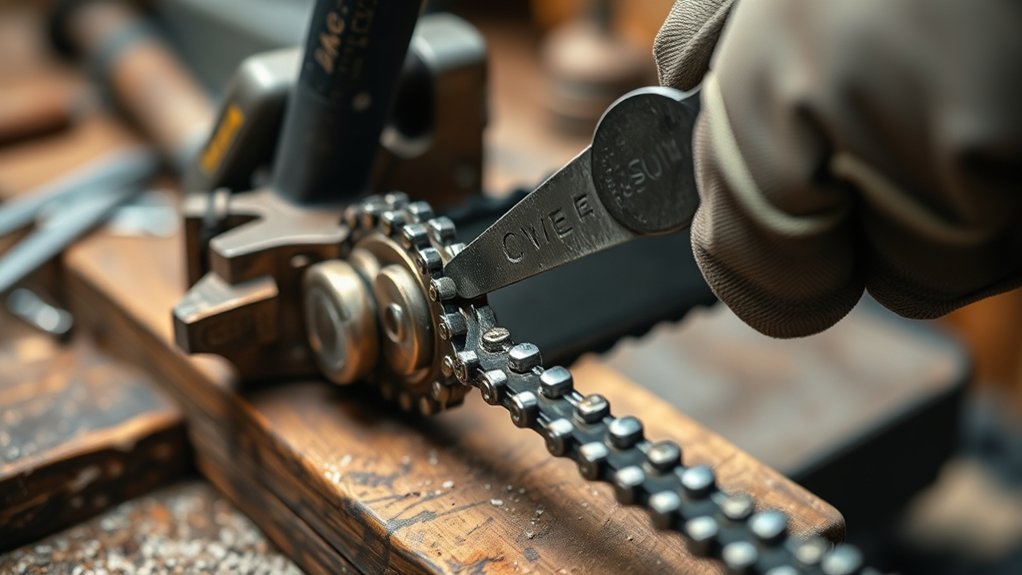
When sharpening your chainsaw, focus on the cutting links. These are the ones with the curved and flat edges designed to slice through wood. These cutting links are the only parts of the chain that need sharpening to keep your saw cutting at its best.
Each cutting link has a guard, or “knuckle,” that helps control the cutting depth. You should maintain this alongside sharpening.
Concentrate on the cutting links facing you, as these are the ones that actually engage with the wood when you’re working.
To make sure your chainsaw performs evenly, sharpen both sides of the chain. Regular maintenance means checking these cutting links for dullness and sharpening them right away to avoid losing efficiency.
Picking the Right File for Your Chainsaw
Maintaining sharp cutting links requires the right tools, starting with selecting the proper file. You need a rounded file that matches the diameter of your chain’s cutting links to sharpen the curved edges effectively without causing damage.
For Husqvarna X-Cut chains, make sure the file corresponds to their unique design features for best results.
Alongside the rounded file, use a flat file to sharpen the top cutting edge, balancing the sharpness across both surfaces of the chain.
It’s practical to keep a set of files with varying diameters on hand, allowing you to adjust to different chains and maintain precision.
Choosing the correct rounded file and flat file makes for efficient, accurate sharpening and prolongs your chainsaw’s cutting performance.
Securing Your Chainsaw Safely Before Sharpening
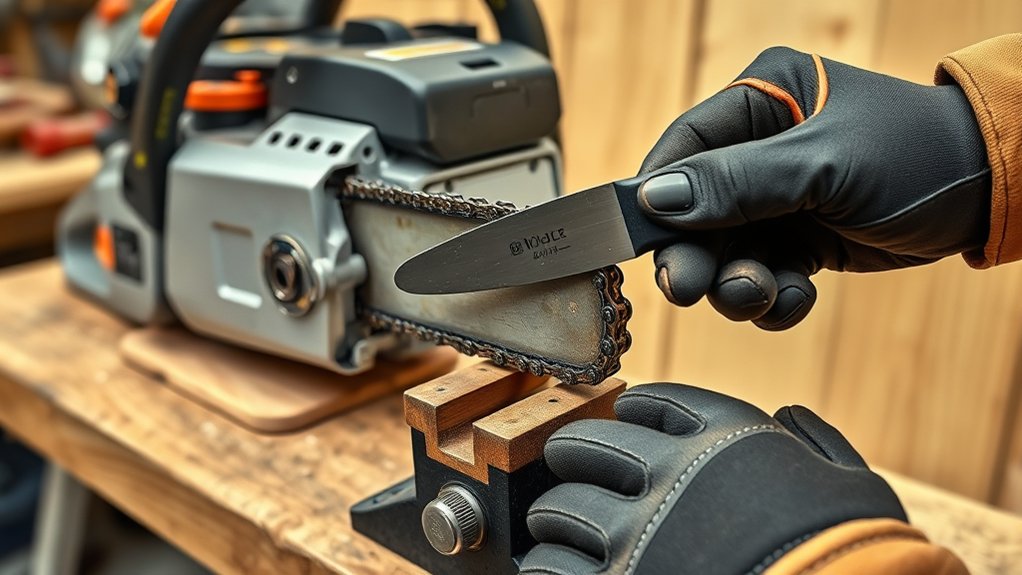
Before you start sharpening your chainsaw blade, make certain the tool is completely powered off and disconnected to eliminate any risk of accidental activation.
Next, engage the chain brake to prevent any movement of the chain during sharpening.
To guarantee safety, secure the chainsaw firmly on a stable surface or use a chainsaw vise. This stability is essential for precise filing and prevents slipping.
Position the saw so you can comfortably access all cutting links without straining.
Make sure to maintain good posture throughout. Always wear protective gloves and eyewear to safeguard against sharp edges and flying debris.
Sharpening the Cutting Links With a File
Use a round file that matches your chain’s cutting links to ensure you sharpen accurately.
Just focus on the cutting links facing you, hold the file at the right angle, and apply steady pressure until the edges get sharp.
Once you’ve finished one side, don’t forget to flip the chain over and do the same on the other side.
This helps keep the cutting balanced and your chain working smoothly.
File Cutting Links
To sharpen the cutting links effectively, select a rounded file that matches the curve of the links so you can sharpen both edges simultaneously.
Position the chainsaw chain so the cutting links facing you’re accessible for filing. Hold the file firmly, applying even pressure, and push it forward along the cutting edge; avoid backward strokes to prevent the file from binding.
Sharpen each cutting link until its edge is shiny and sharp, signaling ideal cutting readiness. After finishing one side, rotate the chain to sharpen the opposite cutting links equally. This guarantees balanced sharpening and maintains consistent cutting performance.
Using the correct filing technique on the cutting links is essential for safe, efficient chainsaw operation. Plus, it helps prolong the blade’s lifespan.
Use Correct File
Selecting the correct file is key to sharpening your chainsaw’s cutting links effectively. You need a simple file set with a rounded file that matches the cutting link’s design. The file diameter must correspond exactly to your chain’s cutting edge size. Using a file too large or small won’t sharpen properly.
Always use correct file sizing to maintain the chain’s efficiency. Start with a brand new file if possible because worn files won’t deliver consistent results.
Position the file to pretty much sharpen both cutting edges simultaneously but focus on filing the links facing you to avoid damaging the file.
Regularly check sharpness and maintain the knuckle to guarantee proper cutting depth. This precision keeps your chainsaw cutting efficiently and safely.
Sharpen Both Sides
Position your chainsaw so the cutting links facing you’re easily accessible. This lets you have a secure and stable grip on the file. I’m going to show you how to sharpen both sides effectively to keep your cutting performance top-notch.
Use a rounded file that matches the cutting links’ curvature. I’ve got the right size to fit perfectly. File each cutting link with a smooth, forward-only motion. Don’t file backward because that can lock or damage the chain.
Keep filing until the edges look shiny. That shine means they’re sharp and ready to work.
Once you finish one side, turn the chain around and do the same on the other side. This way, you get balanced sharpness on both sides.
If you follow these steps, your chainsaw will cut cleanly and efficiently every time.
Sharpening the Chain’s Opposite Side
To sharpen the chain’s opposite side, start by flipping the chainsaw so you can reach the cutters that face away from you.
Make sure to use the same file size and keep the exact filing angle. This helps ensure both sides stay evenly sharp.
Go ahead and file each cutter until it shines—that way, you’ll avoid uneven wear and keep your chainsaw cutting smoothly and efficiently.
Flipping The Chain
Once you finish sharpening one side, turn the chainsaw around so the unsharpened cutting links face you. This flipping technique guarantees proper chain orientation for balanced cutting efficiency.
Maintain the same sharpening position and filing angle used previously to achieve uniform sharpness.
Follow these steps:
- Adjust the chain orientation by flipping the chainsaw so the opposite cutters face forward.
- Position your file to match the original filing angle exactly.
- Use the correct file diameter to avoid damaging the cutting links.
- File each cutting link evenly until the edges appear shiny and sharp.
Filing Opposite Cutters
After flipping the chainsaw chain so the new cutting links face you, use the same rounded file that matches your chain’s design to sharpen the opposite cutters.
Employ consistent file techniques, filing each cutter with a smooth, forward stroke to avoid file lock-up and guarantee an even edge. Focus on filing until the metal surface of each cutter is shiny, indicating effective sharpening.
Maintaining a regular sharpening frequency by alternating sides during chain maintenance helps balance the cutting performance and extends the chain’s lifespan.
Avoid applying excessive pressure; let the file do the work to preserve the cutter’s shape. This methodical approach to filing the opposite cutters guarantees efficient, precise sharpening, keeping your chainsaw chain sharp and ready for maximum cutting.
Ensuring Even Sharpness
Although you’ve sharpened the cutting links on one side, turning the chain to work on the opposite side guarantees even sharpness essential for effective cutting. This step balances wear and maximizes chain performance.
Follow these sharpening techniques for precise results:
- Use the same file diameter on both sides to maintain uniform cutting edges.
- File only the cutters facing you to avoid filing lock-up and secure smooth file movement.
- Sharpen both cutting edges simultaneously with the rounded edge of the file to preserve the chain’s design.
- Alternate sides regularly during sharpening to prevent uneven wear and extend chain life.
Consistent file maintenance during this process secures efficient cutting and prolongs the chain’s usability. It’s a simple step that really makes a difference!
Maintaining Chainsaw Chain Knuckles for Cutting Depth
Monitor the condition of the knuckles on each cutting link to maintain proper cutting depth and chain performance. Regular knuckle maintenance involves thorough wear inspection to identify any signs of rounding or damage that could affect cutting accuracy.
Use a small brush or compressed air for debris removal, making sure no buildup obstructs the knuckle’s function. Debris accumulation can impair the knuckle’s ability to regulate depth, which might lead to uneven cuts or put extra strain on the chain.
If you notice significant wear, replace or repair the knuckles right away to restore proper cutting depth control.
Keeping the knuckles in good shape not only ensures smoother cuts but also helps extend the lifespan of your chainsaw chain by preventing over-cutting and reducing unnecessary mechanical stress.
When to Sharpen Your Chainsaw Chain
How do you know when your chainsaw chain needs sharpening? Recognizing signs of dullness is essential for effective chainsaw maintenance. Sharp chains improve cutting efficiency and safety. Here are key indicators to watch for:
- The chain struggles or slows down cutting through wood, signaling dull blades.
- You apply excessive pressure to push the saw, reducing control and increasing fatigue.
- Inspect the cutting edges. Sharp edges are shiny and precise; dull ones appear rounded or chipped.
- Follow chainsaw maintenance tips by sharpening after every 3-5 fuel tanks, especially if cutting dense material.
Regularly checking your chain guarantees cutting efficiency improvements and prolongs chain life. Stay vigilant, and sharpen promptly to maintain peak performance.
Simple Habits to Keep Your Chain Sharp
When you develop simple habits for maintaining your chainsaw chain, you guarantee consistent cutting performance and extend its lifespan. Regularly check sharpness before use, clean and lubricate the chain to prevent debris buildup, and maintain the knuckle on each cutting link for consistent cutting depth.
Make sure to follow a strict sharpening frequency. Sharpen after a few hours of use or whenever you notice the cutting efficiency drops. It really helps keep things running smoothly.
Keep a set of files handy for quick touch-ups. This way, you won’t have to stop your work for long.
| Habit | Frequency | Benefit |
|---|---|---|
| Sharpness Check | Before every use | Peak cutting performance |
| Sharpening Tools Ready | Always | Quick maintenance |
| Sharpen Chain | Every few hours/use | Prevents damage, improves efficiency |
| Knuckle Maintenance | Regularly | Consistent cutting depth |
| Clean & Lubricate | After use | Reduces blade dulling |
Stick to these chain maintenance tips to keep your saw sharp and efficient. You’ll notice the difference in your cutting work.
Frequently Asked Questions
Can I Use an Electric File Sharpener Instead of a Manual File?
Yes, you can use an electric sharpener instead of manual filing techniques. Electric sharpeners offer benefits like faster sharpening and adjustable settings for different chain types, which can save you time.
That said, manual filing gives you greater precision for detailed chainsaw maintenance. It’s a bit slower but lets you fine-tune your chainsaw blade exactly how you want.
To keep your chainsaw performing at its best, follow maintenance tips like regularly checking sharpness and taking good care of your tools.
Honestly, combining both methods can give you the perfect balance of efficiency and accuracy when it comes to caring for your chainsaw blade.
How Do I Dispose of Old Chainsaw Chains Safely?
To dispose of old chainsaw chains safely, start by cleaning them thoroughly to remove any oil and debris.
Make sure to wear gloves while handling the chains to avoid injury. It’s important to follow your local disposal safety guidelines.
Next, take the chains to a local metal recycling facility since steel chains can be recycled.
If recycling isn’t an option in your area, reach out to your local waste management service to find out how to dispose of them properly.
Some manufacturers even offer take-back programs for old chains.
What Are the Signs of a Damaged Chainsaw Bar?
You’ll notice bar wear as grooves or uneven surfaces along the chainsaw bar, which can reduce cutting efficiency.
If the bar is bent or warped, chain tension will be inconsistent, causing poor performance.
Check for cracks or a thickened drive link groove area, as these hinder smooth chain movement.
Monitoring these signs helps maintain ideal chain tension and guarantees your cutting efficiency stays sharp and safe.
Can I Sharpen a Chainsaw Blade Without Removing the Chain?
Yes, you can sharpen a chainsaw blade without removing the chain by applying proper sharpening techniques directly on the mounted chain.
Focus on filing only the cutting links facing you, using the correct file size and moving away from your body.
It’s important to keep up with regular sharpening to maintain cutting efficiency.
Always follow safety precautions. Wear gloves and make sure the saw is off to avoid injury during the process.
How Often Should I Oil My Chainsaw During Use?
Think of proper oiling as the lifeblood of your chainsaw’s engine. You should oil your chainsaw every 30 minutes during use to keep it running at its best.
Following lubrication frequency guidelines really helps with performance.
Make sure to use high-quality bar and chain oil because it clings better and reduces friction.
Comparing oil types is important—choose oils made specifically for chainsaws to avoid wear.
Regular maintenance tips also stress checking the oil reservoir and oiling system often.
This helps you avoid damage and overheating. Keeping an eye on these things will keep your chainsaw working smoothly.
Conclusion
Think of your chainsaw chain as a warrior’s blade. Dull edges leave it defenseless, while a sharp file is its trusted blacksmith.
By regularly filing and maintaining each link with precision, you guarantee your tool stays battle-ready. It cuts clean and safe every time.
Just like a warrior honors their weapon, you must respect your chainsaw chain with timely sharpening and care. This keeps it performing at peak efficiency and prolongs its lifespan.