How To Start A Husqvarna Chainsaw – Easy Startup Guide
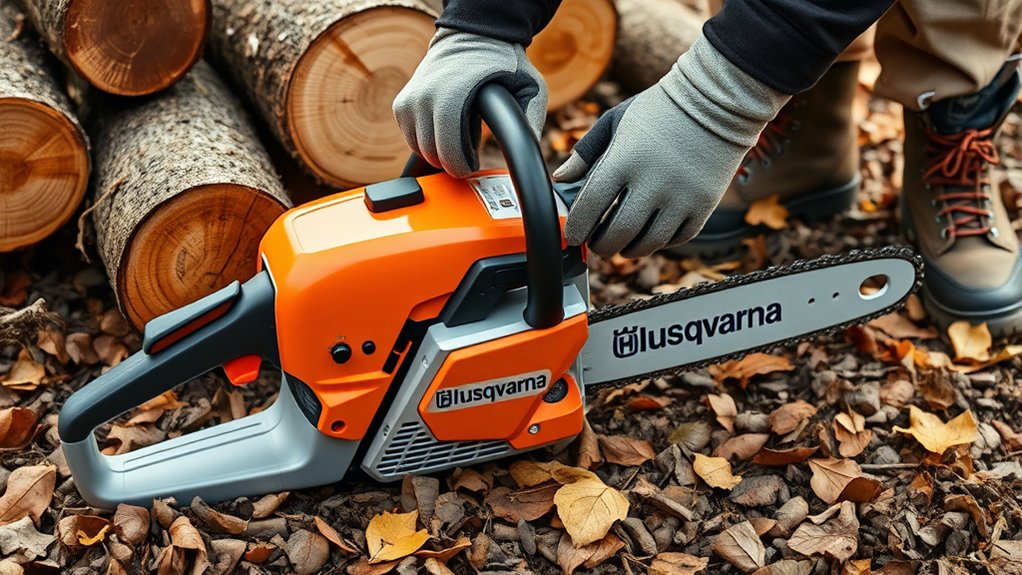
To start your Husqvarna chainsaw safely, first engage the chain brake and make sure you have a firm grip with stable footing. For a cold engine, prime the fuel system by pressing the air purge bulb. Then, place the saw securely and pull the starter rope firmly up to five times.
If the engine is hot, skip the choke but keep the brake engaged. Pull the starter rope with half-throttle if needed. Always confirm safety checks like chain lubrication and wearing protective gear.
Follow these steps, and you’ll soon get the hang of smooth idling and troubleshooting your chainsaw with ease.
Proper Grip and Stance for Starting Your Husqvarna Chainsaw
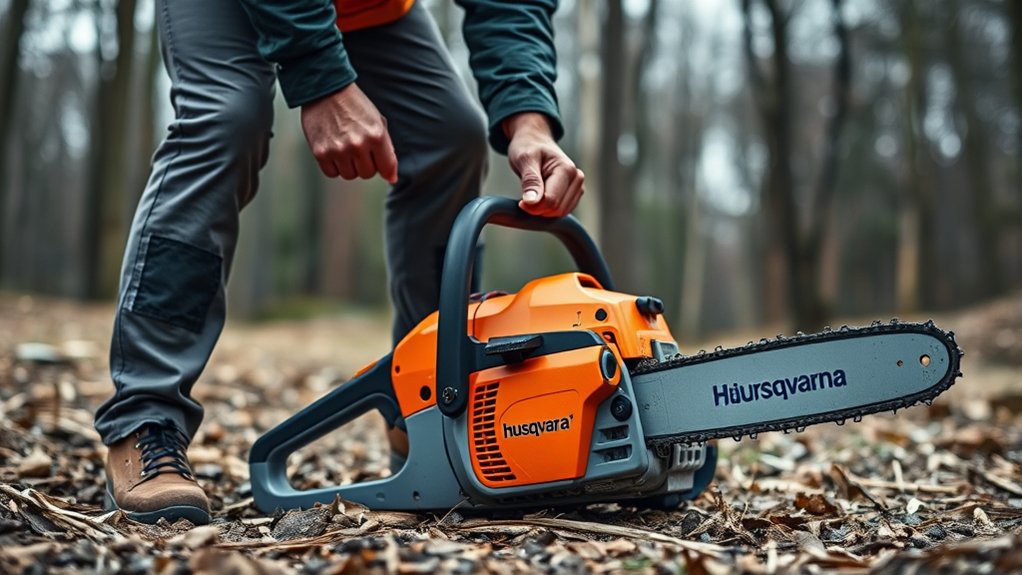
Start by positioning yourself with your right foot secured in the rear handle and your left hand gripping the front handle firmly. This establishes the proper grip and stance needed for stability and control. Keep your feet shoulder-width apart to maintain a solid stance, reducing the risk of losing balance during startup.
Always engage the chain brake before starting to prevent accidental chain movement and enhance safety.
For leverage, maintain a straight left arm while pulling the starter handle with your right hand. Alternatively, you can place the rear handle between your left thigh and right knee while holding the front handle with your left hand to improve balance.
Adhering to these steps guarantees a safe, controlled start every time. It might feel a bit tricky at first, but with a little practice, you’ll get the hang of it quickly.
Just remember, safety first!
How to Start a Cold Husqvarna Chainsaw Step-by-Step
Before you start your cold Husqvarna chainsaw, make sure to engage the chain brake. You can do this by pushing the front hand guard forward—this step is really important for safety.
Next, you’ll want to prime the fuel system. Just press the air purge bulb a few times until you actually see fuel in the carburetor.
Once that’s done, place the saw securely on the ground.
Then, pull the starter rope firmly, and that should ignite the engine. Easy as that!
Engage Chain Brake
Engage the chain brake by pushing the front hand guard forward to secure the chain, preventing accidental movement during startup. This step is essential to guarantee your safety before you start your chainsaw.
When you engage the chain brake, the chain locks in place, reducing the risk of injury if the saw kicks back or moves unexpectedly.
Always confirm the chain brake is fully engaged before proceeding. By engaging the chain brake, you create a stable and secure setup to start your chainsaw efficiently. This safety measure is standard practice and helps you maintain control during the entire startup process.
Remember, never attempt to start your chainsaw without first engaging the chain brake to protect yourself and others nearby. It’s a simple step that makes a big difference in safety.
Prime Fuel Pump
Activate the fuel pump by pressing the primer bulb several times until you see fuel enter the carburettor. This step guarantees the fuel lines are filled and ready for combustion.
When you prime the fuel pump correctly, you reduce the effort needed to start the engine. Avoid over-priming, as this can flood the carburettor.
After priming, you’re prepared to pull the starter handle with confidence. The fuel is now in the carburettor, ready to ignite.
Once you pull the starter handle, the engine will receive the proper fuel mixture necessary for combustion. Proper priming improves the chances that the engine starts quickly and runs smoothly.
This step is critical in starting a cold Husqvarna chainsaw effectively and efficiently.
Pull Starter Rope
Start by securing the chainsaw on the ground and engaging the chain brake to guarantee safety.
Insert your right foot through the rear handle to stabilize the saw. Grasp the starter handle with your left hand and pull the starter rope slowly until you feel some resistance.
Then, pull the starter sharply to initiate engine turnover. Follow these steps: pull the starter up to five times until the engine attempts to start.
After the first attempt, push the choke to the half-choke position.
Once the engine runs, release the chain brake by pulling the front hand guard back.
This method guarantees controlled engagement of the engine and maximizes safety during startup. It’s a straightforward process that helps you get going safely every time.
How to Start a Hot Husqvarna Chainsaw Easily
When your Husqvarna chainsaw is already warm, you can skip using the choke to speed up the startup process. First, verify the chain brake is engaged to maintain safety.
Place the chainsaw on a stable surface, then pull the starter rope firmly to start the chainsaw.
If it struggles to ignite, apply half-throttle by pressing the throttle trigger halfway while pulling the starter rope. If half-throttle isn’t accessible, briefly engage the choke fully, then release it once the engine attempts to start, and continue with half-throttle.
Once the engine runs smoothly, release the chain brake before use. This method avoids unnecessary choke use, reducing wear and allowing quicker startups when the engine is hot.
Release the chain brake once running smoothly to prevent choke wear and ensure faster hot startups.
Always maintain control and follow these steps precisely for efficient operation.
Quick Safety Checks Before You Start Your Chainsaw
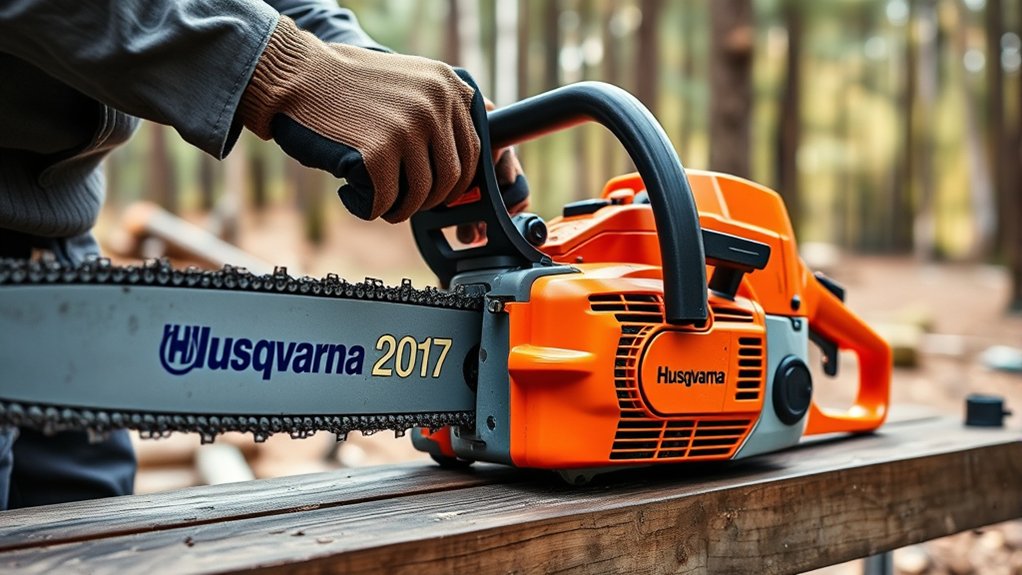
Before you pull the starter rope on your Husqvarna chainsaw, make sure the chain brake is engaged to prevent any accidental movement.
Take a moment to do a thorough inspection to ensure all components are working properly. Also, double-check that your protective gear meets CE, ISO, or UL safety standards.
Here are some quick safety checks to do before you start up:
- Test the chain brake by accelerating and activating it; the chain should stop right away.
- Check the chain lubrication by looking for an oil line on wood surfaces to confirm oil is flowing properly.
- Inspect the chainsaw’s inertia function and overall mechanical condition to make sure everything is reliable.
Following these steps helps guarantee safe operation and reduces the risk of injury.
Always wear certified protective equipment, and never skip the chain brake check before firing up your saw.
How to Engage the Chain Brake for Safe Startup
To engage the chain brake, just push the front hand guard forward firmly until you hear a click. This locks the chain in place.
Doing this helps prevent the chain from moving accidentally when you start up the saw, which keeps you safer.
Make sure you fully engage the brake every time.
Also, don’t forget to test that it’s working before you start the saw. These simple checks can really make a difference.
Chain Brake Activation Steps
Although engaging the chain brake may seem straightforward, it’s vital for safe startup. Before starting your chainsaw, always activate the chain brake to prevent the chain from moving unexpectedly.
Follow these steps to engage the chain brake properly:
Grip the front handle firmly with your left hand to maintain control. Push the front hand guard forward until you hear it click, locking the chain in place.
Verify the brake’s function by accelerating briefly, then releasing the throttle. The chain should stop immediately.
Regularly inspect the chain brake mechanism to guarantee reliable operation. Engaging the chain brake before starting your chainsaw enhances control and safety.
It’s a critical step in your startup routine.
Safety Benefits Explained
Engaging the chain brake locks the chain in place, preventing unexpected movement during startup and markedly reducing the risk of injury.
To engage the chain brake, move the front hand guard forward firmly before handling the saw. This action immobilizes the chain, effectively preventing accidental chain movement that can cause kickback or other hazards.
Utilizing the chain brake during startup increases your control and safety by eliminating the chance of the chain rotating unexpectedly. Always check the chain brake’s functionality before each use to verify it operates correctly.
By engaging the chain brake consistently, you not only protect yourself during startup but also gain added stability during maintenance tasks like filing the chain. This further minimizes injury risks.
Common Engagement Mistakes
When you start your Husqvarna chainsaw, failing to fully move the front hand guard forward often leads to incomplete engagement of the chain brake, which can compromise your safety.
To verify proper engagement of the chain brake, follow these critical steps:
Always position the chainsaw securely on the ground or between your legs before engaging the chain brake to keep it stable.
Move the front hand guard fully forward until you feel the chain brake engage firmly. Partial movement risks accidental chain movement.
Test the chain brake by applying throttle briefly. The chain must stop immediately to confirm it’s working properly.
Avoid starting the chainsaw without the chain brake engaged.
Also, regularly inspect the mechanism for wear so you can be sure it’s reliable every time you start your saw.
How to Get Your Chainsaw to Idle Smoothly After Starting
Let your chainsaw idle at high speed for 20 to 30 seconds right after you start it. This helps stabilize the engine.
Next, pull the throttle slowly and fully for 8-10 seconds, then release it. Doing this helps establish an even idle.
After that, run the chainsaw at normal idle speed for about 10 seconds to promote smooth operation. Check the acceleration by pulling the throttle slowly for 5 seconds.
Make sure the chainsaw maintains a stable idle before you start cutting.
| Step | Action |
|---|---|
| 1 | Idle at high speed 20-30 seconds |
| 2 | Pull throttle fully 8-10 seconds |
| 3 | Release throttle for even idle |
| 4 | Run at normal idle 10 seconds |
| 5 | Test throttle and check idle |
Essential Protective Gear for Safe Husqvarna Chainsaw Use
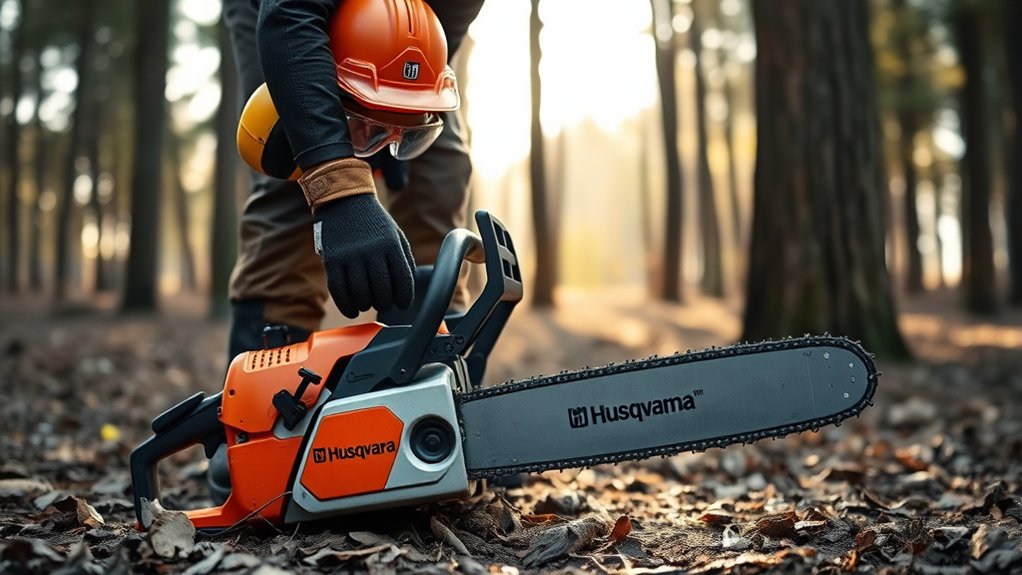
Although operating a Husqvarna chainsaw demands skill, wearing the right protective gear is critical for your safety. You must protect your left hand and right hand from cuts and maintain a secure grip while controlling the saw. Proper protective clothing shields your body from flying debris and accidental contact with the chain.
Always equip yourself with a helmet with a face shield or safety goggles to guard your eyes and face. Cut-resistant gloves protect your left hand and right hand and help enhance your grip.
Don’t forget cut-resistant chaps or pants to safeguard your legs from chain strikes. Also, make sure to wear sturdy, reinforced-toe boots for foot protection.
It’s a good idea to consider ear protection too, so you prevent hearing damage while you’re working. Staying safe makes the job a lot easier and more enjoyable.
Troubleshooting Common Starting Issues With Your Chainsaw
If your Husqvarna chainsaw won’t start, first confirm the chain brake is engaged and the fuel pump bulb has been pressed until fuel reaches the carburettor.
For a cold engine, pull the choke fully out during startup, then shift to half-choke once the engine attempts to start.
If the engine is hot and won’t start, skip the choke and apply half-throttle before pulling the starter handle.
Check the spark plug for wear or damage, because a faulty plug prevents ignition.
A worn or damaged spark plug can stop ignition, so always check it when your chainsaw won’t start.
If the chainsaw starts but stalls, inspect fuel flow and clean the air filter to guarantee proper airflow.
Following these steps helps you quickly troubleshoot common starting issues with your chainsaw and maintain engine performance.
Frequently Asked Questions
What Type of Fuel Mixture Does a Husqvarna Chainsaw Require?
You need to use a fuel mixture with a 50:1 mixing ratio for your Husqvarna chainsaw. That means combining unleaded gasoline (89 octane or higher) with high-quality two-stroke engine oil specifically designed for such engines.
Avoid fuel types containing more than 10% ethanol to prevent damage.
Always mix in a clean container to maintain consistency and protect engine components. This guarantees proper lubrication and peak performance.
Just take your time mixing it well, and your chainsaw will run smoothly.
How Often Should I Sharpen the Chainsaw Chain for Best Performance?
Imagine your chainsaw biting smoothly through wood instead of dragging or burning it. You should sharpen the chain every 3 to 5 hours of cutting or when chain wear indicators show dullness.
Use proper sharpening techniques with a file or tool matching your chain’s specifications to maintain correct angles and depth.
Staying on top of sharpening delivers clear performance benefits. It ensures efficient cuts and helps prolong your saw’s lifespan.
Can I Use a Husqvarna Chainsaw for Cutting Metal or Plastic?
You shouldn’t use your Husqvarna chainsaw for cutting metal or plastic. Material compatibility is really important for chainsaw safety and performance.
Cutting metal causes excessive wear and sparks, which can be dangerous. Plastic can melt and clog the chain, making your saw less efficient.
It’s best to stick to wood and follow the recommended cutting techniques to avoid any damage.
Always check the manufacturer’s guidelines to make sure you’re using your chainsaw properly and safely for the materials it’s meant to cut.
That way, you’ll keep both yourself and your tool in good shape.
What Maintenance Is Recommended After Every 10 Hours of Chainsaw Use?
Like tuning a finely crafted instrument, you need to clean the air filter after every 10 hours of use to keep your chainsaw humming smoothly.
Don’t forget chain lubrication tips. Apply oil to the chain and guide bar for frictionless operation.
Regularly check and maintain the spark plug to prevent misfires and guarantee reliable starts.
These steps preserve performance, extend engine life, and keep your Husqvarna chainsaw ready for action.
How Do I Store My Husqvarna Chainsaw During the Off-Season?
For proper chainsaw storage during the off-season, drain the fuel tank and add fuel stabilization to the system to prevent damage. This helps keep your saw in good shape until you use it again.
Perform seasonal maintenance by thoroughly cleaning the saw, sharpening the chain, and checking tension. These steps make sure your chainsaw is ready to go when you need it next.
Store your Husqvarna chainsaw in a cool, dry place away from moisture and sunlight. It’s best to keep it somewhere safe and dry.
Removing the chain and guide bar for separate storage helps reduce wear and guarantees safety while stored. This little extra step goes a long way to protecting your equipment.
Conclusion
Starting your Husqvarna chainsaw might seem complex, but with the right grip, safety checks, and step-by-step procedure, it becomes straightforward. While the power under the hood demands respect and caution, mastering the startup process guarantees both efficiency and safety.
Don’t rush. It’s this balance between control and power that lets you work confidently. Follow these instructions closely, and your chainsaw will perform reliably, whether cold or hot, every time you need it.