Chainsaw Won T Start When Hot – Troubleshooting Guide
If your chainsaw won’t start when hot, it’s likely due to vapor lock, overheated ignition coils, or fuel delivery issues. Check fuel levels, clean the air filter, and release pressure from the fuel cap. Use the choke properly and let the saw idle briefly to clear vapor lock.
Also, inspect spark plugs and ignition components for wear or weak sparks. Keeping fuel fresh and maintaining your carburetor helps prevent this. You’ll find more detailed troubleshooting and maintenance tips ahead.
Why Your Chainsaw Won’t Start When Hot
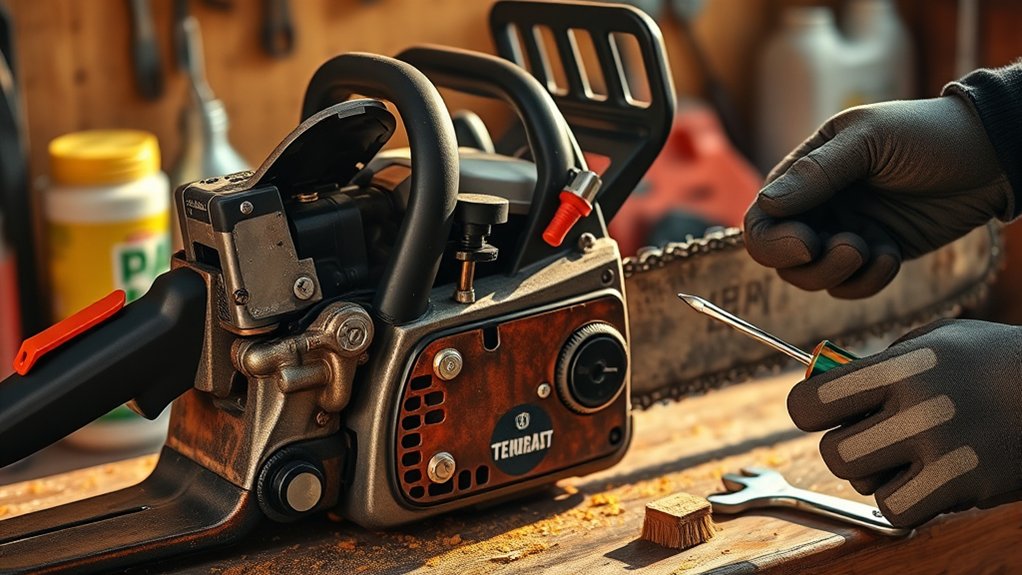
If your chainsaw won’t start when hot, vapor lock in the fuel lines is often the culprit. It causes a lean fuel mixture that prevents ignition. This hot start issue happens because fuel vaporizes under high temperatures, interrupting proper flow.
Also, ignition coils can malfunction when overheated, producing a weak spark that fails to ignite the mixture. Running the saw dry introduces air pockets into the fuel system, which makes hot restarts even harder due to poor fuel delivery.
Overheated ignition coils and air pockets from running dry hinder sparks and fuel flow, causing tough hot starts.
To avoid these problems, make sure you do regular maintenance. Check the spark plug for fouling, clean or replace the air filter, and inspect fuel lines for damage or blockages.
Proper upkeep prevents overheating and keeps fuel flowing smoothly, which reduces the chance of hot start failures and makes your chainsaw more reliable.
How to Restart a Hot Chainsaw: Quick Fixes
When your chainsaw overheats and refuses to start, engaging the chain brake and manipulating the choke position prepares the engine for a quick restart.
To restart when hot, follow these quick fixes:
- Engage the chain brake, pull the choke out, then push it back in before pulling the starter cord.
- Check fuel levels and verify the air filter is clean if it still won’t start.
- Allow the saw to idle for 60-90 seconds before shutting off to reduce vapor lock risk.
- Release pressure from the fuel cap and use the primer bulb if available to maintain fuel flow.
Consistent maintenance of air filters and spark plugs will improve your ability to restart when hot and help you avoid frequent issues.
Just keep these tips in mind, and you’ll save yourself some frustration next time your chainsaw acts up.
Diagnosing Fuel System Problems Causing Hot Starts
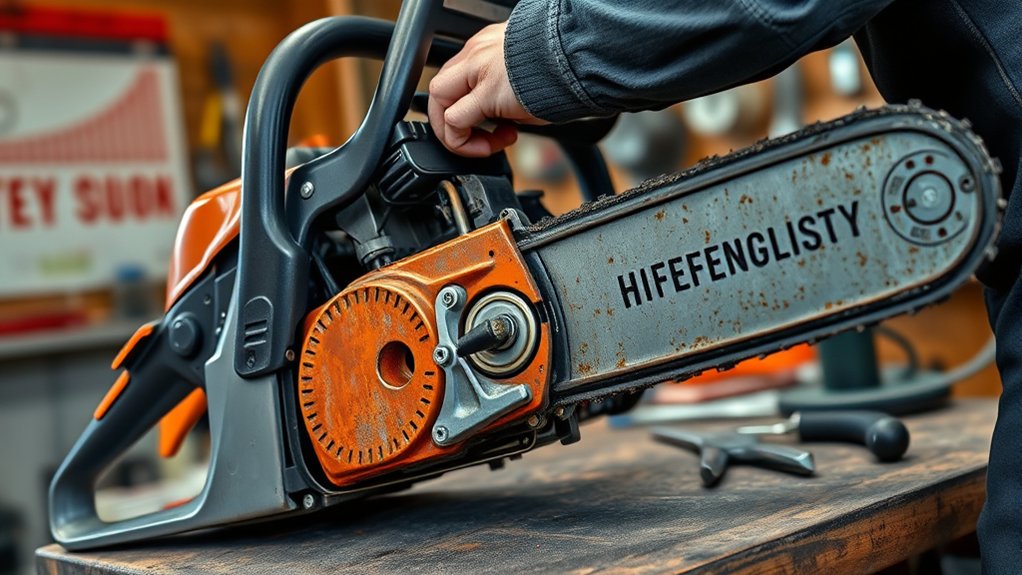
Although hot starts often stem from various causes, fuel system issues rank among the most common culprits. Vapor lock happens when heat vaporizes fuel, blocking delivery. So, it’s important to inspect the fuel line for pinholes or wear because leaks restrict flow when the engine is hot.
Also, cleaning or replacing the air filter can prevent a rich mixture that complicates hot starts. Using premium fuel with a higher octane rating helps reduce the risk of vapor lock. It’s a good idea to keep these points in mind if you’re dealing with hot start problems.
| Symptom | Cause | Action |
|---|---|---|
| Engine won’t start hot | Vapor lock | Cool engine, use premium fuel |
| Weak or no fuel flow | Damaged fuel line | Inspect and replace fuel line |
| Hard starting | Clogged air filter | Clean or replace air filter |
| Engine stalls when hot | Fuel mixture too rich | Check air filter and fuel quality |
| Fuel leaks | Pinholes in fuel line | Replace fuel line immediately |
How to Spot and Fix Ignition Issues When Hot
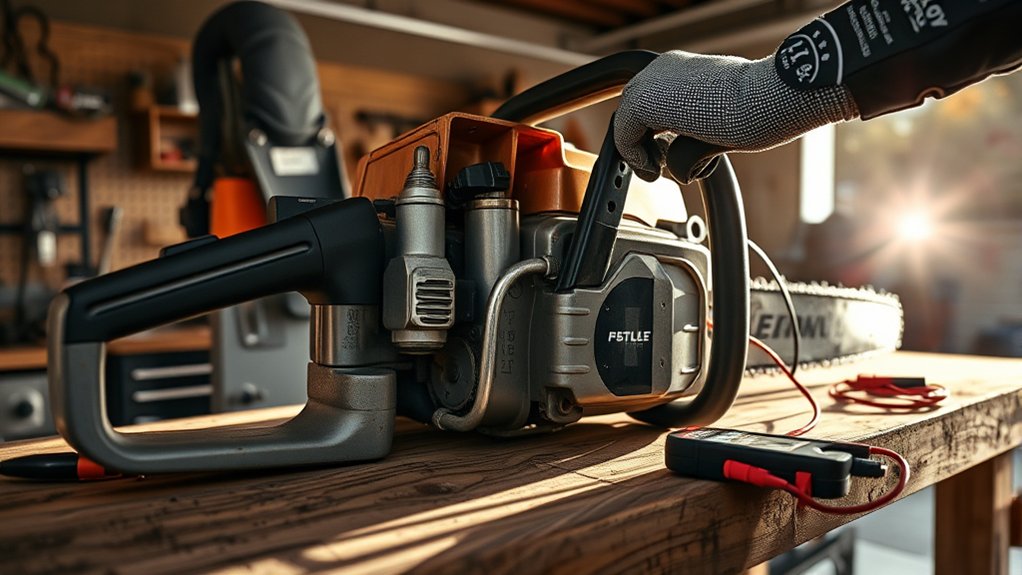
Fuel system checks often reveal the source of hot start problems, but ignition faults can also cause your chainsaw to fail when warm. The ignition module and coil can overheat, which reduces spark strength and prevents ignition.
Here’s how to spot and fix these issues:
- Use a spark tester to check for a weak spark. Heat can cause the ignition coil to malfunction.
- Inspect the spark plug for fouling or incorrect gap. Replace it if it’s dirty or worn.
- Check ignition connections for looseness or damage. These issues can cause intermittent sparks.
- If the ignition coil overheats frequently, replace it to restore reliable spark during hot starts.
Tuning Your Carburetor to Improve Hot Starting
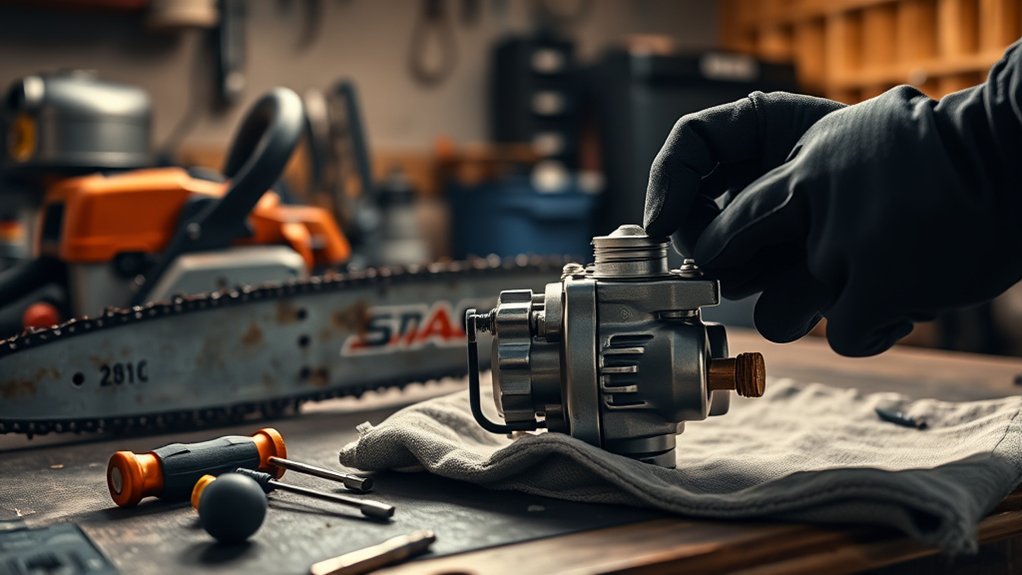
To improve hot starting, begin by adjusting the idle speed so the engine runs smoothly at low RPMs.
Then, move on to balancing the air-fuel mixture screws. This helps prevent flooding and keeps the mixture lean but stable.
You’ll want to fine-tune these settings using a tachometer.
And of course, always follow your manufacturer’s guidelines to get the best results.
Adjusting Idle Speed
When you adjust the idle speed on your chainsaw’s carburetor, you help maintain a consistent fuel-air mixture. This is essential for preventing hot starting problems.
Properly adjusting idle speed keeps the engine running smoothly and prevents stalling after shutdown.
Follow these steps for effective adjusting idle speed:
- Use a tachometer to measure engine RPM and match the manufacturer’s recommended idle speed.
- Turn the idle speed screw slowly to increase or decrease RPM.
- Inspect and clean the carburetor regularly to remove debris that can disrupt idle settings.
- Fine-tune the idle mixture screws to optimize the fuel-air ratio, avoiding flooding or lean conditions.
Balancing Air Fuel
Although adjusting the carburetor can seem complex, tuning the air-fuel mixture is crucial for improving your chainsaw’s hot starting performance.
Balancing air-fuel correctly guarantees ideal combustion temperatures, preventing overheating and vapor lock caused by a lean mix or flooding from a rich mix.
Start by checking the carburetor diaphragm and gaskets for wear, as air leaks disrupt the air-fuel ratio.
Then, carefully adjust the idle and high-speed screws within the manufacturer’s specifications to find the right balance.
Small changes can considerably improve hot starting reliability.
Avoid guesswork.
Refer to your chainsaw’s manual to maintain proper settings.
Proper balancing air-fuel not only enhances starting but also protects engine components and sustains overall performance under hot conditions.
Fine Tuning Screws
Three key screws on your chainsaw’s carburetor control the air-fuel mixture and idle speed. These directly affect hot starting performance.
Fine-tuning screws help you achieve the ideal balance, preventing lean or rich running conditions.
To improve hot starts, follow these steps:
- Adjust the idle speed screw to guarantee smooth idling without stalling when hot.
- Use a tachometer to set the engine RPMs at the manufacturer’s recommended idle speed.
- Gradually fine-tune the high-speed screw in small increments. Be careful to avoid flooding from too rich a mixture.
- Regularly inspect and clean the carburetor to maintain tuning accuracy and fuel delivery.
Proper adjustment of fine-tuning screws enhances hot starting reliability and overall chainsaw performance.
It’s worth taking the time to get it just right.
Spark Plugs and Hot Starting: When to Replace Them
If your chainsaw struggles to start when hot, checking the spark plug should be one of your first steps. Take a close look for corrosion, carbon buildup, or an electrode gap wider than what the manufacturer recommends. Any of these issues can mess with ignition, especially when the engine is hot.
You’ll want to replace the spark plug every 50 to 100 hours of use, depending on how often you run your chainsaw. This helps keep your starts reliable. Always stick to the spark plug type and heat range your chainsaw model calls for—this prevents overheating and ignition troubles.
It’s a good idea to check the spark plug regularly, like after every few fuel tanks, so you can spot wear early. A weak or failing spark plug will make hot starts tough, so swapping it out on time ensures your engine runs smoothly even when things heat up.
How to Prevent Vapor Lock and Improve Fuel Quality
To prevent vapor lock, try storing your fuel in a cool, shaded spot. Using premium gasoline also helps because it’s more stable.
It’s a good idea to regularly check your fuel lines for any damage. Keeping the right fuel mixture is important too, since it helps avoid overheating.
You can also add fuel stabilizers or anti-vapor lock additives. These little extras can really boost fuel quality and make your system more reliable.
Fuel Storage Tips
When you store fuel in a cool, shaded area, you reduce heat exposure that causes vapor lock during chainsaw operation. Proper fuel storage directly impacts your chainsaw’s reliability and performance.
Follow these essential tips:
Use premium gasoline (93 octane) to lower the fuel’s boiling point, improving stability in hot conditions. Mixing diesel with your fuel isn’t usually recommended because it can cause engine problems, so stick to pure gasoline for best results.
Replace stored fuel every 30 days to maintain freshness and prevent degradation that leads to starting issues.
Adding a fuel stabilizer helps prevent moisture buildup and preserves fuel integrity.
These simple steps will keep your chainsaw running smoothly and avoid frustrating startup problems. Just remember to store your fuel properly and check it regularly!
Vapor Lock Prevention
Although vapor lock can disrupt your chainsaw’s performance by vaporizing fuel in the lines or carburetor, you can take specific steps to prevent it and maintain fuel quality. Use premium gasoline (93 octane) to raise fuel boiling points and reduce vapor lock issues.
Keep your fuel tank shaded or use insulated containers to avoid heat buildup. Regularly inspect and replace fuel lines and filters to prevent deterioration.
After use, let your chainsaw idle for 60 to 90 seconds before shutting off to dissipate residual heat and minimize vapor lock risks. It’s a simple step that really helps.
| Prevention Step | Why It Helps | Tip |
|---|---|---|
| Use premium fuel | Higher boiling point | Buy 93 octane or above |
| Shade fuel tank | Prevents heat buildup | Store in cool, shaded area |
| Replace fuel lines | Avoids fuel flow restrictions | Inspect every 3 months |
| Use insulated containers | Limits heat exposure | Especially during transport |
| Idle before shutdown | Reduces engine heat | 60 to 90 seconds recommended |
Fuel Mixture Best Practices
Preventing vapor lock starts with managing the fuel mixture properly. Using the right fuel mix not only reduces vapor lock risks but also boosts engine performance. Follow these best practices:
- Use premium fuel (93 octane) to lower vapor lock chances and enhance combustion, especially in hot conditions.
- Store fuel in a cool, shaded area to keep temperatures down and prevent vapor formation in the fuel line.
- Mix fuel with high-quality two-stroke oil at the correct ratio (usually 50:1) to guarantee ideal combustion and avoid engine damage.
- Always use fresh fuel, avoiding old or contaminated supplies, and consider adding a small amount of diesel to raise the boiling point in extreme heat.
These steps enhance your fuel mixture, preventing vapor lock and improving chainsaw reliability.
Just taking these simple precautions can make a big difference in how well your equipment runs.
Maintenance Tips to Keep Your Chainsaw Starting Smoothly
To keep your chainsaw starting smoothly, you should regularly clean and replace the air filter. This helps maintain ideal airflow and prevents dirt buildup that can hamper performance.
Maintenance tips also include inspecting and replacing spark plugs as needed. A worn or fouled plug can impair ignition, especially when the engine is hot.
Use fresh, properly mixed fuel. Premium gas helps reduce vapor lock risks in warm conditions. Regularly check and replace fuel filters to guarantee unobstructed fuel delivery.
Don’t overlook routine maintenance tasks like inspecting fuel lines for wear and verifying carburetor settings to keep the proper air/fuel ratios.
Following these maintenance tips consistently will guarantee reliable starts and peak chainsaw performance. This way, you minimize downtime and avoid troubleshooting headaches during hot starts.
Frequently Asked Questions
Can Using the Wrong Oil Affect Hot Starting Performance?
Yes, using the wrong oil viscosity can definitely affect your chainsaw’s hot starting performance.
If the oil is too thick, it won’t lubricate the engine properly when hot, which increases friction and makes it harder to restart. On the other hand, oil that’s too thin mightn’t protect engine components well enough, leading to wear.
So, it’s really important to stick with the manufacturer-recommended oil viscosity and type.
This helps ensure ideal lubrication and prevents overheating issues that can cause hot start failures. Just using the right oil can save you a lot of trouble down the line.
How Does Altitude Impact Chainsaw Hot Starting?
You know what they say: “A stitch in time saves nine.”
At higher altitudes, the thinner air changes your chainsaw’s fuel mixture, making it leaner and harder to start when hot.
Vapor lock can also occur, blocking fuel flow. You’ll need to adjust the carburetor to balance the fuel mixture properly.
Using premium fuel and regular maintenance will help you avoid these altitude-related hot starting issues.
Is It Safe to Keep Trying to Start a Hot Chainsaw Repeatedly?
No, you shouldn’t keep trying to start a hot chainsaw repeatedly. Doing so increases the risk of heat damage to ignition components and can cause vapor lock in the fuel system.
Instead, let the saw cool down before another attempt.
Repeated pulls can flood the engine and foul the spark plug, making issues worse. It’s better to give it a break rather than making the problem bigger.
Regular maintenance and checking fuel delivery help avoid these problems and keep your chainsaw reliable.
Do Electric Chainsaws Have Hot Start Issues?
Imagine you’re cutting thick branches all afternoon, and your electric chainsaw suddenly stops.
Electric chainsaws don’t have traditional hot start issues like gas models. Their electric reliability hinges on battery health and motor cooling.
Overheating triggers automatic shut-offs, not ignition failures. To maintain performance, you should monitor runtime, keep vents clean, and let the tool cool between uses.
Proper care guarantees consistent operation without hot start problems.
Can Battery Condition Affect Hot Start in Cordless Chainsaws?
Yes, battery condition directly affects battery performance and can cause hot start issues in cordless chainsaws. When your battery is weak or partially charged, especially in high temperatures, its voltage output drops, reducing power delivery.
Heat worsens this by degrading lithium-ion cells, lowering efficiency.
To avoid starting problems, regularly check your battery’s health and monitor charge cycles. You might also consider using a higher amp-hour battery for more consistent power under hot conditions.
Taking these steps can help keep your chainsaw running smoothly when it’s warm outside.
Conclusion
When your chainsaw won’t start when hot, swift solutions save your sanity. Spotting spark plug slips, tuning the carburetor, and tackling tricky fuel troubles can turn frustration into flawless function.
Preventing pesky vapor lock and practicing precise maintenance keeps your tool ticking tirelessly. Stay sharp, stay steady. Consistent care cuts complications and keeps your chainsaw smoothly slicing through every job, hot or not.