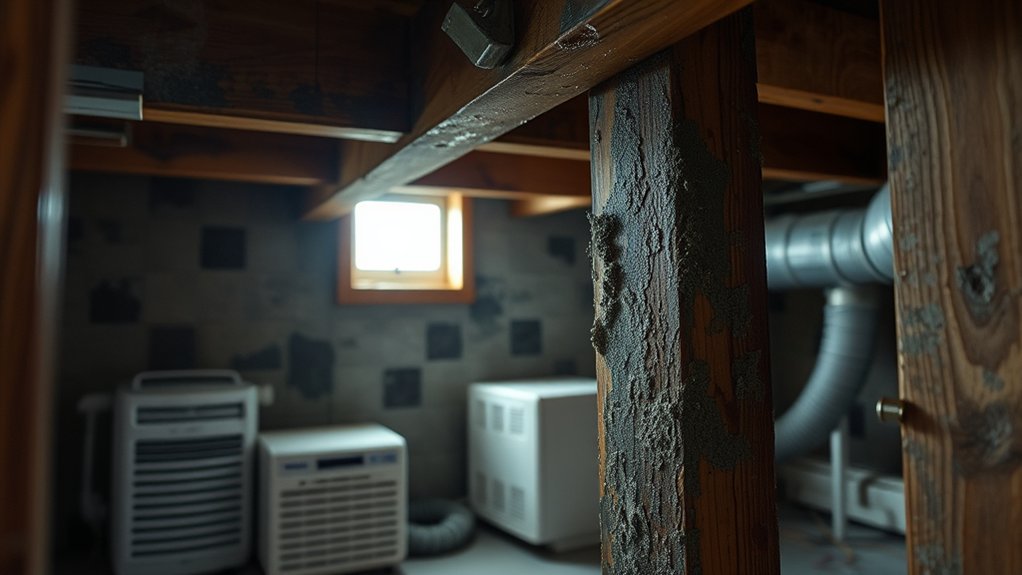
Can Mold Grow On Wood: Causes And How To Prevent It
Yes, mold can grow on wood if moisture, humidity above 60%, and poor ventilation create the right conditions. Newly harvested or unfinished wood is especially vulnerable because of its high moisture and sugar content.
To prevent mold, control indoor humidity and fix leaks promptly. Make sure there’s good airflow too, and consider using mold-resistant sealants on wood surfaces.
Catching mold early and drying things properly are key to stopping it from spreading. You’ll find more detailed steps to protect and treat wood for lasting mold prevention ahead.
Key Takeaways
- Mold grows on wood when moisture, humidity above 60%, and poor ventilation create ideal conditions for spores to thrive.
- Newly harvested or unfinished wood with high moisture and sugar content is especially vulnerable to mold growth.
- Prevent mold by maintaining indoor humidity between 30-50%, improving ventilation, and promptly fixing leaks or water damage.
- Regularly inspect moisture-prone wood areas and apply mold prevention sprays or borate solutions to seal surfaces.
- Clean mold early using vinegar, borax, or diluted bleach treatments, and call professionals for infestations over 10 square feet.
Why Mold Grows On Wood: Key Conditions
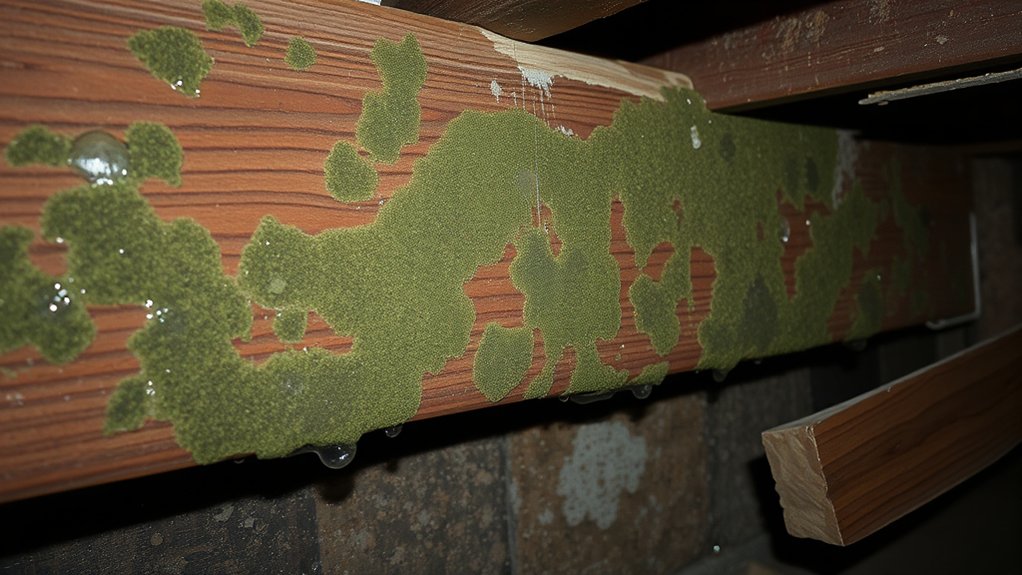
Because mold requires moisture, air, and a nutrient source to thrive, wood becomes an ideal substrate when damp conditions prevail. Mold spores are everywhere in the environment and easily settle on wood surfaces, especially when humidity levels rise above 60%.
Mold thrives on wood when moisture and humidity exceed 60%, making damp conditions ideal for growth.
Newly harvested wood, which is rich in sugars and moisture, is even more inviting for mold to grow. When water damage happens, whether from leaks or condensation, it increases the moisture content in the wood and speeds up mold growth.
Poor ventilation makes things worse by trapping humid air and creating spots where mold can grow without being noticed.
To stop mold from spreading, you need to keep indoor humidity under control and fix any water damage quickly.
Understanding these key conditions helps explain why wood becomes vulnerable to mold infestation under certain environmental factors.
Common Causes Of Mold On Wood In Homes
You’ll often find mold on wood when moisture and humidity levels are high—usually above 60%.
When the air doesn’t move well, like in rooms with poor ventilation, dampness gets trapped. This creates the perfect environment for mold to grow, especially behind walls or furniture.
Plus, plumbing leaks and spills add even more moisture, which feeds mold growth on wooden surfaces directly.
Moisture And Humidity
| Factor | Threshold | Impact on Mold Growth |
|---|---|---|
| Moisture Level | >60% | Promotes spore germination |
| Humidity | >50% | Causes condensation on wood |
| Wood Type | Unfinished/High Sugar | Higher vulnerability |
| Water Sources | Plumbing leaks | Increase moisture exposure |
| Prevention Strategy | Monitor & Control | Limits mold development |
Moisture and humidity play a big role in mold growth. When moisture levels go above 60%, it really encourages spores to start germinating. Similarly, humidity above 50% often leads to condensation, especially on wood surfaces.
The type of wood matters too. Unfinished wood or wood with a high sugar content tends to be more vulnerable to mold. Plus, water sources like plumbing leaks can increase moisture exposure, creating a perfect environment for mold.
To prevent this, it’s important to monitor and control these factors. Doing so can significantly limit mold development and keep your space healthier.
Poor Ventilation Areas
When air circulation is limited, moisture tends to accumulate, creating an environment where mold can easily thrive on wood surfaces. Poor ventilation traps humidity, especially in enclosed spaces, raising moisture levels above 60%, which promotes mold growth.
You should pay close attention to areas with stagnant air behind furniture or in corners where humidity collects. Attics, basements, and closets with inadequate airflow can cause condensation on wood surfaces.
Enclosed storage spaces that prevent moisture escape are also a concern.
For effective mold prevention, regularly inspect and improve ventilation in these zones. Enhancing airflow reduces moisture buildup, which directly lowers mold risks on wood.
Taking care of poor ventilation is a key step in keeping your wood surfaces healthy and mold-free.
Plumbing Leaks And Spills
Beyond poor ventilation, hidden moisture sources like plumbing leaks and spills frequently cause mold growth on wood in homes. Plumbing leaks, even minor ones, create prolonged moisture exposure that wood readily absorbs. This makes it highly susceptible to mold growth.
Areas such as under-sink cabinets are especially vulnerable because standing water from spills or leaks soaks into wooden surfaces. You need to regularly inspect plumbing fixtures and fix leaks promptly to prevent moisture buildup.
Undetected plumbing issues often lead to mold infestations, which can compromise the integrity of wood structures.
Cleaning up spills immediately and repairing leaks without delay are critical steps. Addressing plumbing leaks quickly reduces the risk of mold and helps preserve the health and longevity of wood in your home.
Preventing Mold Growth On Wood: Simple Steps
You can really cut down on mold growth on wood by sealing the surfaces with mold prevention sprays.
These sprays help limit moisture absorption and create a strong barrier against mold.
Keeping your indoor humidity levels between 30-50% also plays a big role.
It stops mold from developing by making the environment less friendly for fungal growth.
When you combine these two steps, you get a solid way to protect your wood and keep mold at bay.
Seal Wood Surfaces
Apply a high-quality mold prevention spray to seal wood surfaces and drastically reduce moisture absorption. This helps create conditions that are unfavorable for mold growth.
To effectively prevent mold, you should:
- Treat clean lumber regularly with borate solutions to inhibit mold growth.
- Inspect vulnerable areas like under-sink cabinets for leaks. Even minimal water can trigger mold infestations.
- Use UV-resistant sealants to protect wood from mold and environmental damage.
Proper sealing of wood surfaces is critical in mold remediation efforts because it limits the moisture wood can absorb. This directly reduces mold’s ability to thrive.
By following these steps, you’ll create a more resilient wood surface that resists mold colonization and minimizes the need for costly remediation.
Seal wood surfaces strategically to maintain durability and mold resistance over time.
Control Indoor Humidity
Three key strategies help you control indoor humidity and prevent mold growth on wood surfaces.
First, maintain indoor humidity between 30-50%, never exceeding 60%. Higher levels increase moisture and mold risk. Use dehumidifiers and air conditioners, especially in damp areas like basements and bathrooms, to reduce excess moisture.
Second, guarantee proper ventilation by operating exhaust fans during cooking and showering. This helps prevent humidity buildup.
Third, regularly inspect and fix plumbing leaks promptly since moisture from leaks creates an ideal environment for mold. Also, keep wood furniture slightly away from walls to allow airflow, reducing moisture accumulation.
Identifying Mold On Wood Early
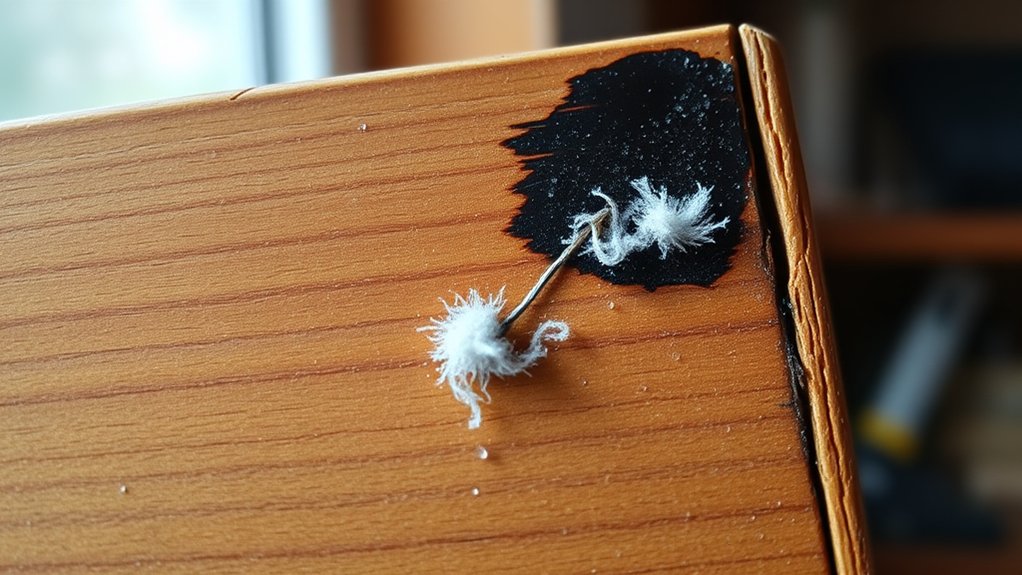
Although mold can develop rapidly on wood, early identification hinges on recognizing subtle indicators like discoloration and musty odors. Mold on wood typically appears as spots ranging from white to black, signaling moisture problems.
Detecting these early signs helps you act promptly, preventing mold from spreading and complicating eliminating mold efforts.
To identify mold on wood early, focus on:
- Visual discoloration: Look for unusual dark or light patches.
- Musty odors: Note persistent damp smells, especially in humid areas.
- Dampness duration: Check if wood has stayed wet for 24-48 hours, a critical window for mold growth.
Regular inspections in moisture-prone zones let you prevent mold before it takes hold. This way, you can safeguard your wood surfaces effectively.
Treating Moldy Wood: Effective DIY Methods
Once you’ve spotted mold on wood, addressing it promptly can prevent further damage and health risks. For effective mold removal, start with a mixture of detergent and water. Dish soap works well for scrubbing the affected area thoroughly. Then, make sure to dry it completely.
Alternatively, you can spray distilled white vinegar on the mold and leave it for an hour before wiping. This method kills spores naturally and is pretty easy to do.
Spray distilled white vinegar on mold, wait an hour, then wipe for a natural, easy spore-killing solution.
Borax mixed with water offers a dual benefit: it cleans and helps prevent future mold growth by leaving a residue that inhibits spores.
For unfinished wood, a diluted bleach solution combined with detergent can be effective. Just keep in mind it requires careful scrubbing and full drying. Always wear gloves and a mask to protect yourself.
These DIY methods provide targeted, evidence-based solutions for mold treatment on wood surfaces while minimizing health risks. Give them a try and see what works best for your situation!
Picking The Best Mold Cleaner For Wood
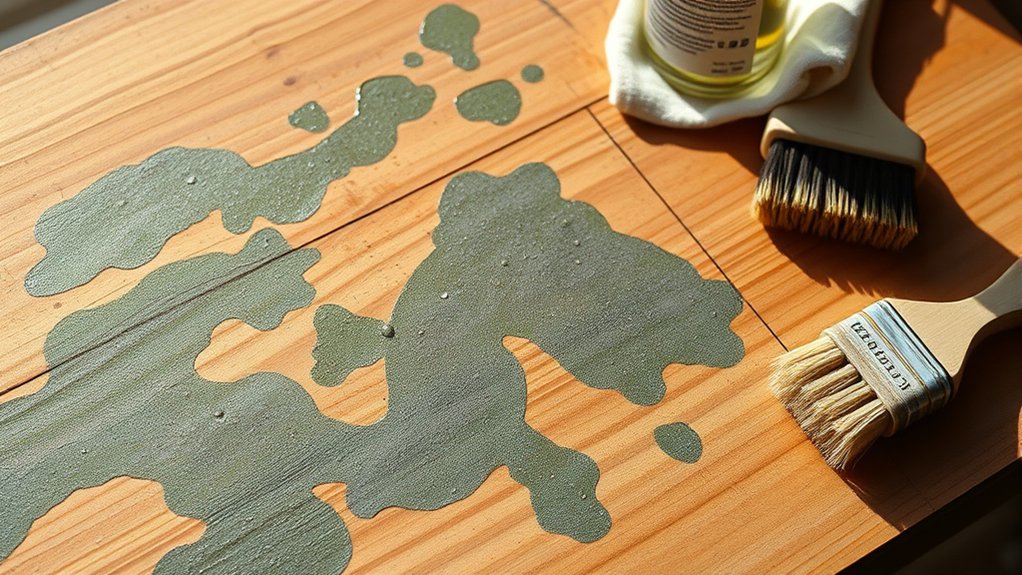
How do you choose the most effective mold cleaner for wood? To remove mold thoroughly and prevent growth, focus on these key factors.
First, look for penetration ability. Products like BactroKill Antimicrobial Spray deeply penetrate wood’s porous surface to eradicate mold spores completely.
Next, consider long-term protection. It’s best to opt for cleaners that offer ongoing antimicrobial effects to inhibit future mold growth, so you get lasting results.
Safety and suitability matter too. Choose EPA-registered cleaners designed specifically for wood, as they meet strict safety and efficacy standards for indoor use.
Also, identify the mold type to tailor your cleaner choice.
And always follow manufacturer instructions, including safety precautions.
This analytical approach guarantees you remove mold effectively while preventing its return on wooden surfaces.
When To Call A Professional Mold Remover
When mold spreads over more than 10 square feet, you should call a professional mold remover to guarantee thorough and safe remediation.
DIY methods often miss hidden mildew growth in hard-to-reach areas like behind walls or under flooring, where spores can persist and worsen.
A professional mold remover uses specialized equipment, including air quality testing and advanced cleaning agents, to effectively eliminate mold and help prevent its recurrence.
If you experience persistent health issues linked to mold or have concerns about mold in HVAC systems, experts are essential to make sure spores don’t spread throughout your home.
Engaging a professional not only addresses visible mold but also targets underlying causes.
This provides a safer environment and reduces the risk of future mildew growth on wood surfaces.
It’s definitely worth calling in the pros when mold becomes a bigger problem.
Maintaining Wood To Prevent Mold Recurrence
Hiring professionals to remove extensive mold is an important step, but preventing mold from returning requires ongoing care of your wood surfaces. Mold growth thrives in environments with excess moisture and high humidity, so controlling these factors is vital.
To maintain wood and prevent mold recurrence, focus on the following:
- Regularly seal wood with mold prevention sprays or treat with borate solutions to reduce moisture absorption and inhibit mold growth.
- Keep indoor humidity below 60% using dehumidifiers and guarantee proper ventilation to limit damp conditions.
- Frequently inspect moisture-prone areas like under-sink cabinets for leaks or standing water, addressing issues promptly.
Taking these steps consistently can make a big difference in keeping your wood surfaces mold-free.
It’s all about staying on top of moisture and making sure your home stays dry and well-ventilated.
Frequently Asked Questions
Can Mold on Wood Affect Indoor Air Quality?
Yes, mold on wood affects indoor air quality by releasing mold spores into the air.
You need to control humidity levels, keeping them below 60%, to prevent mold growth. Improving air circulation helps reduce moisture buildup on wood surfaces, limiting mold development.
Regularly check for mold and address it promptly to avoid prolonged exposure to spores. This can worsen air quality and cause health issues.
Taking these steps helps keep your indoor environment healthier and safer.
Is Mold on Wood Harmful to Pets?
Yes, mold on wood can be harmful to your pets. Certain mold types, like black mold, release toxins that cause pet symptoms such as sneezing, coughing, and skin irritation.
These effects can get worse for pets with weakened immune systems.
To protect them, follow prevention tips like controlling humidity, fixing leaks, and cleaning mold promptly.
Being proactive helps keep your pet’s health in check and prevents exposure to dangerous mold toxins indoors. It’s definitely worth the effort!
How Long Does Mold Take to Appear on Wood?
Mold growth on wood can happen fast—sometimes within 24 to 48 hours. It’s like a wildfire fueled by moisture in the wood and other environmental factors.
When wood stays damp and temperatures hover between 60°F and 80°F with humidity above 60%, mold spores take full advantage. They multiply quickly and before you know it, mold starts to appear.
So, it’s really important to keep an eye on moisture levels and control the environment.
Otherwise, mold could claim your wood surface sooner than you expect.
Can Painted Wood Still Grow Mold Underneath?
Yes, painted wood can still grow mold underneath if moisture gets trapped beneath the surface.
To prevent mold growth, focus on proper painted wood maintenance and moisture control tips.
Regularly inspect for cracks or peeling paint, seal any gaps, and use mold-resistant paint.
Controlling humidity and fixing leaks promptly reduces moisture. This effectively minimizes mold risk beneath painted wood surfaces.
Does Mold on Wood Cause Structural Damage?
Mold on wood can cause structural damage faster than you’d expect, weakening its integrity and leading to rot.
To prevent this, you need effective mold growth prevention strategies, including moisture control solutions that keep wood dry. Applying proper wood treatment methods also helps protect against mold penetration.
Ignoring mold allows it to compromise load-bearing capacity, resulting in costly repairs.
Conclusion
Mold on wood thrives in damp, poorly ventilated spaces, but you don’t have to let it take root. By controlling moisture, spotting early signs, and choosing the right cleaners, you can keep your wood surfaces healthy and mold-free.
Remember, a stitch in time saves nine. Addressing mold promptly prevents costly damage later.
If the problem persists, don’t hesitate to call a professional. Staying vigilant and proactive is your best defense against mold.