Can You Put Wood Floors Over Tile: Installation Guide And Key Considerations
You can put wood floors over tile if the tile is intact, level, and clean. Start by making certain your tile floor is free of cracks and uneven spots. Then roughen glossy surfaces for better adhesion.
Choose moisture-resistant engineered wood or laminate for stability, and pick between floating or glue-down installation methods. Manage moisture with a barrier and acclimate wood before installing.
Address height differences with transition strips to guarantee smooth changes. Keep following to explore detailed installation steps and care tips.
Can You Install Wood Flooring Over Tile?
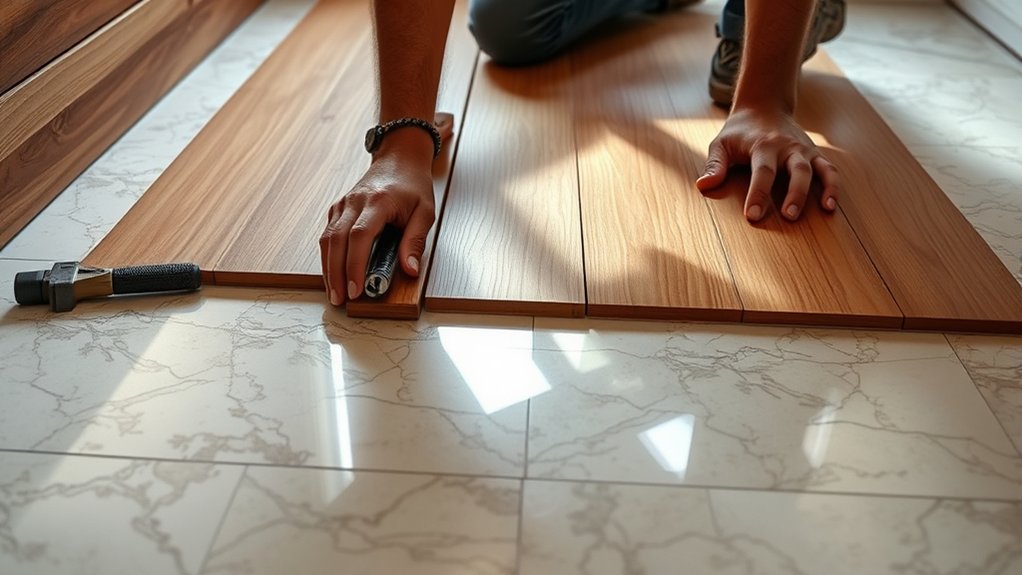
Wondering if you can install wood flooring directly over tile? Yes, you can install wood flooring over tile, as long as the existing tile is in good condition, free from cracks, and firmly bonded to the subfloor. This ensures a stable base for your new floor.
You can install wood flooring over tile if the tile is intact and securely bonded to the subfloor.
When it comes to installation, you have options. You can go with floating floors, which are simpler if you want to tackle it yourself.
Or, you can choose glue-down installations, which offer better stability but require more careful prep work.
Don’t forget about a moisture barrier. It’s important to prevent issues like warping or mold in your wood flooring.
Also, after installation, be ready for some height adjustments. You might need to trim doors or use transition strips to connect different flooring types smoothly.
Preparing Your Tile Floor for Wood Installation
Before laying wood flooring over your tile, you need to prepare the surface meticulously to guarantee a secure and lasting installation. Start by thoroughly cleaning the tile surface to remove dust and debris, which helps the adhesive bond better.
Next, inspect the existing tile for any cracks or loose pieces. Repair any issues promptly to keep the floor stable.
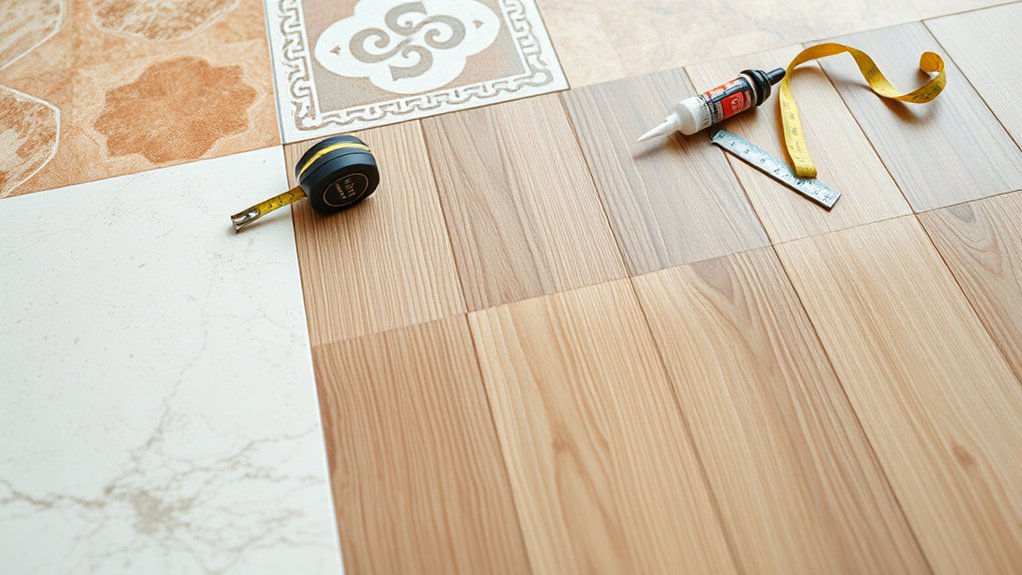
Use a level to spot any uneven areas, then apply a leveling compound to create a smooth foundation. If the tile has a glossy finish, roughen it up a bit to improve the adhesive’s grip during installation.
Also, check the moisture levels with a moisture meter to make sure they stay below 12%. This helps prevent potential wood warping or damage.
Taking these precise steps will effectively prepare your tile and make sure your wood flooring installation turns out successful.
Which Wood Flooring Types Work Best Over Tile
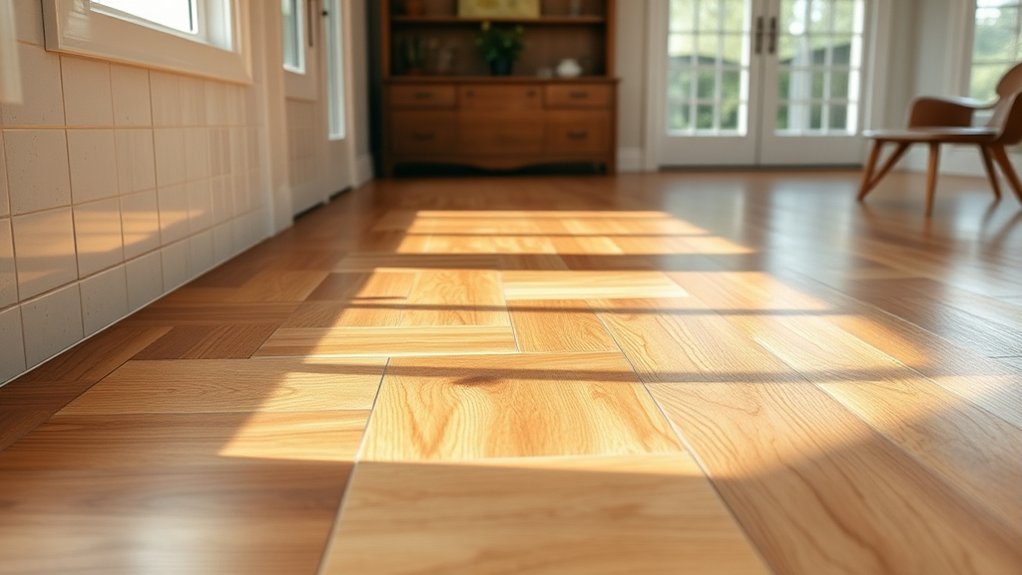
Selecting the right wood flooring type is essential when installing over tile to guarantee durability and performance. Among your flooring options, engineered wood flooring stands out due to its moisture resistance and superior surface stability. This makes it highly compatible with existing tile surfaces.
Solid hardwood is less ideal because it demands a solid, stable base and is vulnerable to moisture fluctuations. This can cause compatibility concerns when laid over tile.
Laminate flooring offers a practical alternative with excellent moisture resistance and a simple click-lock installation. It’s a good choice for tile overlays.
Vinyl plank flooring also excels, providing durability, water resistance, and ease of installation while effectively mimicking wood aesthetics.
When choosing, focus on installation conditions, particularly moisture levels and surface stability. This will help assure your selected wood flooring type performs reliably over tile.
How to Install Wood Flooring Over Tile
Before you start installing wood flooring over tile, make sure the tile surface is clean, level, and firmly attached to the subfloor.
It’s important to fill in any grout lines with a leveling compound to create a smooth base. Also, don’t forget to install a moisture barrier to protect your wood from any potential dampness.
Next, you’ll want to decide whether to go with a floating floor or a glue-down method. This choice depends on your specific project needs and preferences.
Just remember to leave proper expansion gaps around the edges of the room to allow the wood to naturally expand and contract.
Surface Preparation Steps
Start by thoroughly inspecting the existing tile to confirm it’s intact and securely adhered. Any cracks or loose pieces can undermine the stability of your new wood flooring, so it’s important to check carefully.
Next, perform surface leveling by using a leveling compound to achieve a smooth and level surface. This step is essential for proper adhesion of the new flooring.
Clean the surface meticulously to remove dust and debris. If you have glossy tiles, roughen them up a bit to help with adhesion.
Then, install a moisture barrier to prevent any moisture issues from the existing tile floor. This will protect your new flooring over time.
Finally, apply an appropriate underlayment. This adds cushioning and soundproofing, making your floor more comfortable and quieter.
| Step | Purpose |
|---|---|
| Inspect the tile | Verify tile is intact and secure |
| Surface leveling | Create a smooth, level surface |
| Clean the surface | Remove debris for better adhesion |
| Moisture barrier installation | Protect against moisture issues |
| Underlayment application | Provide cushioning and soundproofing |
Installation Techniques Overview
Choose between two primary installation methods when laying wood flooring over tile: the floating method and the glue-down method.
The floating method involves interlocking boards resting on an underlayment, which makes installation easier and allows for slight movement. The glue-down method permanently adheres boards to the existing tiles, giving you enhanced stability.
Make sure to prepare the surface thoroughly by cleaning, drying, and leveling the tile with a leveling compound. This step guarantees you have a flat base to work with.
Also, don’t forget to incorporate a moisture barrier for effective moisture management, especially in humid areas. This helps prevent warping.
Keep in mind the height considerations because adding wood flooring will raise the floor height. You’ll want to trim doors and adjust baseboards accordingly.
Before you start the installation, allow the wood to acclimate for about seven days in the installation area.
Finally, install transition strips to create smooth connections between flooring types and give your project a professional finish.
Common Challenges Installing Wood Floors Over Tile
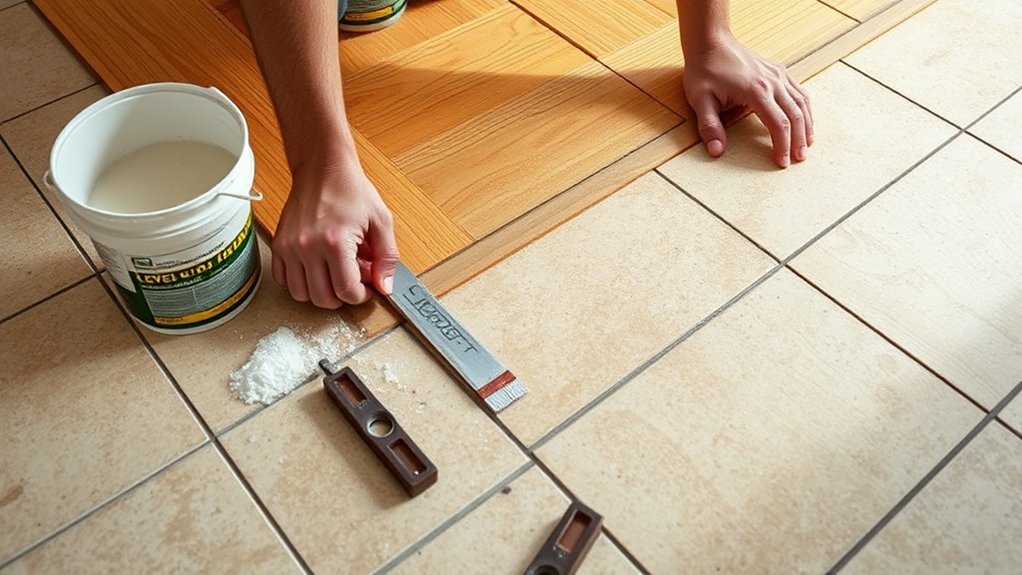
Although installing wood floors over existing tile can save time and labor, it does come with several challenges you need to address for a successful outcome.
Moisture management is critical. You have to install an effective moisture barrier to prevent warping and mold.
Uneven tile surfaces and grout lines can be tricky. They require thorough surface preparation, often using leveling compounds to create a smooth, stable base. That way, your wood floor will sit nicely without any bumps.
Height differences between the tile and wood flooring installation can cause complications. This is where transition strips come in handy for seamless floor junctions.
Also, adhesive issues might pop up if the tile isn’t properly cleaned and primed, which can affect bond strength in glue-down methods.
Managing Height and Door Clearance Issues With Wood Floors Over Tile
When you install wood floors over tile, the added height, typically between ½ and ¾ inch, can create clearance issues with doors and other fixtures. Properly measuring the new height before installing wood flooring is essential to prevent problems with door clearance and ensure everything operates smoothly.
Installing wood floors over tile adds height that can affect door clearance—measure carefully to avoid issues.
You’ll often need to trim the bottoms of doors to accommodate the increased floor thickness. Confirming the tile surface level before installation helps minimize uneven height challenges.
For a seamless transition between rooms or flooring types, use transition strips like T-moldings to manage height adjustments effectively.
Taking these steps during your home improvement project guarantees the wood flooring over tiles integrates flawlessly without compromising door function or causing obstructions.
Maintaining Wood Floors Installed Over Tile
After addressing height and clearance challenges during installation, keeping your wood floors over tile in ideal condition requires consistent care.
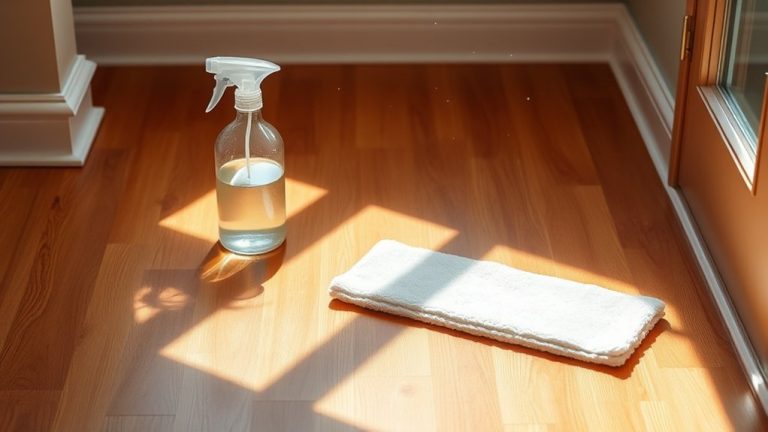
When installing engineered wood, you should regularly clean with a soft broom or vacuum to prevent dirt buildup that can scratch the surface. Using a damp mop with a wood-safe cleaner helps maintain shine, but be careful not to over-wet the floor to avoid moisture damage.
Always address spills immediately to stop moisture from seeping between planks, which can cause warping or mold.
It’s also important to control indoor humidity levels between 30-50% since this reduces the risks of expansion and contraction.
Make it a habit to conduct periodic inspections so you can catch common issues like wear or moisture damage early on.
These simple steps will help you prevent moisture damage and keep your wood floors installed over tile looking great for years.
Frequently Asked Questions
How Does Humidity Affect Wood Floors Installed Over Tile?
Humidity levels directly impact wood floors over tile by causing wood movement and floor expansion. Without proper moisture control, high humidity can lead to buckling or gaps.
You must focus on subfloor preparation, including damp proof membranes, and guarantee an acclimation process for the wood to adjust to seasonal changes.
Adequate air circulation helps stabilize humidity levels, protecting both the tile condition and wood.
Employ precise installation techniques to accommodate wood’s natural response to moisture. It’s all about making sure the wood can move a bit without causing damage.
This way, your floors stay beautiful and durable over time.
Can Underfloor Heating Be Used With Wood Over Tile?
You can’t judge a book by its cover. Underfloor heating works with wood floors over tile if you consider key factors. Choose engineered wood for better compatibility and lower expansion.
Use a moisture barrier and underlayment that optimize underfloor heating efficiency while managing wood floor insulation. Regulate surface temperature below 27°C to prevent warping.
Compare installation techniques, mind floor thickness, and select heating system types to minimize energy consumption. Regular maintenance preserves performance.
It’s all about paying attention to the details to make sure your wood floor and underfloor heating work well together.
What Is the Average Lifespan of Wood Floors Over Tile?
You can expect wood floors over tile to last 15 to 30 years, depending on flooring types and installation techniques.
Engineered wood often reaches 20-30 years with proper maintenance tips like cleaning methods and humidity control.
Using moisture barriers prevents damage, extends lifespan, and improves sound insulation.
Consider aesthetic options and cost considerations upfront.
Warranty details vary, so check before starting DIY approaches.
Proper installation and upkeep guarantee durability and performance.
Are There Specific Adhesives Recommended for Wood Over Tile?
You should choose flexible, moisture-resistant adhesive types specifically designed for wood over tile.
Proper installation techniques require thorough surface preparation, including cleaning and leveling the tile condition. Using a primer on smooth tiles boosts adhesion.
Also, consider plank thickness and temperature stability when selecting adhesives with high shear strength.
It’s a good idea to incorporate moisture barriers to prevent damage and enhance sound insulation.
Make sure to follow manufacturer guidelines closely.
And don’t forget to apply regular maintenance tips to guarantee long-lasting performance.
How Do Wood Floors Over Tile Impact Home Resale Value?
You’d think wood floors over tile could singlehandedly skyrocket your home’s resale value! In reality, they boost market appeal by aligning with resale trends and buyer preferences favoring hardwood’s aesthetic value.
Comparing flooring options, wood over tile offers a long-term investment with lower maintenance requirements versus tile alone.
Though installation challenges and renovation costs exist, successful projects enhance neighborhood impact and attract buyers.
This can increase your home’s value considerably in competitive markets.
Conclusion
You can confidently install wood floors over tile when you properly prepare the surface, choose compatible wood types like engineered hardwood, and address height clearance issues. While challenges like uneven tiles or moisture exist, following precise installation steps guarantees durability and aesthetic appeal.
Don’t let myths about poor adhesion or instability stop you. Successful wood-over-tile installations are common and reliable with correct techniques and materials. This approach maximizes your flooring options without costly tile removal.