
How Much Can A Woodchuck Chuck Wood: Answer Explained
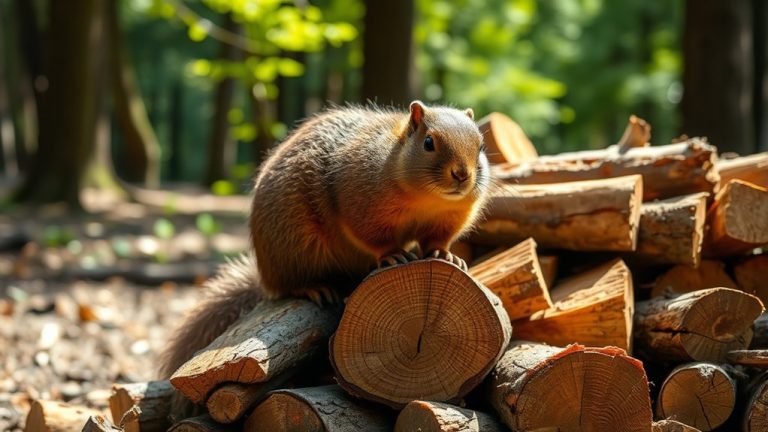
You might wonder how much wood a woodchuck can chuck, but woodchucks don’t actually chuck wood. They dig burrows and move soil instead. Scientists estimate they can displace about 35 cubic feet of soil daily, weighing up to 700 pounds.
That’s a lot more soil than wood they’d move. So, the tongue twister is really just a playful exaggeration. Understanding their behavior and this scientific estimate reveals the real answer behind the riddle’s humor and origins.
What the Woodchuck Tongue Twister Means and Its Common Answer

The tongue twister “How much wood would a woodchuck chuck if a woodchuck could chuck wood?” asks a fun, hypothetical question about whether the animal could move wood.
Even though woodchucks don’t actually chuck wood, the phrase plays on their name in a playful way.
It comes from the 1902 song “The Woodchuck Song” by Robert Hobart Davis. The tongue twister sparks a silly but catchy inquiry that’s more about wordplay than reality.
The common answer is, “A woodchuck would chuck as much wood as a woodchuck could chuck if a woodchuck could chuck wood.” It just shows how silly the question is.
Interestingly, wildlife expert Richard Thomas made a humorous estimate that a woodchuck could move about 700 pounds of dirt while burrowing.
This gives a fun, scientific twist to the question, but really, it’s more of a cultural and language curiosity than a literal one.
Why Woodchucks Don’t Actually Chuck Wood
Although woodchucks are often imagined tossing wood, they don’t actually chuck wood because their behavior centers on digging burrows rather than handling timber.
As New York state wildlife, woodchucks focus on excavating soil, moving substantial amounts daily to create extensive underground homes.
The idea that a woodchuck could chuck wood comes from a linguistic misunderstanding. The name “woodchuck” actually comes from the Algonquian word “wuchak,” which means “digger,” not a wood handler.
Scientific observations confirm woodchucks don’t engage in chucking wood. Instead, they displace soil, which fits perfectly with their ecological role.
How Much Soil (And Wood) Can a Woodchuck Move?

When you consider a woodchuck’s burrowing activity, it can move roughly 35 cubic feet of soil daily, which weighs about 700 pounds on average. The exact weight varies with soil density, ranging from 2600 to 3300 pounds per cubic foot when factoring moisture and composition.
A woodchuck moves about 35 cubic feet of soil daily, weighing roughly 700 pounds on average.
While woodchucks don’t chuck wood, if you compare this volume to wood, 35 cubic feet would weigh between 250 pounds for lighter woods like balsa and up to 1400 pounds for denser woods such as maple. This comparison emphasizes the woodchuck’s actual capacity to displace large volumes of earth rather than wood.
Understanding the cubic feet of soil a woodchuck moves provides insight into its burrowing efficiency and physical strength.
It’s pretty impressive when you think about how much work goes into all that digging!
Richard Thomas’s Method for Estimating Woodchuck’s Ability
You’ll take a look at Richard Thomas’s method by checking out how woodchucks dig their burrows and figuring out the amount of soil they move around.
His way of doing things measures just how much earth a woodchuck shifts each day, which helps estimate how strong or capable they really are.
Basically, this method gives you a clear way to turn the soil they move into an idea of how much wood they could chuck.
Burrowing Behavior Analysis
Because woodchucks are known for their impressive digging skills, Richard Thomas, a wildlife conservation officer, developed a method to quantify their burrowing capacity. He analyzed the woodchuck’s burrowing behavior, noting that their extensive tunnels average 25-30 feet long and about 6 inches wide.
Thomas estimated a woodchuck would chuck approximately 35 cubic feet of soil daily, including side galleries and dens. Considering soil density, which ranges from 2600 to 3300 pounds per cubic yard depending on moisture, he calculated a woodchuck could move around 700 pounds of dirt each day.
This analysis highlights that, while a woodchuck doesn’t chuck wood, its burrowing behavior demonstrates significant soil displacement capabilities. It provides a scientific basis for understanding the animal’s physical exertion during excavation.
Soil Volume Calculations
How much soil can a woodchuck realistically move in a day? Richard Thomas estimated that a woodchuck displaces about 35 cubic feet of soil daily while digging burrows averaging 25-30 feet long and 6 inches wide.
This volume translates to roughly 2,600 to 3,300 pounds of soil, depending on density. Clay weighs around 75 pounds per cubic foot, sand about 95.
By calculating this soil volume, Thomas offers a practical approach to quantifying how much wood a woodchuck would chuck if it could chuck soil equivalently.
Though soil displacement differs from chucking wood, this method highlights the absurdity of the original riddle. It provides a scientific baseline to estimate the woodchuck’s physical capacity for moving material in its natural behavior.
How Soil Weight Compares to Wood: What’s the Real Answer?
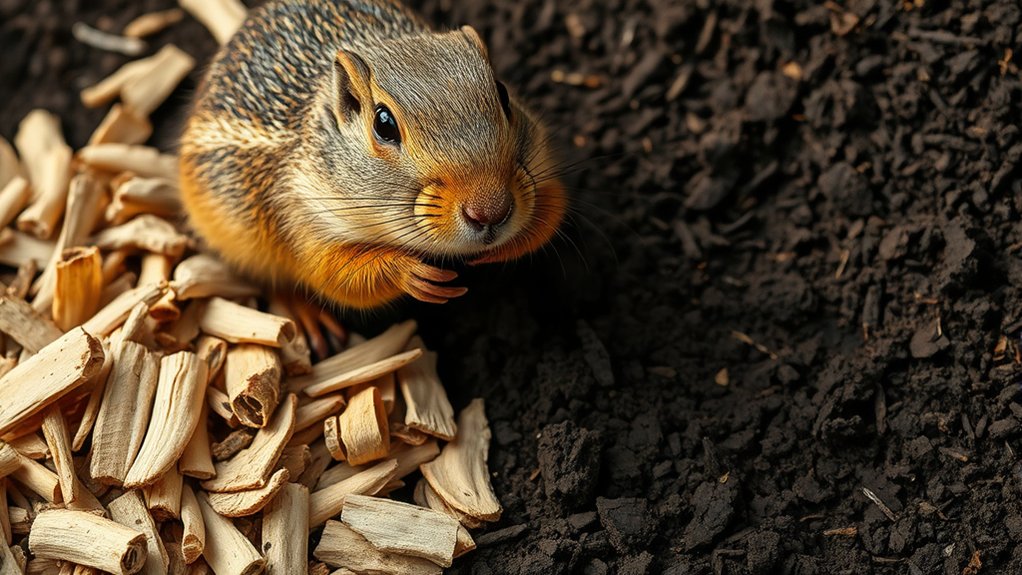
What distinguishes the weight of soil from that of wood, and how does this affect the comparison of a woodchuck’s digging capacity to the notion of chucking wood? Understanding soil weight versus wood weight reveals why the riddle is misleading.
A woodchuck moves about 35 cubic feet of soil, weighing between 2600 to 3300 pounds, depending on soil density. In contrast, the same volume of wood weighs much less.
Consider these facts:
- Clay soil weighs around 75 pounds per cubic foot
- Sandy soil weighs about 95 pounds per cubic foot
- Maple wood weighs approximately 1400 pounds per 35 cubic feet
- Balsa wood weighs near 250 pounds per 35 cubic feet
And remember, woodchucks dig soil, not chuck wood. This really clarifies the real magnitude of a woodchuck’s digging effort versus wood chucking.
Where Did the Woodchuck Riddle Come From?
Understanding the weight differences between soil and wood clarifies why the woodchuck’s digging capacity doesn’t translate to wood chucking.
The woodchuck riddle originated in 1902 with “The Woodchuck Song,” written by Robert Hobart Davis for the musical *The Runaways*. Its catchy chorus, popularized in a 1904 recording by Theodore Morse and Ragtime Roberts, propelled the riddle into public awareness.
The term “woodchuck” likely comes from the Algonquian word “wuchak,” which means “digger.” This emphasizes burrowing behavior rather than wood chucking.
Over a century, the riddle has stuck around as a playful tongue-twister. It highlights the absurdity of the question it asks.
In 1957, the Associated Press even called it an unanswered riddle. That just shows how much it’s continued to capture people’s imagination and keep them intrigued.
Why the Woodchuck Riddle Became a Pop Culture Hit
Because its catchy phrasing combines with an absurd premise, the woodchuck riddle has secured a lasting place in popular culture. You’ll find its appeal rooted in several key factors:
It originated in the 1902 song “The Woodchuck Song” by Robert Hobart Davis, making it a memorable tongue twister. The riddle also featured in media like the 1992 game “Monkey Island 2: LeChuck’s Revenge,” which helped broaden its audience.
Plus, it’s been integrated into technology, with virtual assistants such as Siri and Cortana offering witty replies.
Richard Thomas’s 1980s calculation estimating a woodchuck could chuck roughly 700 pounds of wood added a scientific dimension. The riddle continues to provoke curiosity and humor, emphasizing language’s playful nature.
All these elements explain why the woodchuck riddle remains a pop culture hit, blending science, humor, and media presence seamlessly.
Frequently Asked Questions
Can Woodchucks Chuck Wood if Trained?
You can’t expect woodchucks to chuck wood, even with training techniques, because woodchuck behavior is naturally geared toward digging, not lifting or throwing.
Their physical structure and instincts limit their ability to manipulate wood, so training won’t overcome these biological constraints.
While you might improve certain actions, woodchucks simply aren’t adapted for chucking wood.
Are Woodchucks Related to Beavers?
Have you ever wondered if woodchucks and beavers share a family tree? They’re related only broadly as rodents but belong to different families. Woodchucks are part of Sciuridae, while beavers belong to Castoridae.
You might notice some similarities, like their gnawing habits, but their behavior is quite different. Woodchucks are mostly terrestrial and herbivorous.
Beavers, on the other hand, are semi-aquatic and famous for building dams.
How Long Do Woodchucks Live in the Wild?
In the wild, you’ll find that woodchucks typically live 3 to 6 years. Some may even reach up to 10 years if conditions are just right. Their lifespan really depends on their behavior, like burrowing and foraging, and the quality of their habitat.
Predators like coyotes, foxes, and hawks are a big threat. Disease and harsh weather also take a toll, especially during their vulnerable first year.
That said, conservation efforts can really help improve how long they live.
What Do Woodchucks Eat Besides Wood?
You might expect a woodchuck to chew only wood, but its woodchuck diet mainly consists of plants.
Their feeding habits include grasses, clovers, fruits like apples, and vegetables such as beans and peas.
Occasionally, they consume insects and small invertebrates, although that’s a minor part of their diet.
They use strong incisors to chew tough plant material, consuming up to a pound a day.
This is especially common during spring and summer when they’re prepping for hibernation.
Do Woodchucks Have Natural Predators?
Yes, woodchucks have natural predators that influence woodchuck behavior and woodchuck habitats.
You’ll find coyotes, foxes, hawks, and eagles actively hunting them, especially near their burrows.
Domestic animals like dogs and cats also threaten woodchucks in suburban areas.
To survive, woodchucks adapt by using burrowing and camouflage strategies.
These strategies directly affect their habitat choices and daily activities, helping regulate their populations and maintain ecological balance.
Conclusion
You might not find a definitive answer to how much wood a woodchuck can chuck because woodchucks don’t actually chuck wood. Instead, they move soil by digging extensive burrows with impressive strength and efficiency.
By comparing soil displacement to wood weight, you get a more accurate estimate. Understanding the riddle’s origins and its cultural impact helps you appreciate the question’s playful nature.
Even as science clarifies the realistic limits of a woodchuck’s capabilities, it’s fun to explore the idea.