Can You Put A Wood Cutting Board In The Dishwasher: Care Guide
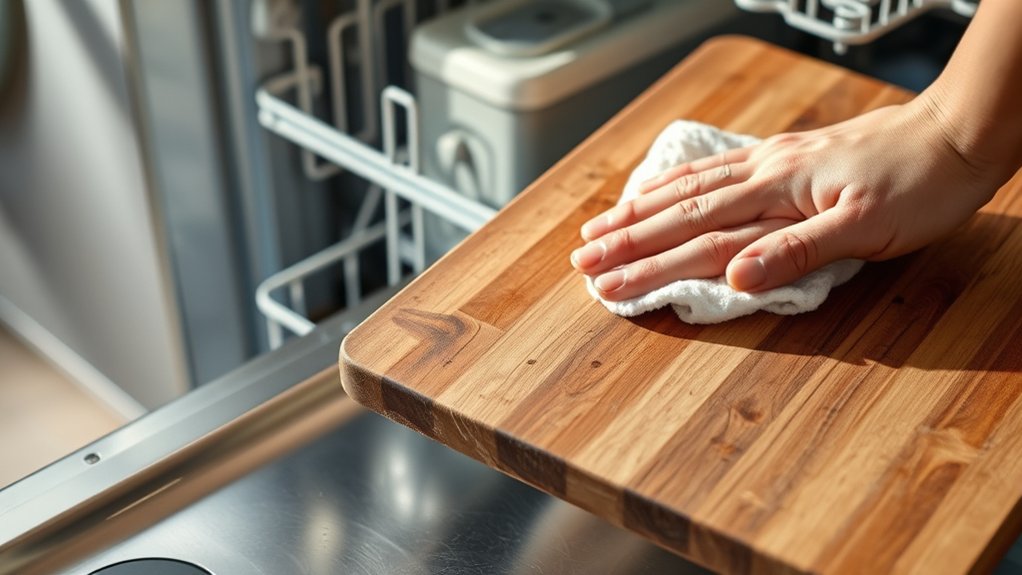
You shouldn’t put your wood cutting board in the dishwasher because the high heat and moisture can warp, crack, and weaken it. Dishwashing also strips natural oils, leaving the wood dry and prone to bacteria and odors. Instead, clean your board by hand with hot, soapy water.
Dry it immediately after washing, and oil it regularly to keep it in good shape. Keep an eye out for any damage that signals it’s time for a replacement. Taking these steps will help you extend the life and hygiene of your board.
Discover how to properly care for your board so it stays in great condition for years to come. It’s easier than you might think!
Don’t Put Wood Cutting Boards in the Dishwasher
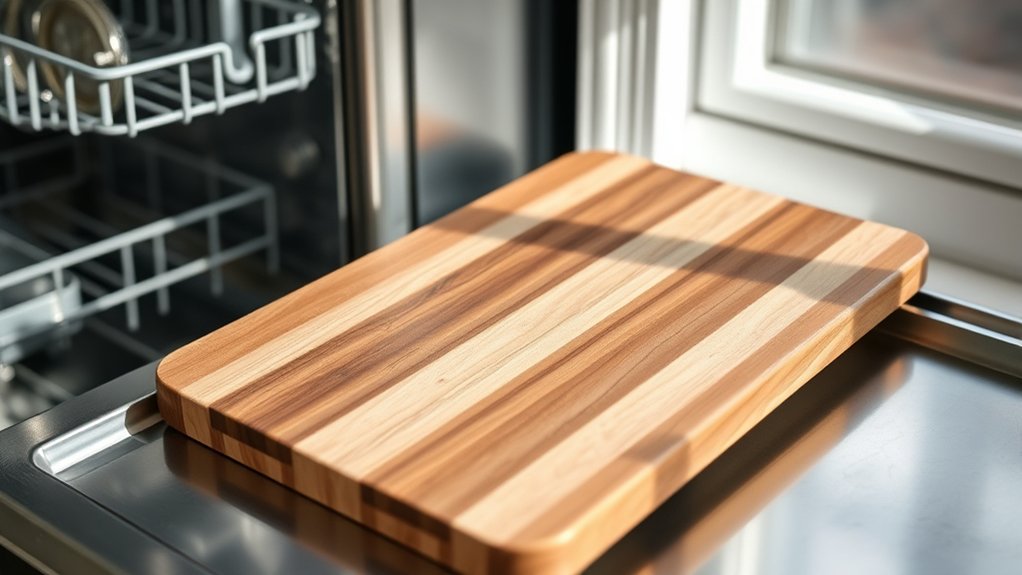
Although it might seem convenient, you should never put wood cutting boards in the dishwasher. The intense heat and moisture cause the wood to warp, crack, or split, damaging your board.
Dishwashers strip away the wood’s natural oils, reducing its moisture content and leaving it dry and brittle. This weakening can also affect glue joints, making the board less durable.
Instead, focus on hand washing your board with hot, soapy water and drying it thoroughly afterward. To maintain its condition, regularly apply food-safe mineral oil.
This helps replenish lost moisture and protects the wood from future damage. By avoiding the dishwasher and practicing proper hand washing and oiling, you’ll extend your cutting board’s life and keep it in excellent shape.
Remember: don’t put wood cutting boards in the dishwasher.
How Dishwashers Damage Wooden Cutting Boards
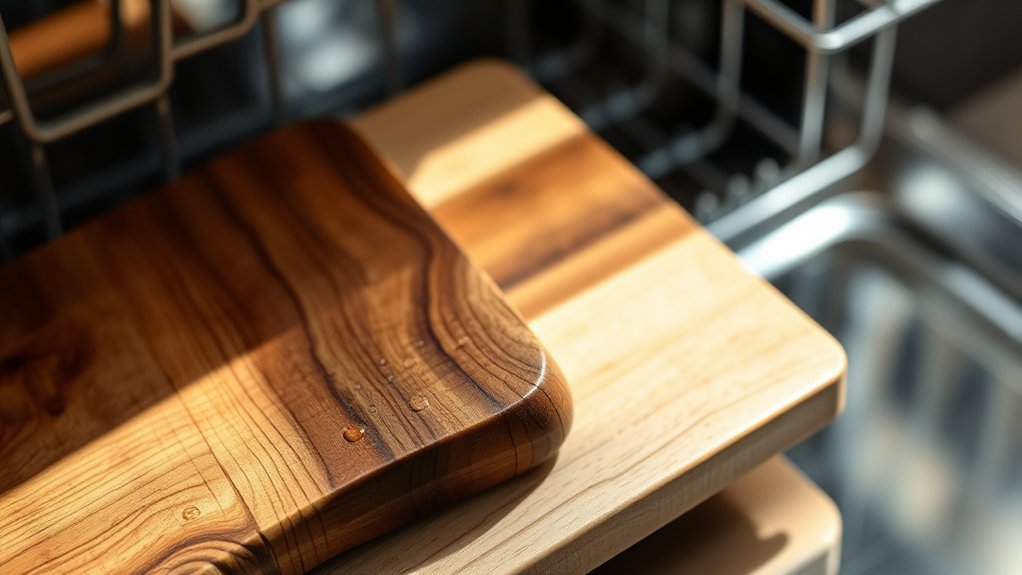
You really shouldn’t put your wooden cutting board in the dishwasher. The heat can cause the wood to warp and crack.
Plus, the excess moisture from the wash cycle soaks into the board, which dries out the wood and weakens its structure.
Over time, all this damage shortens the board’s lifespan and makes it less sturdy.
Heat Effects On Wood
When you place a wooden cutting board in the dishwasher, the high heat and prolonged exposure to water and steam can cause serious damage. High temperatures lead to warping, cracking, and splitting as the wood’s porous grain expands and contracts. Heat also weakens glue joints in laminated boards, compromising their structural integrity.
This intense heat strips natural oils, drying out the wood and opening its grain further. That makes it more vulnerable to bacteria and odors. Over time, this heat exposure drastically shortens your board’s lifespan.
| Heat Effects | Consequences |
|---|---|
| High temperatures | Warping and cracking |
| Porous grain | Increased bacteria |
| Stripped oils | Dry, brittle wood |
| Weakened joints | Compromised strength |
Moisture Damage Risks
Beyond the damage caused by heat, moisture presents another serious threat to wooden cutting boards in dishwashers. The prolonged exposure to high humidity and water causes moisture damage, which leads to warping and cracking of the wood fibers. This moisture seeps deep into the board, stripping away natural oils that keep wooden cutting boards resilient.
Over time, the repeated cycles in a dishwasher can also weaken glue joints and cause splitting. These effects not only ruin the board’s appearance but make it more prone to bacteria hiding in grooves and scratches.
To avoid this, you should skip the dishwasher and opt for hand washing instead, using mild soap and drying the board immediately. This helps preserve your board’s moisture balance and extends its lifespan.
Structural Integrity Loss
Although dishwashers offer convenience, they cause significant structural damage to wooden cutting boards. When wood cutting boards are washed in a dishwasher, the combination of high heat and moisture can cause them to warp or crack, which undermines their structural integrity.
Prolonged exposure to water weakens glue joints, while intense heat strips away natural oils, leaving the wood dry and brittle.
To protect your cutting board, avoid dishwasher use and practice regular handwashing instead. This helps maintain the board’s strength and longevity by preventing warping and cracking from heat and moisture, glue joint failure due to prolonged soaking, and loss of protective oils causing dryness and splintering.
Regular handwashing is key to preserving the structural integrity of your wooden cutting boards. It might take a little more time, but your boards will thank you for it in the long run.
How to Clean Wood Cutting Boards by Hand
Start by scraping off any stuck-on food with a bench scraper or metal spatula to guarantee a thorough clean.
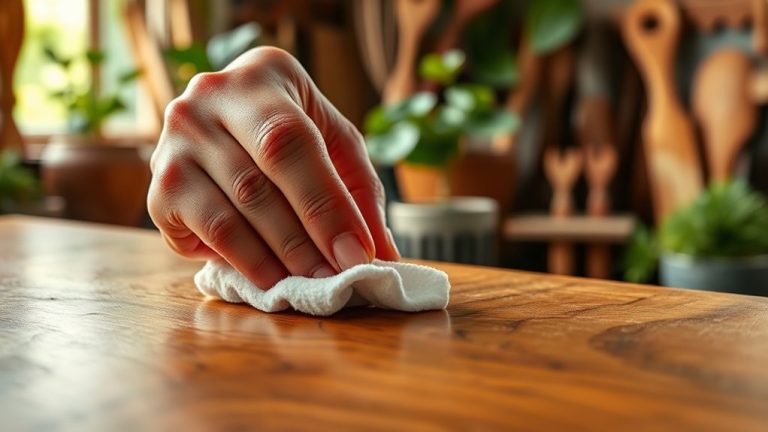
Next, wash your wood cutting board by hand using hot soapy water. Avoid the dishwasher to prevent warping or cracking.
After rinsing, dry the board immediately with a clean towel.
Then, store it upright so it can air dry completely and avoid moisture buildup.
For stubborn stains or lingering odors, scrub the surface with a mixture of kosher salt and lemon or a vinegar solution.
Let it dry, then rinse thoroughly.
To keep your wood cutting board in good condition, regularly apply food-safe mineral oil.
This helps maintain its integrity and prevents drying or cracking over time.
Choosing Oils and Waxes for Wood Cutting Boards
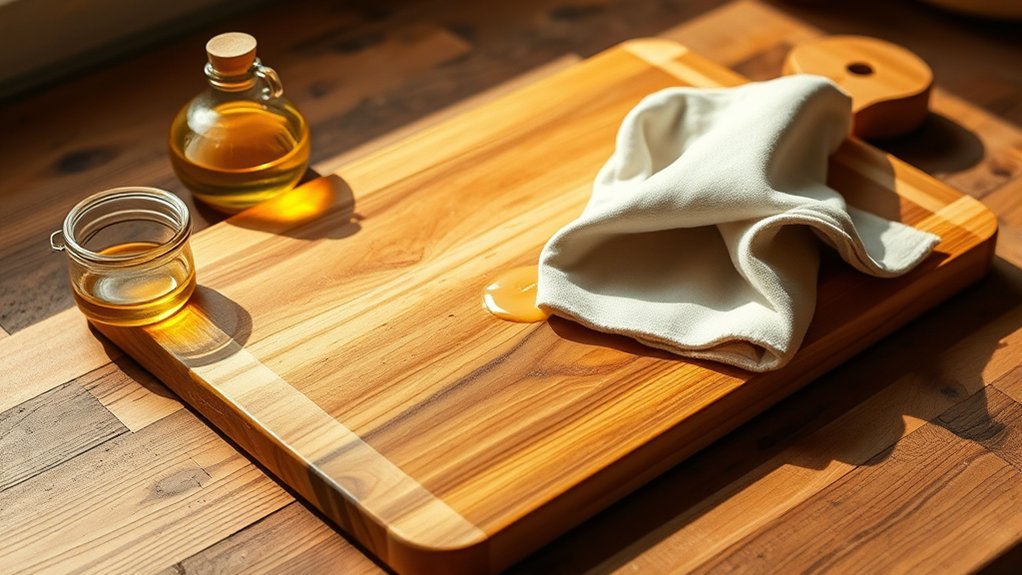
How do you choose the best oils and waxes to keep your wood cutting board in top condition? Start with food-safe mineral oil. It penetrates the wood deeply without going rancid, unlike vegetable oils you should avoid.
After oiling, apply a beeswax sealant. This locks in moisture and protects the surface from stains.
To know when to oil, test for moisture by sprinkling water on your board. If it soaks in, it’s time to reapply oil. New boards need more frequent attention, but you’ll get a feel for the right oiling frequency over time.
- Use food-safe mineral oil for deep conditioning
- Seal with beeswax to enhance durability
- Test moisture regularly to maintain your board’s health
How Often to Oil and Maintain Your Wood Board
Once you’ve selected the right oils and waxes for your wood cutting board, maintaining its condition becomes a regular task. To keep your board in top shape, oil it frequently at first to help the wood absorb moisture and prevent cracking.
After that, you can reduce how often you oil it to keep the moisture in and protect the surface. It’s all about finding the right balance for your board.
| Time Period | Oiling Frequency |
|---|---|
| First week | Every 2 days |
| Next month | Weekly |
| After first month | Monthly or when dry |
| Signs to watch | Dryness, dull appearance |
| Oil type | Food-safe mineral oil |
Apply the oil evenly and let it absorb for at least 8 hours. This simple routine helps keep your board moist and extends its life. Give your board this little bit of TLC, and it’ll stay in great shape for years.
DIY Repair for Damaged Wood Cutting Boards
If your wood cutting board shows minor damage like scratches or shallow cuts, you can fix it yourself by sanding the surface.
Start by sanding wood boards with coarser-grit sandpaper (80-100 grit), then move to finer grits (up to 220 or higher) to smooth the finish. Always sand along the wood grain to avoid further damage.
After sanding, clean off dust thoroughly and apply a food-safe mineral oil to restore moisture and protect the wood.
For effective DIY repairs and ongoing maintenance, remember to:
- Sand gently and progressively for a smooth surface
- Remove all dust before oiling
- Regularly oil your board to keep it hydrated and resilient
This routine keeps your wood boards in top shape between repairs. Just a little care goes a long way!
Signs It’s Time to Replace Your Wood Cutting Board
If your wood cutting board has deep cracks or grooves, it’s definitely time to think about replacing it. Those little crevices can trap bacteria and are really tough to clean properly.
Plus, if you notice persistent odors or stains that just won’t go away, that’s another clear sign your board mightn’t be safe to use anymore.
Keeping an eye out for these issues helps you make sure your cutting surface stays hygienic and reliable.
Deep Cracks And Grooves
Although wood cutting boards are durable, deep cracks and grooves can develop over time. These create hidden spaces where bacteria thrive.
These imperfections pose a serious food safety risk since they’re tough to clean thoroughly. When you notice deep cracks or grooves compromising hygiene, it’s time to replace your board.
Ignoring these signs can lead to uneven surfaces, making food prep less effective and increasing contamination chances.
Watch for these warning signs:
- Deep cracks that trap food particles and bacteria
- Grooves too difficult to clean properly
- Uneven surfaces that affect cutting performance
Regularly inspect your board and prioritize hygiene. If deep cracks or grooves appear, replacing your cutting board guarantees safe food handling and helps keep your kitchen clean.
Persistent Odors Or Stains
Deep cracks and grooves aren’t the only signs that your wood cutting board needs attention. If you notice persistent odors that linger despite thorough cleaning, it’s a clear indicator bacteria may be deeply embedded within the wood.
Similarly, stains that resist removal through common methods like baking soda or vinegar suggest the discoloration has penetrated too far, compromising hygiene. These issues create an environment where bacteria thrive, increasing the risk of food contamination.
When your board shows these signs, it’s time to contemplate replacement to maintain proper food safety. Regularly inspect your cutting board for such persistent odors and stains to guarantee it remains a clean, safe surface for food preparation.
Prioritizing replacement when necessary protects your health and keeps your kitchen hygienic. It’s worth staying on top of this to make sure your cooking space stays safe and fresh.
Frequently Asked Questions
Can Wooden Cutting Boards Harbor Bacteria After Hand Washing?
Yes, wooden cutting boards can harbor bacteria growth even after hand washing, especially if you don’t follow proper hand washing techniques.
You need to maintain your wooden board regularly by oiling it to preserve the wood and minimize moisture absorption.
For better sanitizing options, use vinegar or diluted bleach solutions carefully.
Keeping up with wooden board maintenance is essential to prevent bacteria buildup and guarantee your cutting board stays safe and hygienic.
Taking these steps can really help keep your board in good shape and reduce the risk of bacteria lingering around.
It’s all about regular care and using the right cleaning methods.
Is It Safe to Use Bleach on Wooden Cutting Boards?
You shouldn’t use bleach on wooden cutting boards because it can damage the wood and weaken glue joints. Instead, try bleach alternatives like vinegar or baking soda for cutting board sanitization. These options are gentler but still effective.
For wooden board maintenance, focus on proper hand washing and drying to prevent bacteria. Make sure your board is completely dry before storing it to avoid any mold or warping.
Also, use wood preservation methods such as oiling regularly. This keeps your board in good shape and helps it last longer.
Following these bacteria prevention tips helps keep your board safe without harsh chemicals.
What Types of Wood Are Best for Cutting Boards?
When choosing between maple vs. bamboo, maple stands out for its surface durability and resistance to knife marks, making it a top choice.
Bamboo is eco friendly and grows fast but can be harder on knives.
To boost longevity factors, you should apply regular oiling and avoid soaking.
Proper maintenance techniques like hand washing and drying keep your board in great shape, ensuring it lasts longer and stays safe for food prep.
Can You Use a Wooden Cutting Board for Raw Meat?
Yes, you can use a wooden cutting board for raw meat, but you need to be careful with meat juices to avoid cross contamination risks.
Always clean it thoroughly with hot soapy water and sanitize it after use.
It’s a good idea to season your board regularly with oil to keep the surface in good shape and help it last longer.
Try to avoid deep grooves where bacteria can hide.
If possible, consider using a separate board just for raw meat. This way, you keep your food preparation safe and hygienic.
How Do Temperature Changes Affect Wooden Cutting Boards?
Temperature changes cause wood to expand and contract, and this thermal shock can crack or warp your cutting board.
When heat causes moisture to drop, the wood dries out and loses its flexibility and durability.
To keep your board in good shape, try to avoid sudden temperature shifts. Keeping the moisture level consistent really helps too.
Regular maintenance like oiling your cutting board keeps the wood supple and strong.
This way, you prevent damage and can extend the lifespan of your board effectively.
Conclusion
You shouldn’t put your wood cutting board in the dishwasher. It can crack and warp from the heat and water. In fact, studies show over 70% of wood boards damaged in kitchens come from improper cleaning methods like dishwashers.
Instead, wash by hand with mild soap, dry thoroughly, and oil regularly to keep it in great shape. Following these simple steps will extend your board’s life and keep it safe for food prep. It’s really not that hard once you get into the habit!