Can Wood Bees Sting: Facts Explained
Wood bees, or carpenter bees, can sting, but only females do. They rarely will unless provoked. Their stings cause localized pain, swelling, and redness but are generally less severe than honeybee stings.
Males can’t sting but may hover aggressively near nesting sites. You should clean and cool stings promptly to reduce discomfort and watch for severe reactions.
Recognizing their activity and managing infestations early helps protect your wood surfaces and peace of mind. It’s always better to deal with them sooner rather than later.
What Are Wood Bees?
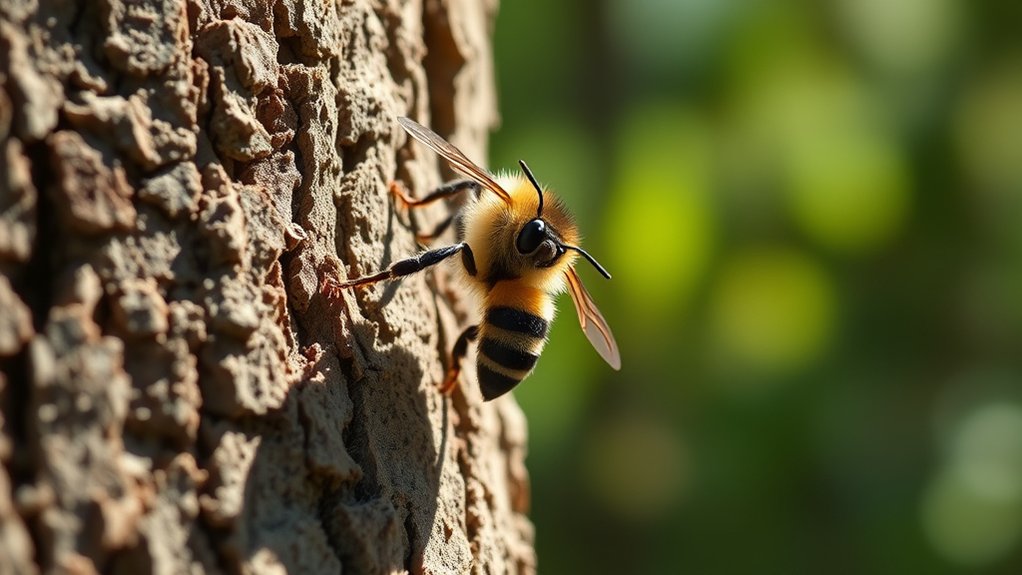
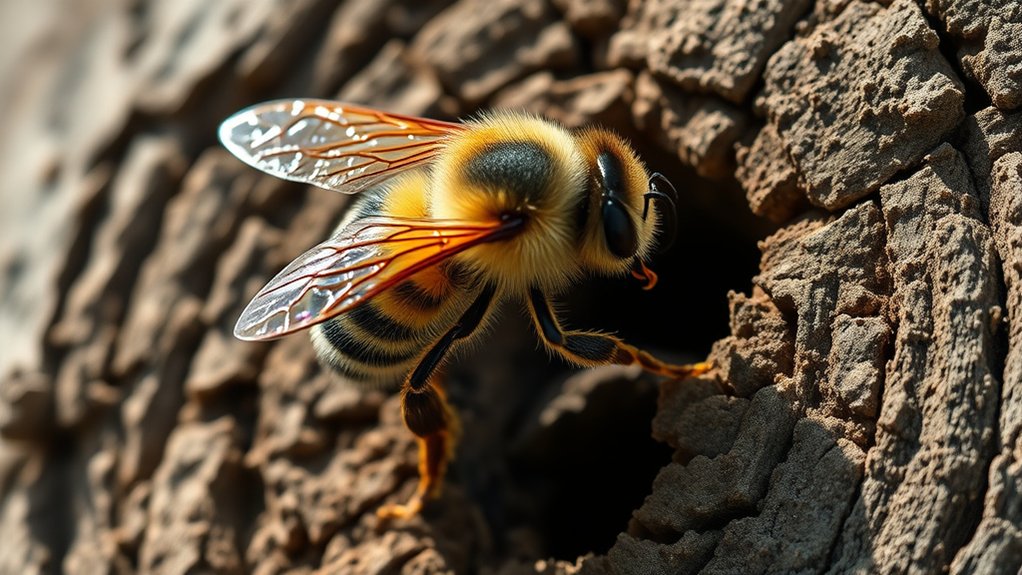
Wood bees, often called carpenter bees, are large solitary insects that bore into wood to create nests. These carpenter bees prefer untreated wood, especially softwoods like pine and cedar, where they drill round holes about half an inch wide.
You’ll often notice sawdust piles near these holes, a sign of their nesting activity.
While female carpenter bees can sting if provoked, males cannot, though they display defensive aggression. Carpenter bees play an important role as pollinators, contributing to the health of flowering plants and vegetable gardens.
Female carpenter bees can sting, males cannot, yet both protect themselves while aiding pollination in gardens.
However, their boring can lead to structural damage over time, weakening wooden surfaces.
Their life cycle includes egg, larval, pupal, and adult stages. Adults often remain in their galleries before mating and dispersing in spring.
Which Wood Bees Sting and When?
Although female carpenter bees can sting, they rarely do so unless provoked or threatened. You should know that female carpenter bees have a smooth stinger, which means they can sting multiple times, unlike honeybees. Carpenter bee stings usually cause swelling and redness but are generally less intense than stings from wasps or honeybees.
Male carpenter bees might hover aggressively near nests, but they’re harmless since they don’t have stingers. Most stinging happens when a bee is accidentally trapped or squeezed, so it’s important to be careful around them.
If you avoid provoking female carpenter bees, the risk of getting stung is pretty low. Knowing which wood bees sting and when helps you handle encounters safely and reduces unnecessary fear of these mostly non-aggressive insects.
Just treat them with respect, and they won’t bother you much.
Are Wood Bees Dangerous?
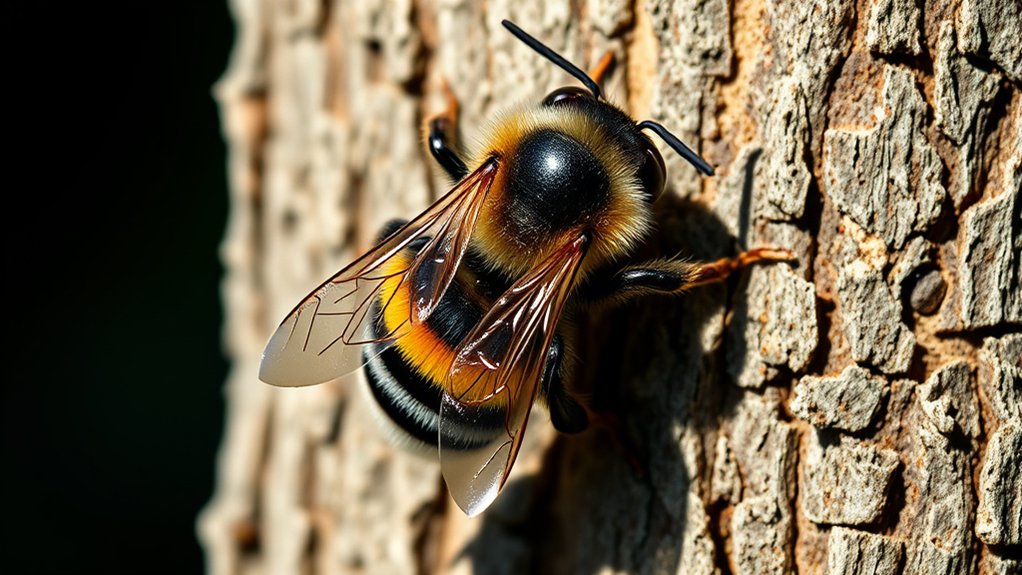
Understanding when and why carpenter bees sting sets the stage for evaluating their overall danger. Carpenter bees are generally non-dangerous wood-boring insects that sting only when provoked.
Female carpenter bees can sting, but their stings are usually less intense than those of honeybees or wasps. Male carpenter bees exhibit aggressive behavior by hovering and buzzing near threats but can’t sting.
Female carpenter bees can sting mildly; males buzz aggressively but lack stingers.
While female stings may cause pain, allergic reactions are rare. Still, it’s wise to be cautious if you have sensitivities.
Carpenter bees can cause structural damage by tunneling into wood, but they also contribute notably to pollination and ecosystem health.
How Does a Wood Bee Sting Feel?
How does a sting from a carpenter bee compare to other bee stings? When threatened, female carpenter bees can sting multiple times because their stingers are smooth. This is different from honeybees, which sting only once.
The sting causes localized pain, swelling, and redness at the sting site. But usually, the pain isn’t as intense as with honeybee or wasp stings. Plus, carpenter bees rarely sting since they tend to avoid confrontation.
Here are some key points about carpenter bee stings:
- They mostly happen when the bee feels threatened.
- Their smooth stingers let them sting more than once without losing it.
- You can expect localized pain and swelling as common symptoms.
Usually, the discomfort is mild to moderate compared to other stings. Any immediate reaction typically stays at the sting site, and systemic effects are rare.
Knowing these facts helps you understand the risk and what to expect if you do get stung by a carpenter bee.
How to Treat a Wood Bee Sting
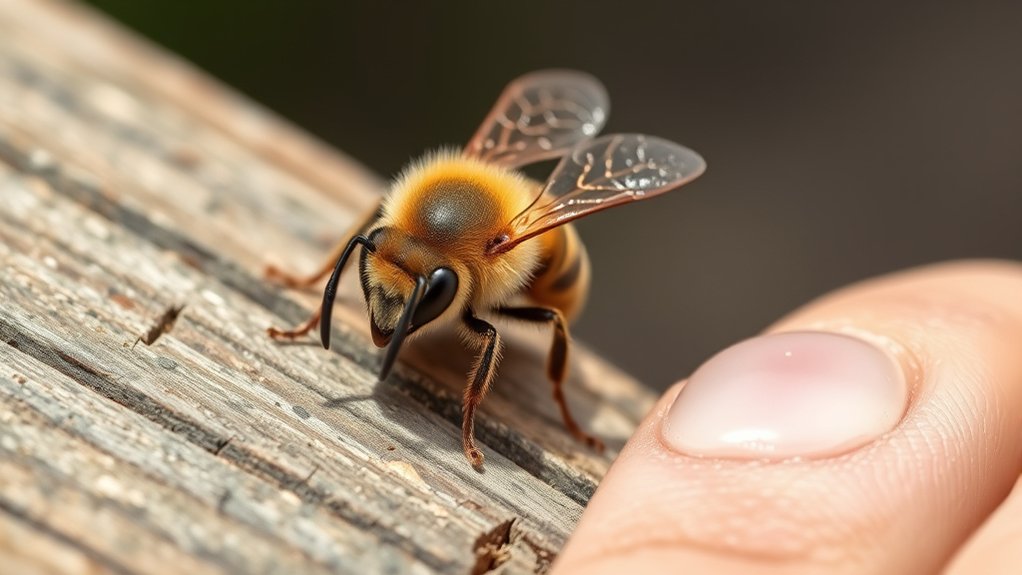
If you get stung by a female carpenter bee, the first thing you should do is clean the area with soap and water. This helps lower the risk of infection.
Then, you can apply a cold compress to the sting site to reduce swelling and ease any pain you might be feeling.
If the pain is bothering you, over-the-counter pain relievers can help.
Just keep an eye on how you’re feeling — if you notice any severe allergic reactions or if your symptoms get worse, it’s important to seek medical help right away.
Immediate Sting Care
Although female carpenter bees rarely sting unless provoked, knowing how to treat their stings promptly can minimize pain and prevent complications.
Immediate sting care focuses on preventing infection and managing symptoms effectively. First, clean the affected area thoroughly with soap and water to remove any bacteria.
Then, apply a cold compress to reduce pain and swelling. Over-the-counter pain relievers like ibuprofen or acetaminophen help alleviate discomfort.
Keep an eye out for signs of severe allergic reactions, such as difficulty breathing or extensive swelling. If you notice these, get medical help right away.
- Clean the sting site with soap and water
- Use a cold compress to reduce pain and swelling
- Take over-the-counter pain medication for discomfort
- Avoid scratching to prevent infection
- Seek medical help if allergic reactions develop
Reducing Swelling Pain
When you get stung by a wood bee, promptly cleaning the area with soap and water helps prevent infection and speeds healing.
To aid in reducing swelling and discomfort, apply a cold compress to the sting area for 10 to 15 minutes. This constricts blood vessels, minimizing inflammation and pain.
Over-the-counter pain relievers like ibuprofen or acetaminophen can further alleviate discomfort.
It’s important to monitor the sting site closely for signs of severe allergic reactions, such as difficulty breathing or swelling extending beyond the sting area.
If you notice persistent or worsening swelling after several days, it’s a good idea to consult a healthcare provider for further evaluation.
These steps help make sure you manage symptoms properly and support the best healing after a wood bee sting.
When To Seek Help
Because wood bee stings can vary in severity, you should promptly assess your symptoms to determine whether professional medical care is necessary.
If stung by carpenter bees, carefully remove the stinger if present and clean the area with soap and water to minimize infection risk. Apply a cold compress to reduce swelling and discomfort.
Use over-the-counter pain relievers as needed.
However, seek help and medical attention immediately if you experience difficulty breathing or tightness in the chest, swelling extending beyond the sting site, severe or persistent pain and swelling, signs of infection such as redness or pus, or worsening symptoms despite home treatment.
Getting prompt evaluation guarantees proper management and helps reduce complications from a carpenter bee sting.
How to Identify Wood Bee Activity Around Your Home
You can spot wood bee activity by checking wooden structures for perfectly round holes about half an inch wide.
Keep an eye out for nearby piles of sawdust too—they’re a big clue. Also, watch the bees themselves. If you see shiny black bees hovering around wood surfaces, especially in spring, that’s a good sign something’s going on.
Another thing to look for is yellow stains on the wood. These often show up because of bee waste and usually indicate an infestation.
Signs Of Wood Damage
Detecting carpenter bee activity early is essential to protect your home’s wooden structures. You should inspect for signs such as perfectly round holes about 1/2 inch in diameter and sawdust piles (frass) near these entry points.
Yellow stains on wood surfaces may also indicate nesting behavior. If left unchecked, tunnels can extend over 3 feet, causing serious structural damage.
Woodpecker activity near infested areas is another indicator, as they prey on carpenter bees inside the wood. Early intervention during spring months helps prevent cosmetic issues from escalating.
- Perfectly round holes on wooden surfaces
- Accumulations of sawdust piles near holes
- Yellow discoloration from bee waste
- Presence of woodpeckers around infested areas
- Visible tunnels causing structural damage
Regular inspection is critical to mitigate wood damage effectively. Keep an eye out, and you’ll catch problems before they get worse.
Bee Flight Patterns
When wood bees, especially carpenter bees, are active around your home, their flight patterns provide clear clues to their presence. You’ll notice carpenter bees hovering around wood surfaces, especially unpainted wood, where they establish nesting activity. Males buzz aggressively near round holes about 1/2 inch wide, signaling territory, while females focus on tunneling.
Look for frass, small sawdust piles, beneath these holes as evidence. These bees sting unless provoked, so observe from a safe distance. Flight activity peaks from spring to early summer, a critical time to monitor.
| Observation | Description | Significance |
|---|---|---|
| Hovering around wood | Males buzz aggressively near holes | Indicates nesting activity |
| Round holes | About 1/2 inch wide, in unpainted wood | Entry points for tunnels |
| Frass | Sawdust below holes | Evidence of tunneling |
| Flight activity | Most active in spring to early summer | Peak nesting period |
How to Prevent and Manage Wood Bee Infestations
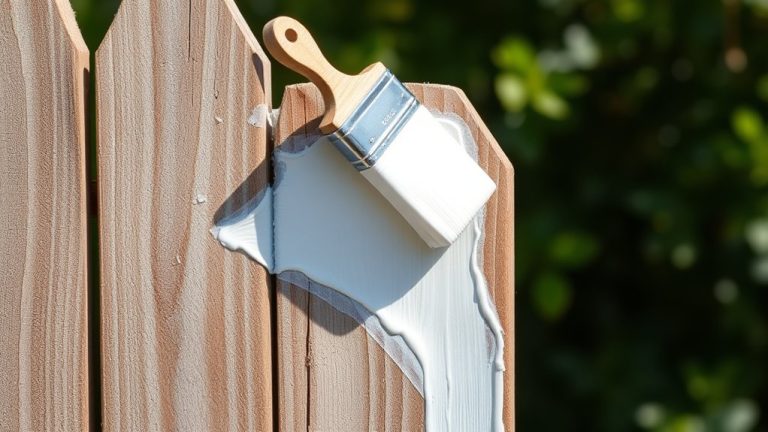
Although wood bees can cause significant damage, you can effectively prevent and manage infestations by treating exposed wood with oil-based paint or polyurethane. This helps deter their nesting.
To prevent carpenter bees, focus on protecting untreated wood and regularly check for early signs of damage, like round holes and sawdust. If you spot an infestation, it’s better to consider professional treatments rather than relying solely on DIY sprays. A pest control company can apply borate or pyrethrin dust for better control.
Remember, carpenter bees sting only when provoked, but managing wood bee infestations promptly protects your property.
- Apply paint or varnish to all exposed wood surfaces
- Seal cracks and end-grain with metal flashing and caulk
- Inspect wooden structures from April to June
- Monitor for signs of damage regularly
- Engage professional treatments for persistent infestations
Frequently Asked Questions
Do Wood Bees Pollinate Flowers Effectively?
You’ll find wood bees pollinate flowers effectively due to their specific flower preferences and distinct pollination patterns.
Their habitat influences the nectar sources and flower types they visit. Plus, their seasonal activity guarantees timely pollination.
Bee behavior, like solitary foraging, helps minimize competition with other pollinators.
This ecological role supports diverse plant reproduction.
How Long Do Wood Bees Live?
Like a fleeting shadow at dusk, the wood bee lifespan lasts about one year. You’ll find wood bees nesting in wooden habitats, where their behavior centers on reproduction and provisioning.
Their lifecycle progresses through egg, larval, pupal, and adult stages in roughly seven weeks.
Understanding wood bee identification helps you track their nesting habits and watch for predators. Unlike migratory insects, wood bees stay local, focusing on their habitat year-round.
What Do Wood Bees Eat Besides Wood?
You’ll find wood bees primarily eat nectar and pollen from diverse pollen sources, reflecting their nectar preferences. Their foraging behavior targets flowers with large, open structures. This is influenced by environmental factors and competition.
Besides wood as nesting materials, their food sources vary seasonally. They adapt to habitat requirements throughout the year. Understanding these seasonal diets helps explain their role in pollination.
It also shows how environmental influences and competition shape their feeding ecology and survival strategies.
Can Wood Bees Damage Wooden Furniture Indoors?
Yes, wood bees can cause wood damage to your wooden furniture indoors by tunneling through various wood types. You’ll notice infestation signs like sawdust piles near holes.
Without prompt furniture repair and pest control, these tunnels can lead to serious long-term effects on your indoor habitats.
Treatment options include professional extermination and prevention methods such as sealing wood surfaces.
Acting quickly helps protect your furniture from extensive damage. So, if you spot any signs, don’t wait—take action right away!
Are Wood Bees Attracted to Certain Types of Wood?
You’ll find wood bees showing clear wood preferences, favoring softwoods like pine and cedar because they’re easier to excavate. This matches up with their nesting habits perfectly. They really go for those types of wood.
Their seasonal activity and habitat choices mostly revolve around these softwoods. Lifespan and mating behaviors play a part in where and when they’re active. It all ties together with their preference for certain woods.
Pheromone signals help them mark their territory, which is pretty interesting. At the same time, predation risks influence how they impact their environment.
Knowing all this can help you manage wood bees better around your home or garden.
Conclusion
Understanding wood bees is like decoding nature’s quiet architects. While some can sting, they rarely pose a serious threat unless provoked. Their presence signals a thriving ecosystem.
That said, you’ll want to manage their activity carefully to protect your home. By recognizing their behavior and knowing how to treat stings, you’re equipped to coexist safely.
Think of wood bees as both a natural wonder and a reminder to respect the delicate balance around you.