Can You Put Ice Melt On Wood Deck: Damage Risks
You can put ice melt on your wood deck, but you need to choose carefully to avoid damage. Avoid rock salt, urea-based products, and those with dyes. They can stain, weaken the wood, and corrode metal fasteners.
Instead, go for pet-friendly, non-corrosive options like calcium chloride or calcium magnesium acetate. Always rinse off any residue after use. It’s also a good idea to consider mechanical removal first, like shoveling or sweeping.
Taking these steps helps protect your deck’s integrity and safety. Keep exploring to find the best ways to maintain your deck through winter.
Traditional Ice Melt Damage to Wood Decks
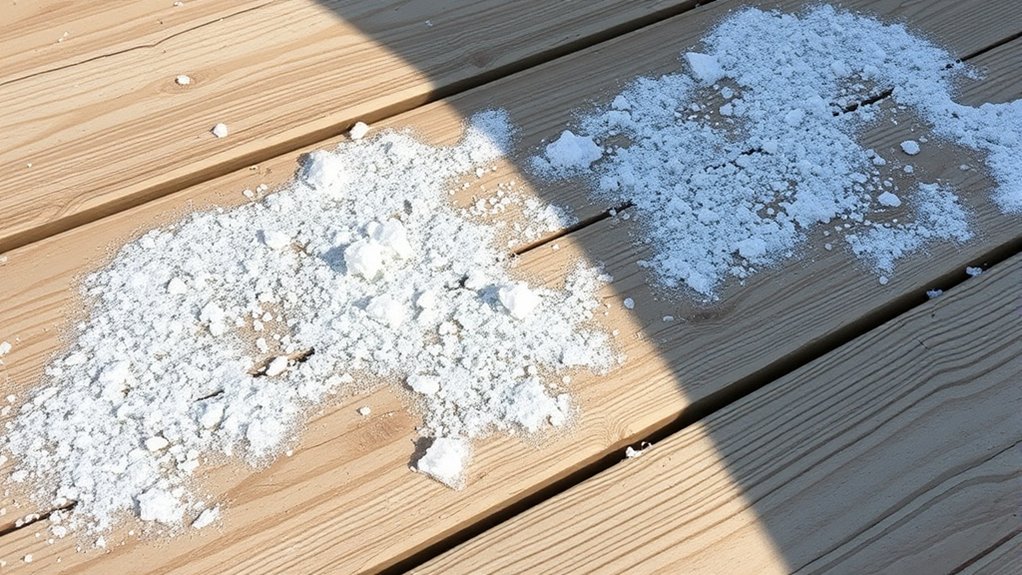
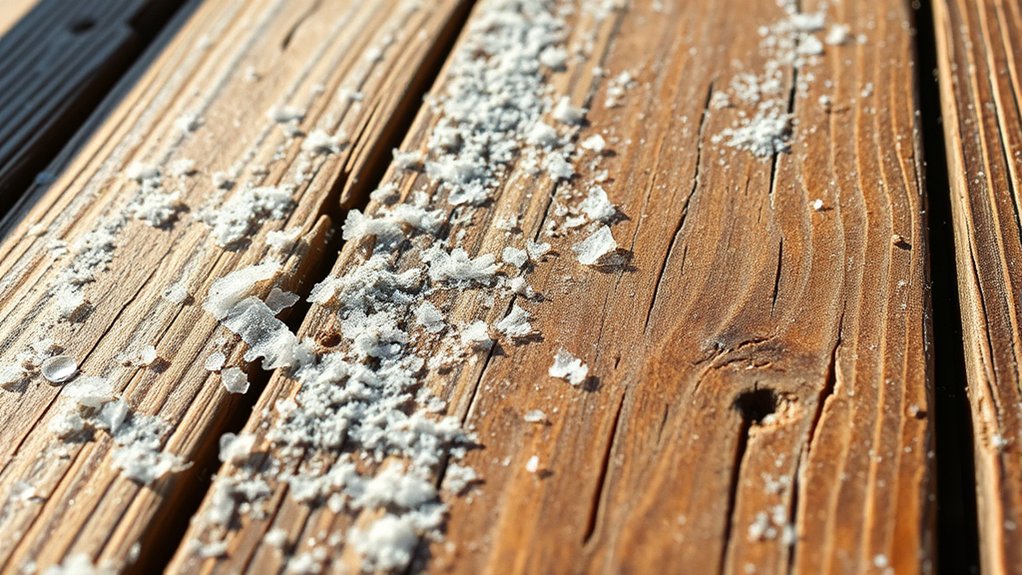
Although traditional ice melts might seem like a quick fix for slippery wood decks, they can actually cause serious damage over time. Many traditional ice melts contain sodium chloride, which dehydrates the wood, weakening its structure and leading to cracks or warping.
Traditional ice melts with sodium chloride dry out wood decks, causing cracks and warping over time.
When you use these products, you risk surface damage that not only affects the deck’s look with unsightly stains and discoloration but also shortens its lifespan.
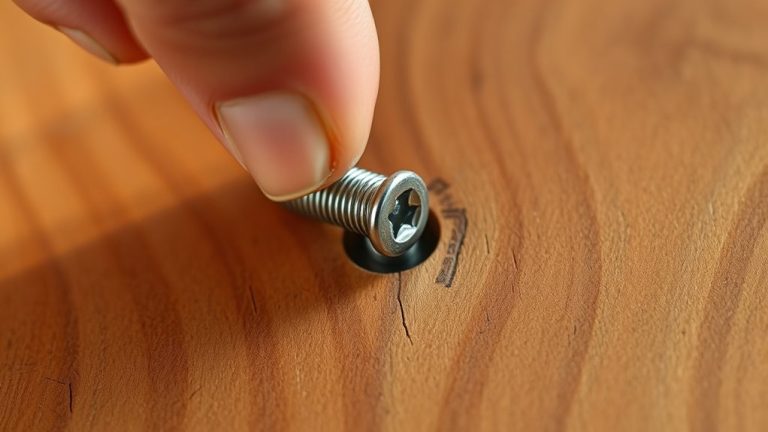
Plus, sodium chloride speeds up corrosion of metal fasteners, which compromises your deck’s stability.
Repeated applications mean more maintenance, making you spend extra time and money on repairs.
Safe Ice Melt Ingredients for Wood Decking
You’ll want to choose ice melt products that are pet-friendly and non-corrosive to protect both your wood deck and your furry friends.
It’s really important to pick something that won’t cause damage. Look for environmentally safe options like calcium chloride, magnesium chloride, or calcium magnesium acetate.
These ingredients do a great job preventing damage while keeping your deck safe and intact through the winter months.
Pet-Friendly Ice Melts
When protecting your wood deck from ice, choosing pet-friendly ice melts like calcium magnesium acetate (CMA) and magnesium chloride can keep both your decking and furry friends safe. These options reduce corrosion and staining risks common with traditional salts. Avoid ice melts with dyes to prevent permanent stains on lighter wood.
For effective deck maintenance, rinse the deck after application to remove residue.
| Ice Melt Type | Benefits |
|---|---|
| Calcium Magnesium Acetate (CMA) | Safe on wood and pets |
| Magnesium Chloride | Effective at low temperatures |
| Calcium Chloride | Pet-safe, gentle on wood |
| Magnesium Pellets | Less corrosive, pet-friendly |
| Dye-Free Options | Prevent staining on light wood |
Choose wisely to protect your deck and pets this winter.
Non-Corrosive Ingredients
Because wood decks are particularly vulnerable to damage from harsh chemicals, choosing ice melt products with non-corrosive ingredients is essential for their care. Non-corrosive ice melts, like calcium magnesium acetate (CMA) and magnesium chloride, provide effective melting power while minimizing damage to wood and composite decks.
Unlike traditional rock salt, these ingredients reduce corrosion and prevent staining, keeping your deck looking its best. When selecting ice melts, avoid those with dyes or colorants to prevent unsightly marks. Many pet-friendly ice melts also use non-corrosive formulas, making them safer choices.
To further protect your deck, rinse it regularly after applying ice melt to remove any residue.
Environmentally Safe Options
Choosing ice melt products with non-corrosive ingredients helps protect your wood deck, but it’s equally important to think about environmental safety. You’ll want to go for environmentally friendly options like Calcium Magnesium Acetate (CMA), which is safe for wood decking and gentle on surrounding vegetation.
CMA biodegrades quickly and minimizes corrosion, so it helps preserve your deck’s integrity.
Another great choice is Magnesium Chloride. It works efficiently at low temperatures and causes less damage to wood than traditional salts.
While Potassium Chloride is kinder to plants, it only works above 24°F, so you’ll want to use it cautiously.
Also, avoid ice melts that contain dyes or colorants because they can stain your wood deck.
Ice Melt Products to Avoid on Wood Decks
Although ice melt products can help keep your wood deck safe during winter, some can cause more harm than good. You should avoid rock salt, as it dehydrates wood, causes staining, and damages deck construction over time.
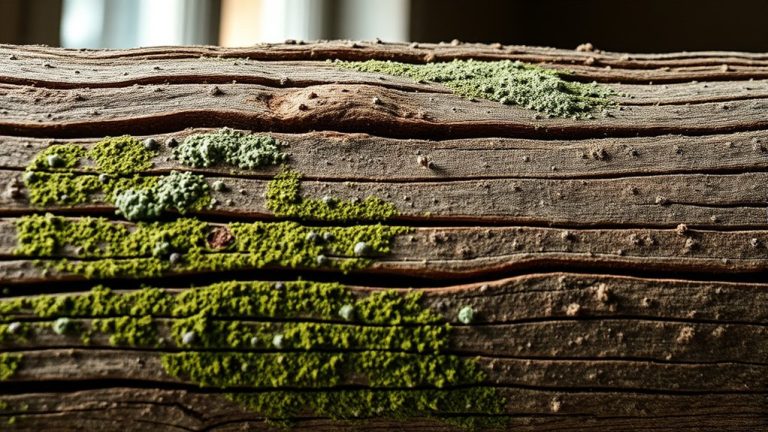
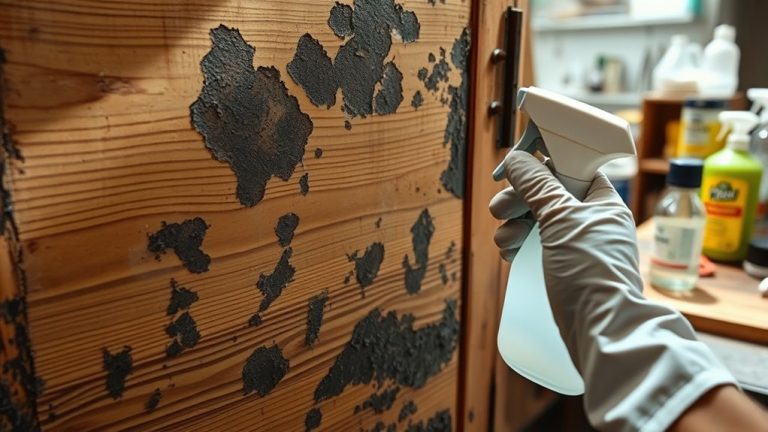
Urea-based ice melts aren’t safe either; they increase moisture retention, encouraging mold growth and speeding up deterioration. De-icers with dyes or colorants can leave permanent stains, ruining your deck’s appearance.
Sand might improve traction but scratches the wood surface, leading to costly maintenance. Granular ice melts containing harsh chemicals can also leach into metal fasteners, causing corrosion and weakening your deck’s structural integrity.
To protect your deck, always choose an ice melt safe for wood and avoid products that compromise its durability and look. It’s better to be cautious and keep your deck looking great all winter long.
How to Safely Apply Ice Melt on Your Wood Deck
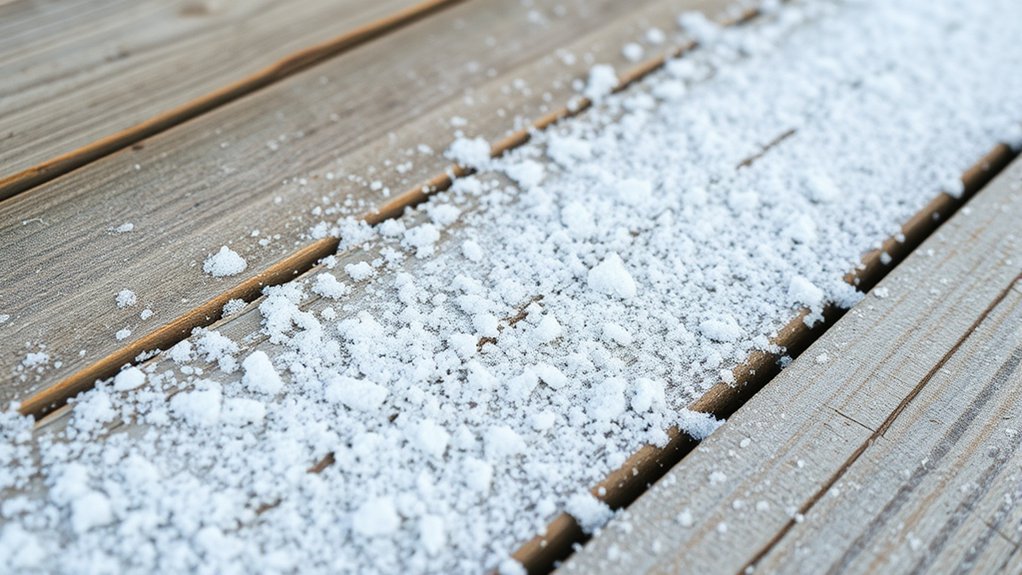
When you prepare to apply ice melt on your wood deck, start by sweeping away any snow. This helps the product work more effectively and protects the wood surface. It’s a simple first step that makes a big difference.
Choose ice melts containing calcium chloride. These are safer for wood and composite decking. They meet your deck needs without causing excessive moisture retention.
Apply the ice melt evenly and sparingly. This avoids staining and guarantees consistent coverage.
After applying, promptly remove any slush to prevent refreezing and reduce slip hazards.
Once winter passes, rinse your deck thoroughly. This washes away residual chemicals that could damage the wood over time.
Safe Alternatives to Chemical Ice Melts for Wood Decks
If you’re concerned about the potential damage chemical ice melts can cause to your wood deck, there are several safer alternatives you can use.
Calcium Magnesium Acetate (CMA) is an ice melter that’s gentle on wood and composite decks, reducing corrosion and environmental harm. Magnesium chloride is another effective option that works well in colder temperatures without damaging your deck.
For added traction, you can apply sand carefully, but remember to clean it up to avoid scratches.
Household solutions like vinegar or sugar water offer natural, pet-safe de-icing without harming wood surfaces.
Finally, mechanical removal using plastic shovels or brooms is the safest way to clear ice while protecting your deck’s finish.
These alternatives help you maintain safety without risking deck damage.
How Wood and Composite Decks React to Ice Melt
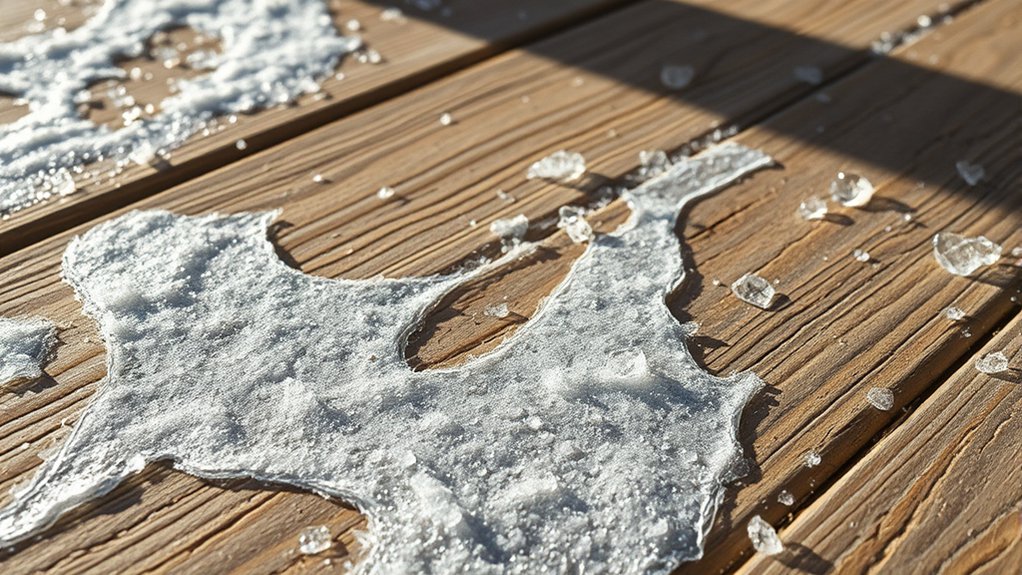
Because ice melt products often contain harsh chemicals like sodium chloride, they can cause significant damage to both wood and composite decks over time.
When you apply ice melt, here’s what can happen:
Wood decks absorb moisture drawn by salts, causing swelling, cracking, and warping.
Moisture absorbed by wood decks from salts leads to swelling, cracking, and warping over time.
Composite decks may show surface discoloration and fading, especially from prolonged exposure.
Repeated use of harsh ice melts weakens wood fibers, reducing deck lifespan.
Metal fasteners and components on both deck types can corrode, risking structural integrity.
To reduce damage, opt for ice melt products containing magnesium chloride or calcium chloride, which are gentler on wood and composite surfaces.
Using the right product helps you protect your deck while safely managing ice buildup.
Maintaining and Repairing Your Deck After Winter
After winter’s harsh conditions, you should inspect your wood deck carefully for signs of wear and moisture damage. Look for cracks, splintering, or areas where chloride from ice melt products may have settled.
Promptly clean any salt or chemical residues to prevent long-term damage and preserve your deck’s appearance.
If you spot damage, don’t delay repair. Water infiltration can worsen the problem quickly, so it’s best to act sooner rather than later.
Re-sealing your deck every few years is essential to protect it from moisture and harsh chemicals.
When in doubt, consult professional deck builders for tailored advice and repairs suited to your deck’s material and condition.
Taking these steps guarantees your deck stays safe and attractive year-round.
Frequently Asked Questions
How Long Does It Take for Ice Melt Damage to Appear on Wood Decks?
You’ll usually see ice melt damage on your wood deck within a few weeks, especially if the ice melt composition includes harsh salts.
Repeated exposure during winter weather can cause swelling, cracking, and discoloration fast.
To protect your deck, incorporate regular wood deck maintenance.
Also, consider winter weather precautions like using alternative de-icing methods, such as sand or calcium magnesium acetate.
These options can help you avoid accelerated damage and prolong your deck’s life.
Can Ice Melt Affect the Color or Stain of My Wood Deck?
Absolutely, ice melt can wreak havoc on your wood deck’s color and stain! It speeds up color fading and stain deterioration, making your deck look old before its time.
Ice melt chemicals penetrate the wood grain, increasing moisture absorption, which further damages the finish.
To protect your deck, pick dye-free products and rinse thoroughly after use. This way, you’ll keep your wood looking vibrant and sturdy despite winter’s bite.
It’s really all about giving your deck the care it needs to survive the cold months without losing its charm.
Is There a Difference in Ice Melt Effects Between Hardwood and Softwood Decks?
Yes, there’s a clear difference between hardwood durability and softwood sensitivity when it comes to ice melt.
Hardwoods resist moisture absorption better, so they handle ice melt with fewer long-term effects.
Softwoods, however, absorb moisture more easily and are more vulnerable to damage from harsh chemicals in ice melt. This weakens their structure over time.
You’ll want to choose ice melts carefully and maintain softwood decks more often to prevent lasting harm.
Does Using a Snow Shovel Reduce the Need for Ice Melt on Decks?
Yes, using proper snow removal techniques like shoveling can reduce the need for ice melt on your deck. By clearing snow promptly, you prevent ice buildup, which means you won’t have to rely as much on alternative de-icing methods.
This approach supports effective deck maintenance tips and promotes winter safety by minimizing slippery surfaces.
Plus, incorporating regular snow removal into your routine helps protect your wood deck’s finish and structure.
It also reduces your exposure to chemicals that come with ice melt products.
Are Pet-Safe Ice Melts Also Safe for Wood Decking?
Yes, pet safe alternatives are generally safer for wood decking, but you should still use them carefully. These products help with winter maintenance while minimizing harsh chemical reactions that can damage wood.
To protect your deck’s wood preservation, apply ice melt sparingly and evenly, then rinse it off when possible. This approach reduces moisture buildup and prevents swelling or cracking.
Doing this keeps your deck in good shape throughout winter. It’s a simple way to care for your wood while keeping your pets safe at the same time.
Conclusion
Think of your wood deck as a delicate garden in winter. It needs careful care to stay healthy. Using the right ice melt prevents damage, while avoiding harsh chemicals keeps your deck strong and beautiful.
Apply safe products sparingly, and consider natural alternatives to protect your investment. With mindful maintenance, your deck will weather the cold without losing its charm. It’ll be ready to welcome you back when spring arrives.