Where Can I Rent A Wood Chipper: Rental Guide Explained
You can rent a wood chipper from local equipment rental shops, major retailers like Home Depot and Lowe’s, or independent rental companies with competitive rates and flexible terms. Prices typically range from $70 to $500 daily, depending on size and features.
Be sure to check availability ahead and understand rental agreements, including delivery fees and deposits. Choosing the right model and preparing with safety gear are key.
Explore more to make the best rental choice for your project.
Wood Chipper Rental Prices: What to Expect
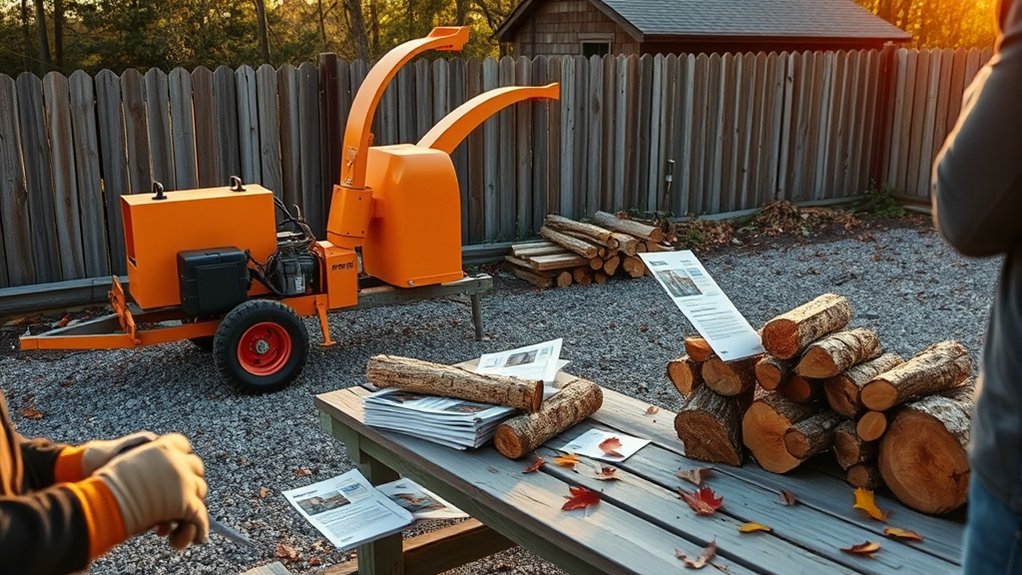
Wondering how much it will cost to rent a wood chipper? Wood chipper rental prices vary widely depending on the size and features you need. Small chippers typically range from $70 to $150 per day.
For example, a 2-inch capacity chipper rental for four hours costs about $67 in the Midwest and slightly more, $69, in Norristown, PA.
Larger models can run between $200 and $500 daily. Extended rentals can reach $400 to $1,200 depending on specifications.
Don’t forget delivery fees, which usually average around $69 one way and can add to your total.
Also, watch for extra charges like insurance, accessories, and maintenance responsibilities. Knowing these factors helps you budget smartly when planning your wood chipper rental.
Where to Find Wood Chipper Rentals Near You
You can find wood chipper rentals at local equipment rental shops and major retailers like Home Depot or Lowe’s.
They usually offer a range of sizes to fit whatever project you have in mind.
It’s a good idea to check availability ahead of time, especially during busy seasons, so you’re sure the equipment you need will be ready when you are.
Also, don’t forget to compare options nearby to find the best price and flexible rental terms.
Local Rental Providers
Finding local rental providers for wood chippers is easier than you might think, with several convenient options available to suit your project needs. You can rent from home improvement stores like Home Depot or Lowe’s, independent rental companies, or online platforms that compare prices nearby.
Renting a wood chipper typically ranges from $67 for 4 hours to $200 for a full day, depending on size and provider. Delivery services are often available for an extra fee, adding convenience.
Here’s a quick overview:
| Provider Type | Price Range |
|---|---|
| Home Improvement Stores | $67 – $200/day |
| Independent Rentals | Around $130/4 hours |
| Online Platforms | Varies, compare rates |
| Delivery Service | About $69 one way |
Explore these local rental providers to find the best fit for your project.
Equipment Availability Options
Local rental providers offer a solid starting point when looking for wood chipper rentals, but knowing where to check for equipment availability can save you time and hassle.
You can rent or buy from local home improvement stores like Home Depot and Lowe’s, which usually have small chippers available for daily rates between $67 and $150.
For larger models or specialized needs, specialty rental companies often provide a broader selection at competitive prices.
Online rental platforms make it easy to compare equipment availability and prices across multiple providers, helping you find the best fit quickly.
Remember, many rentals require advance booking, especially during peak seasons.
How to Choose the Right Wood Chipper for Your Yard
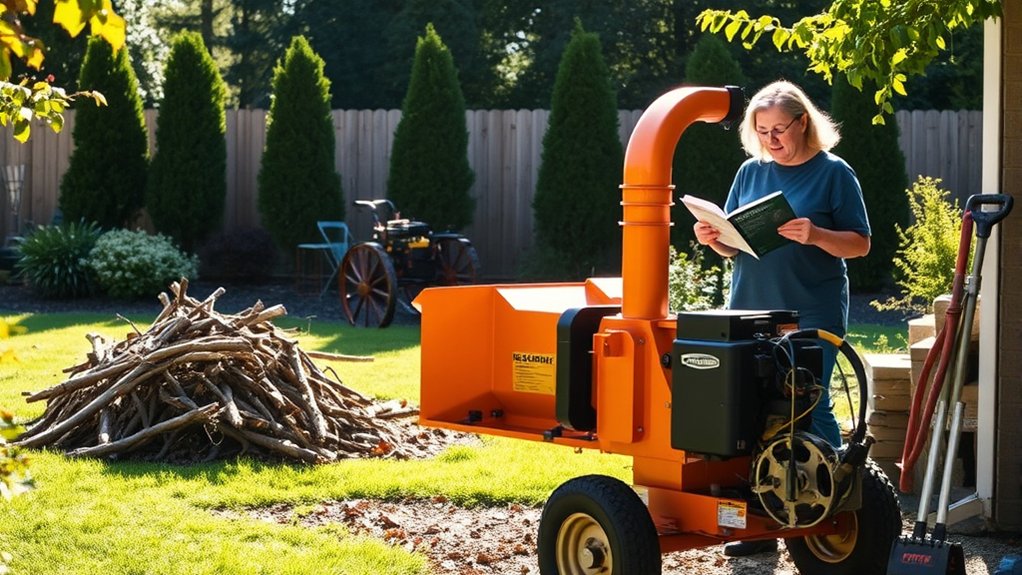
How exactly do you determine which wood chipper suits your yard’s needs best? Start by considering the throat size. The larger it is, the bigger branches you can chip without constant cutting.
Next, check the reduction ratio. A higher ratio, like 10:1, means the chipper processes material more efficiently. This lets you handle more debris faster.
Also, think about engine displacement to guarantee the chipper has enough power for your yard’s workload. Look for features like self-feeding mechanisms and safety enhancements that make operation easier and safer. This is especially helpful if you’re not used to heavy equipment.
Gas vs. Electric Wood Chipper Rentals: Which Is Best?
Once you’ve identified the right wood chipper size and power for your yard, the next step is choosing between gas and electric models.
A gas wood chipper offers more power and mobility, making it ideal for larger, tougher jobs. However, it requires regular maintenance like oil changes and fuel management.
On the other hand, electric chippers are quieter, cleaner, and easier to operate with features like self-feeding mechanisms. They produce no emissions, which is better for the environment, especially in residential areas.
Keep in mind, electric models are limited by cord length or battery life, so they suit smaller tasks.
Rental costs reflect these differences. Gas wood chipper rentals typically cost more, ranging from $70 to $150 per day, while electric chippers usually come at a lower price.
Consider your job size and convenience when deciding.
Rental Terms and Extra Fees Explained
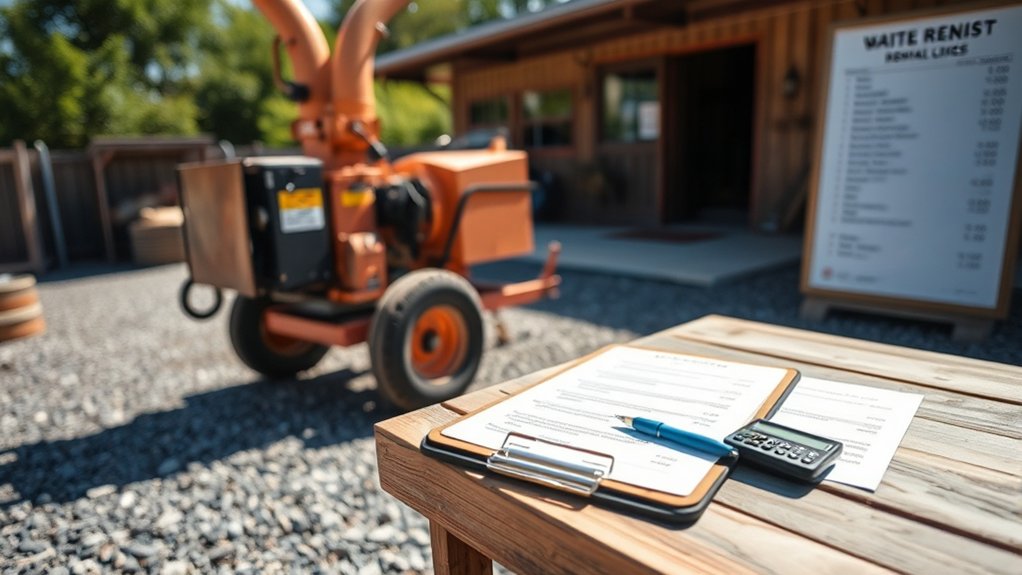
Although renting a wood chipper seems straightforward, you’ll want to carefully review the rental terms and extra fees before signing any contract.
Rental contracts usually specify your responsibilities, including upkeep and potential charges for damage or excessive wear.
Be aware that extra fees often include delivery costs, typically around $69 one way. These can add up if the rental location is far.
Some companies also require a deposit, a percentage of the rental cost, to secure the equipment.
Insurance options may be offered to cover damage or theft, but they can increase your total expense.
Also, don’t forget about fees for accessories like safety gear or extra fuel.
Understanding these factors helps you budget accurately and avoid surprises during your wood chipper rental.
It’s always better to know what you’re getting into before you sign on the dotted line.
How to Reserve and Pick Up Your Wood Chipper
Before you reserve your wood chipper, it’s important to check availability with local rental companies or big-box stores like Home Depot. Many places let you rent a wood chipper online, making it easy to secure your equipment for the dates you need.
Check availability at local rental shops or Home Depot before reserving your wood chipper online.
When arranging delivery and pickup, confirm any fees and scheduling details upfront to avoid surprises.
On pickup day, bring a valid ID, proof of payment, and any required documents.
Before leaving, inspect the chipper for damage and familiarize yourself with its operation and safety features. This helps guarantee smooth use and prevents liability issues.
Following these steps will make reserving and picking up your wood chipper straightforward and hassle-free.
Safety Gear and Preparation Before Using a Rental Chipper
After picking up your wood chipper and checking its condition, gearing up properly is key to working safely. Always wear essential safety gear like safety glasses and thick gloves to shield yourself from flying debris and sharp edges during operation.
Sturdy footwear is a must to prevent slips and protect your feet, while ear protection helps guard against the chipper’s loud noise.
Before starting, familiarize yourself with the chipper’s manual and safety features, especially emergency shut-off options, to guarantee you handle the machine correctly.
Inspect the chipper thoroughly for damage or malfunctions to assure safe operation.
Finally, plan ahead to have someone assist you, particularly if older individuals are involved, to maintain safety during loading and operation. It’s always better to have an extra pair of hands around when working with heavy equipment like this.
Should You Rent or Buy a Wood Chipper?
You’ll want to weigh the rental cost benefits against the advantages of owning a wood chipper before making a decision.
If you only need it occasionally, renting can save you money and hassle.
But if you’re planning to use it frequently, buying might actually be more economical.
Think about how often you’ll use the chipper to figure out which option fits your needs and budget best.
Rental Cost Benefits
Though purchasing a wood chipper might seem like a long-term investment, renting often proves more cost-effective for short-term projects. Rental cost varies by model size and duration, making it ideal if you only need the chipper occasionally. Renting also covers maintenance and repairs, saving you unexpected expenses.
| Rental Duration | Cost Range | Notes |
|---|---|---|
| Small model (daily) | $70 – $150 | Ideal for quick jobs |
| Large model (daily) | $200 – $500 | Suitable for heavy-duty tasks |
| Extended rental | $400 – $1,200 | Includes maintenance |
| Additional fees | Varies | Delivery, insurance, accessories |
Understanding these costs helps you decide whether renting or buying a wood chipper fits your budget and needs. It’s worth weighing your options before making a choice.
Long-Term Ownership Advantages
If you use a wood chipper regularly, say 60 to 70% of the time, owning one can save you a significant amount compared to renting. Long-term ownership eliminates daily rental fees, which can add up quickly, especially for larger models.
When you buy a wood chipper, you get immediate access anytime. That means no scheduling hassles and your projects stay on track without waiting around.
Sure, maintenance and repairs become your responsibility, but if you use it consistently, those costs are worth it since they offset rental expenses.
Plus, a well-maintained chipper keeps its resale value, which helps soften the initial investment.
If you often need to chip wood, owning one offers convenience, cost savings, and control that renting just can’t match.
Usage Frequency Considerations
When deciding whether to rent or buy a wood chipper, your usage frequency plays an essential role in making the most cost-effective choice. If you only handle yard waste occasionally, renting is usually smarter. It saves you from the upfront cost and ongoing maintenance that come with ownership.
Rental rates typically range from $70 to $150 per day, with bigger models costing up to $500 daily. Plus, rental agreements often include maintenance, so you won’t have to worry about repairs.
However, if you’re chipping wood 60-70% of the time or more, buying might save you money in the long run by avoiding repeated rental fees.
Think about how often you generate yard waste to decide which option fits your needs best.
Frequently Asked Questions
Can I Get a Wood Chipper Rental for Just a Few Hours?
Yes, you can get a wood chipper rental for just a few hours. Many rental companies offer short term rentals, often starting at 4 hours. This is perfect if you only need the equipment briefly.
Rental costs for these short periods typically range from $67 to $69, depending on your location.
Just make sure to reserve ahead, especially during busy seasons. That way, you can secure availability and avoid any surprises with pricing.
Are There Any Age Restrictions for Renting a Wood Chipper?
About 90% of rental companies enforce strict age requirements, usually setting the minimum at 18 years old.
You’ll need to check each company’s rental policies carefully, as some might allow younger renters with parental consent or adult supervision.
Most places also require a valid ID or driver’s license to verify your age.
What Is the Maximum Branch Diameter the Rental Chipper Can Handle?
The maximum branch diameter you can chip depends on the rental chipper’s specifications. Most rental chippers handle branch sizes from 2 to 6 inches, but some heavy-duty models can manage up to 12 inches.
Always check the chipper specifications before renting to make sure it fits your project.
Don’t forget to review the user manual or rental details for exact branch size limits. That way, you’ll be prepared and safe while working.
Do Rental Companies Provide Training on How to Use the Chipper?
Yes, many rental companies provide training on how to use the chipper. This includes safety precautions and maintenance tips.
They often offer a quick orientation or demonstration to help you operate the machine safely and efficiently.
Some even provide written instructions or online videos.
Don’t hesitate to ask about proper safety gear and operational advice when you rent. It’ll keep you safe and guarantee you get the best performance from the chipper during your project.
Is Insurance Required or Offered for Wood Chipper Rentals?
You’ll likely find insurance happily offered, or even gently encouraged, in rental agreements for wood chippers. This helps keep things smooth if accidents happen and aligns with safety guidelines.
Some companies require it, while others let you waive it if you show your own coverage.
Always read through those rental agreements carefully to understand what’s covered and your responsibilities.
That way, you stay protected and focused on the job without surprises.
Conclusion
Renting a wood chipper can be your secret weapon to turning yard chaos into mulch magic. By knowing where to find reliable rentals, picking the right type, and understanding terms, you’ll breeze through your project like a pro. Just suit up with safety gear and reserve ahead to avoid hiccups.
Whether you rent or buy, you’re one step closer to a tidier, greener yard that’s the envy of the neighborhood.