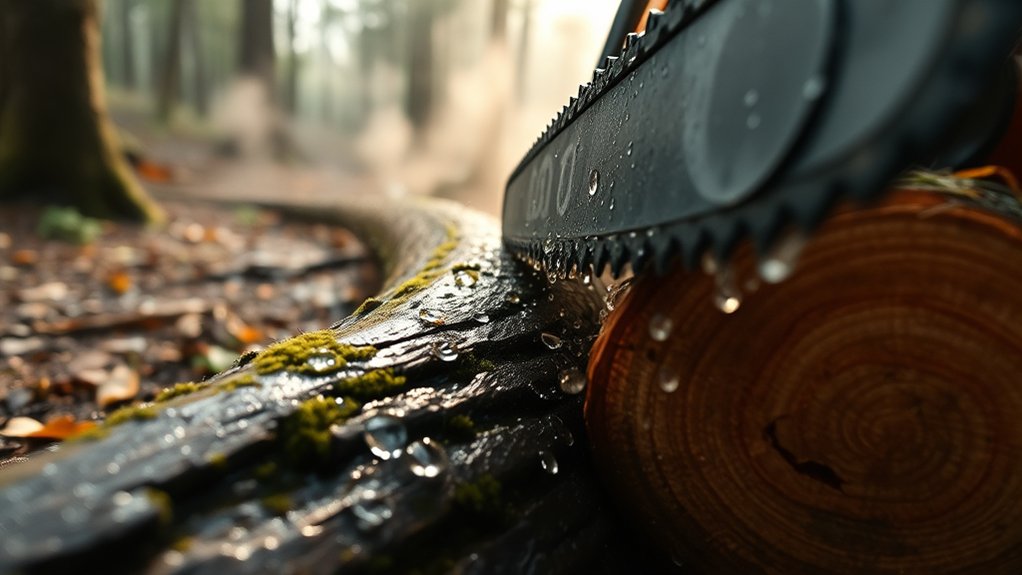
Can You Chainsaw Wet Wood: Safety And Performance Tips
You can safely chainsaw wet wood by using a chainsaw with a 40cc engine or more and a sharp micro chisel chain designed for dense, moist wood. Wear gloves, goggles, and anti-cut clothing. Keep a firm grip and maintain stable footing on slippery surfaces.
Wet wood’s moisture lubricates but can clog your chain’s oil flow, so clean and oil your chainsaw immediately after use. Mastering proper cutting techniques and maintenance will boost safety and performance in wet conditions. Just take your time and be cautious out there!
Can You Cut Wet Wood Safely With a Chainsaw?
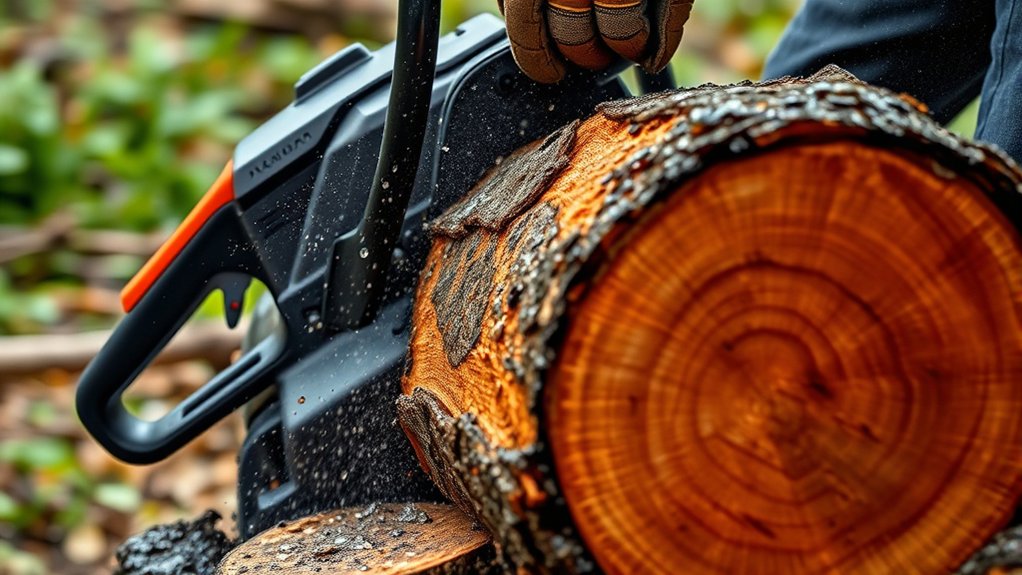
How safely can you cut wet wood with a chainsaw? You can do it safely if you follow essential chainsaw safety practices.
Cutting wet wood in wet conditions means wearing the right personal protective equipment like gloves, goggles, and anti-cut clothing to protect against slips and kickbacks.
Always wear gloves, goggles, and anti-cut clothing to stay safe when cutting wet wood in slippery conditions.
Even though the wood is wet, it often cuts more efficiently because water acts like a natural lubricant. To keep your cutting smooth, make sure your chainsaw has a sharp chain and gets regular maintenance, including proper lubrication to prevent binding.
Avoid using electric chainsaws near standing water—petrol chainsaws work better in wet environments.
Also, watch out for slippery surfaces to keep control and balance. Follow these tips, and you’ll stay safe while getting the job done efficiently.
How Wet Wood Affects Chainsaw Performance
When you cut wet wood, you’ll notice it offers more resistance because of the extra moisture and density. This means your chainsaw has to work harder and use more power.
Plus, the wet sawdust tends to be sticky, which can clog up the chain’s lubrication system. When that happens, oil doesn’t flow as well, and your chain wears out faster.
So, to keep your chainsaw running smoothly, you’ll want to slow down your cutting speed a bit.
It also helps to clean and oil the chain regularly. Doing this prevents too much friction and keeps the chain sharp longer.
Cutting Resistance Differences
Although wet wood contains more moisture, it doesn’t increase cutting resistance compared to dry wood, so you can maintain similar cutting speeds with less effort. The moisture in wet wood acts as a natural lubricant, reducing friction and easing chainsaw cutting performance.
That said, wet wood’s density and weight can demand more power from your chainsaw, so stay aware of your tool’s limits.
Keep these points in mind for ideal safety and maintenance:
- Wet wood produces clumpy sawdust that may obstruct oil flow, impacting lubrication and performance.
- Proper chain lubrication is essential to prevent binding and maintain cutting efficiency.
- Monitor your chainsaw’s response closely, adjusting technique to compensate for wood density differences.
Understanding these differences helps you cut wet wood effectively while ensuring your chainsaw’s longevity and safety.
Lubrication And Chain Wear
Since wet wood contains moisture that acts as a natural lubricant, it doesn’t dull your chainsaw chain faster than dry wood. During wet wood cutting, this moisture reduces friction between the chain and guide bar, improving performance.
However, wet sawdust can clump and block the flow of bar oil, which can increase wear if you don’t address it.
Regular maintenance is really important. Cleaning the chainsaw thoroughly after use helps prevent buildup that messes with lubrication.
Also, keeping the chain tension just right and making sure the chain is sharp are key for efficient cutting and less wear.
It’s also a good idea to slow down your cutting speed when working with wet wood. This helps reduce friction and makes your chain last longer.
Choosing the Right Chainsaw and Chain for Wet Wood
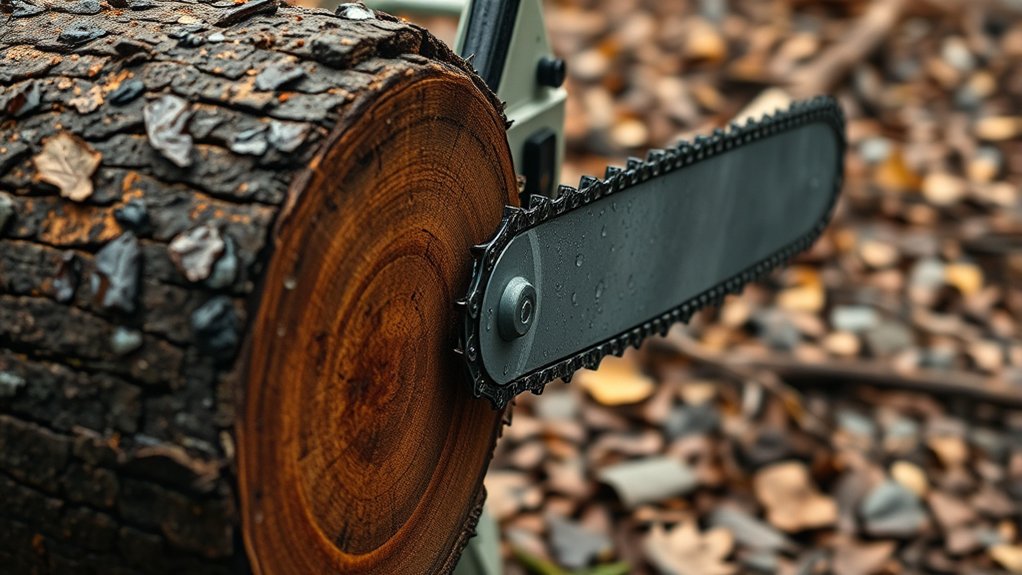
You’ll want a chainsaw with at least a 40cc engine to handle wet wood effectively. This way, you’ll have enough power and control to get the job done smoothly.
When it comes to choosing the chain, standard saw chains usually work fine, but micro chisel chains are even better for cutting through dense, wet wood. They make the process a bit easier and faster.
Just make sure your chain is well-lubricated, sharp, and low-kickback. That way, you’ll stay efficient and safe, especially when things get slippery.
Chainsaw Types Comparison
When cutting wet wood, selecting the right chainsaw and chain really makes a difference in how efficient and safe the job will be.
In a chainsaw types comparison, a gas-powered chainsaw with at least 40cc is ideal for medium logs. If you’re dealing with larger logs, go for 50cc or more.
Electric chainsaws can work too, but you have to be careful about water exposure to avoid any hazards.
Always use a sharp chain because it reduces the risk of kickback and improves cutting performance on wet wood. Micro chisel chains are great for getting through denser wood species.
Proper maintenance is super important. Make sure to lubricate the chain regularly with mineral oil. This helps prevent wet sawdust from building up and messing with the oil flow.
Choose gas-powered chainsaws if you want power and versatility. Use micro chisel chains when working with tougher wet wood.
And don’t forget to keep your chain sharp and well-lubricated for consistent cutting.
Best Chains For Wet
Choosing the right chain complements your chainsaw’s power and design, directly impacting how well you cut through wet wood. Standard chainsaw chains generally handle cutting wet wood effectively, but micro chisel chains excel on denser species, reducing wet wood damage.
To keep your chain performing well, make sure it’s well-maintained and sharp. Regularly sharpen it with a 3/16 round file. A dull chainsaw chain increases resistance, risks binding, and accelerates wear.
Using high-quality chainsaws with engines of at least 40cc guarantees enough power for wet wood.
And just as important, always keep the chain lubricated with mineral oil. This helps prevent clumpy wet sawdust buildup and reduces friction.
Proper maintenance and choosing the right chain optimize cutting through wet wood. This way, you minimize damage and keep things safer while you work.
Essential Safety Tips for Cutting Wet Wood
Five critical safety measures can greatly reduce risks when cutting wet wood with a chainsaw. First, always wear appropriate protective gear like gloves, goggles, and anti-cut clothing. This will help shield you from potential injuries.
Next, maintain a firm grip on the chainsaw. Position your feet shoulder-width apart to enhance stability, especially on slippery surfaces.
Finally, check that your chainsaw has a low-kickback chain. This helps reduce the higher risk of accidents in wet conditions.
Inspect your chainsaw thoroughly before use to make sure all components work properly.
Also, clear your cutting area of obstacles to prevent tripping hazards.
Avoid forcing the chainsaw through wet wood. Doing so can cause engine strain and overheating.
Following these tips will keep you safe and help preserve your chainsaw’s performance while cutting.
Techniques for Effective Wet Wood Chainsaw Cutting
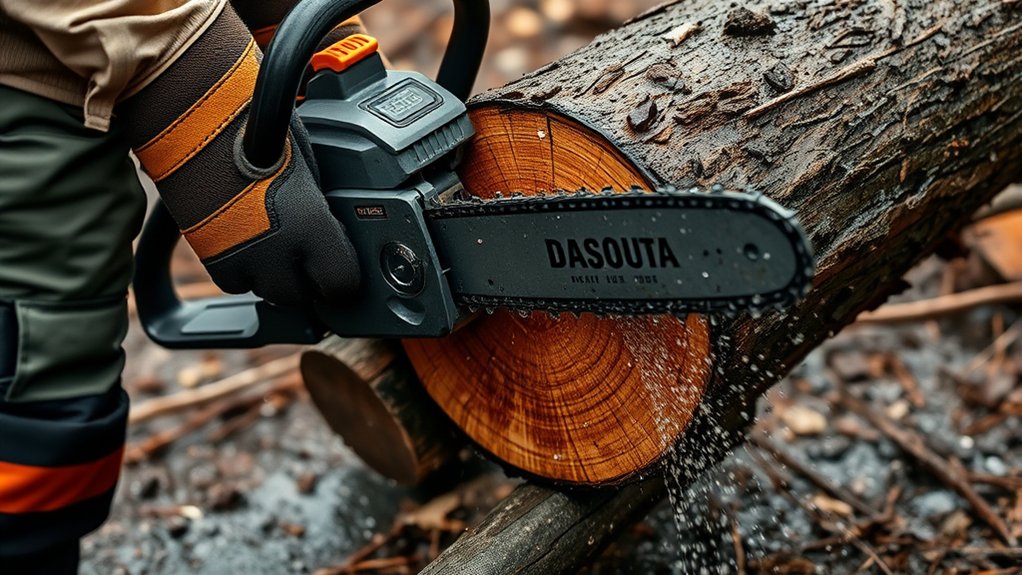
Mastering the proper techniques for cutting wet wood will improve both your safety and efficiency beyond just wearing protective gear and preparing your chainsaw.
When cutting wet wood, maintain a steady motion to avoid kickback from slippery surfaces. Use a chainsaw with at least 40cc engine power to handle the wood’s density and moisture effectively.
Always verify your chain is sharp; dull chains increase friction, cause binding, and raise safety risks.
Follow the grain of the wood to reduce resistance and keep a consistent speed, which prevents engine overload.
After finishing, clean the chainsaw thoroughly, removing wet sawdust that can block oil flow and impair lubrication.
Combining these practices with proper safety gear guarantees effective, safe cutting of wet wood every time.
It’s all about staying smooth and steady while taking good care of your equipment. That way, you’ll work smarter and safer every time you cut.
Common Wet Wood Cutting Problems and Solutions
When cutting wet wood, you’ll run into some challenges that can affect both safety and how well your saw works. Excess moisture makes sawdust clump up, which blocks the oil flow and causes your chainsaw to dull faster. This means your saw will wear out quicker if you don’t take care of it.
Cutting wet wood challenges safety and saw performance, as moisture clumps sawdust and dulls your chainsaw faster.
To keep the chain sharp and cutting smoothly, use the right control techniques and do regular maintenance. And don’t forget to always wear proper safety gear because wet wood means slippery surfaces and a higher chance of kickback.
Clumpy sawdust blocks lubrication, so clean your saw frequently to keep the oil flowing. Increased friction dulls the chain faster, so sharpen or replace it as soon as you notice it getting dull.
Slippery conditions can make it harder to control the saw, so make sure you have a firm grip and stable footing. Taking care of these issues will help you cut wet wood more safely and efficiently, plus it will extend the life of your chainsaw.
How to Maintain Your Chainsaw After Cutting Wet Wood
Handling wet wood creates unique challenges for your chainsaw, making proper maintenance after use essential to keep it running smoothly.
After cutting wet wood, always clean the chainsaw by removing the chain and bar to eliminate debris buildup that can impair performance.
Regularly inspect the chain for wear and sharpness since sticky sawdust from wet wood can clog oil flow and dull the chain. Lubricate the chain with mineral oil to prevent rust and maintain proper function.
Make sure the entire chainsaw dries thoroughly before storage to avoid moisture damage and remove any wet sawdust.
Also, don’t forget to perform routine maintenance by cleaning the air filter and inspecting all components for wear.
These steps really help you maintain your chainsaw’s performance and extend its lifespan after cutting wet wood.
Pro Tips to Protect Your Chainsaw in Wet Conditions
Although cutting wet wood presents added challenges, you can protect your chainsaw by following specific precautions tailored to moist conditions.
To keep your chainsaw operating efficiently and safely when cutting wet wood, focus on maintenance and appropriate equipment choices. Always clean your chainsaw immediately after use to prevent sawdust buildup that obstructs oil flow.
Make sure the chain is well-lubricated with mineral oil to reduce friction and wear. Regularly inspect and sharpen the chain, as wet wood dulls it faster. Furthermore, opt for low-kickback chains to enhance safety and control in slippery conditions.
- Clean your chainsaw thoroughly after each use to prevent rust and lubrication issues.
- Use well-lubricated chains and regularly inspect for dullness or damage.
- Choose low-kickback chains to improve safety and performance in wet conditions.
Frequently Asked Questions
Can Wet Wood Cause More Frequent Chain Sharpening?
Yes, wet wood can cause more frequent chain sharpening because of sawdust buildup and moisture that increases friction. This means you’ll need to tweak your cutting techniques and chainsaw maintenance to keep things running smoothly.
Wet wood changes how lubrication works, which can wear down your chain faster. Picking the right blade material and sticking to basic safety tips really helps keep your chainsaw performing well.
Make sure to clean and sharpen your chain regularly. This prevents dullness and keeps your cutting safe and efficient.
Does Cutting Wet Wood Affect Chainsaw Fuel Consumption?
Imagine you’re cutting freshly fallen, wet oak. Your chainsaw’s fuel efficiency drops noticeably. The high wood moisture increases cutting resistance, causing engine strain and reducing combustion quality.
Wet sawdust clogs oil flow, which raises lubricant needs and accelerates bar wear.
Compared to dry wood, you’ll see a performance difference that favors dry cuts.
You’ll need to increase maintenance frequency to keep your saw running smoothly and efficiently under tougher wet conditions. It’s just part of dealing with wetter wood.
Are There Specific Chainsaw Brands Better for Wet Wood?
You’ll find brands like Stihl and Husqvarna excel with wet wood due to superior chain lubrication and durable chainsaw blade types designed for high wood moisture levels.
Echo and Makita offer reliable performance, especially with electric models.
Focus on maintenance tips like regularly sharpening blades and using appropriate oils.
Combine precise cutting techniques with safety gear to maximize efficiency.
Comparing user experiences reveals these brands handle environmental impacts better, ensuring consistent, safe operation.
It really pays off to choose the right brand and keep up with proper care.
How Does Wet Wood Impact Chain Tension Adjustments?
Wet wood gently challenges your chainsaw’s tension stability by increasing moisture absorption, which demands more frequent chain tension adjustments.
This moisture accelerates chain wear and affects blade alignment, reducing cutting efficiency. You’ll need to monitor bar lubrication closely and clear sawdust accumulation to maintain smooth operation.
Prioritize safety precautions by regularly checking tension to enhance your user experience and prevent dangerous kickbacks caused by loose or overly tight chains during wet wood cutting.
Staying on top of these adjustments keeps your saw running smoothly and helps you work more safely. It’s just a bit more attention, but it makes a big difference.
Can Chainsaw Gloves Improve Grip on Wet Wood?
Yes, chainsaw gloves can improve your grip on wet wood by combining ergonomic design with advanced glove materials that reduce moisture absorption.
Using gloves that meet safety standards enhances control through textured palms and reinforced fingertips.
If you incorporate grip techniques learned from user experiences, you’ll find synthetic gloves outperform leather in wet conditions.
Comparing brands reveals differences in durability and comfort, so it’s smart to follow maintenance tips to preserve effectiveness.
This way, you can guarantee consistent, secure handling every time.
Conclusion
Cutting wet wood with your chainsaw demands extra care and the right techniques to guarantee safety and maintain performance. Imagine tackling a fallen, rain-soaked tree after a storm. You rely on proper chain choice, steady handling, and post-use maintenance to avoid accidents and equipment damage.
By following these tips, you’ll protect yourself and your chainsaw. This keeps both sharp and reliable even in challenging, wet conditions. Stay prepared, stay safe.