Can You Microwave Wood: Risks And Facts Explained
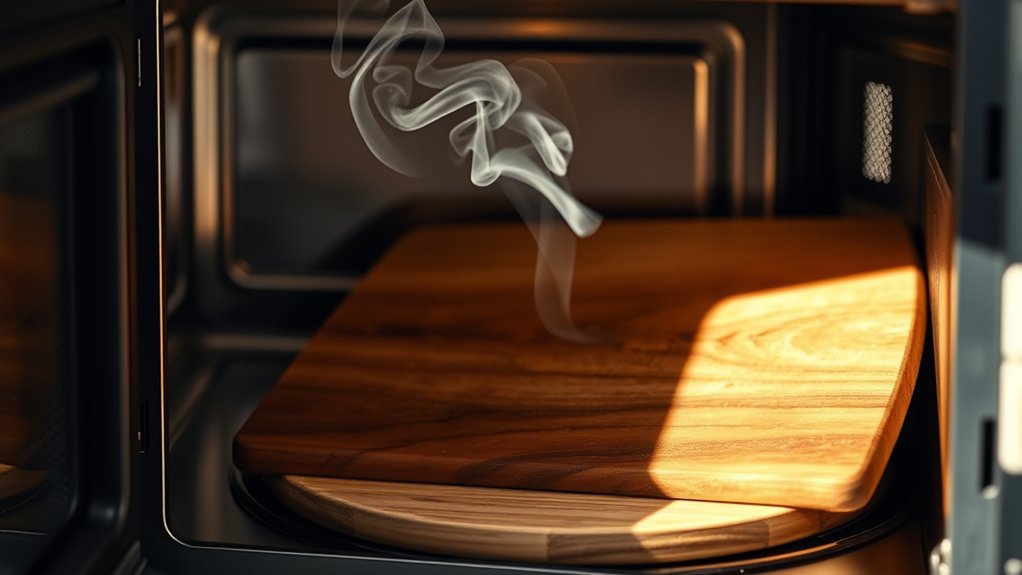
You shouldn’t microwave wood because uneven heating causes moisture loss, leading to warping, cracking, and structural damage. This creates internal steam pressure and can release harmful chemicals from treated finishes or adhesives. That risks food contamination.
Moreover, bacteria may grow in cracks formed during microwaving. The USDA advises against microwaving wooden bowls due to these safety concerns and potential fire hazards. It’s really best to steer clear of putting wood in the microwave.
Understanding these effects will help you choose safer alternatives and proper care for your wooden items. So, next time, maybe go for something microwave-friendly instead!
Are Wooden Bowls Safe to Microwave?
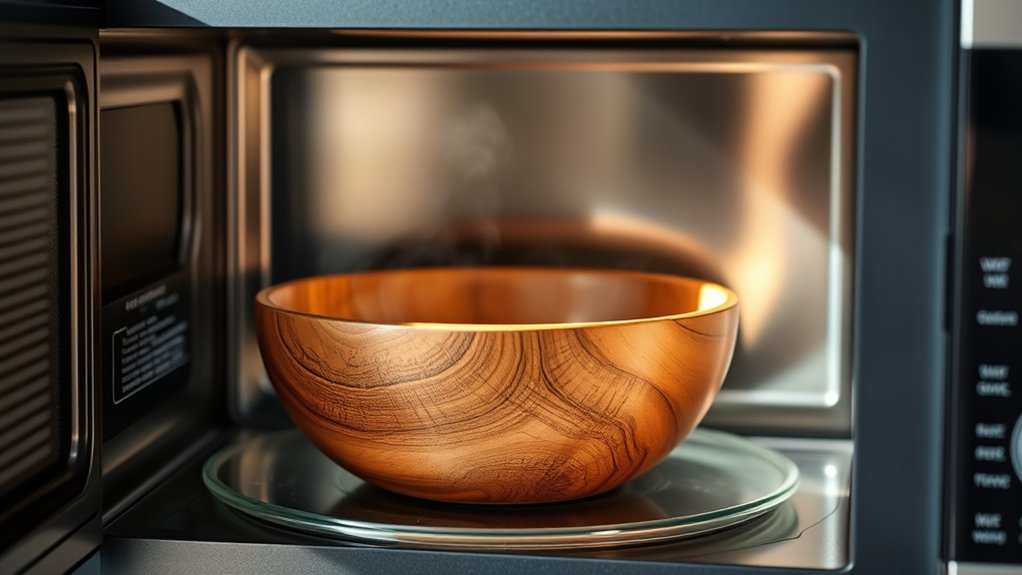
Why should you avoid microwaving wooden bowls? The primary risks involve safety and potential food contamination.
Wooden bowls contain moisture that, when heated in the microwave, can evaporate unevenly. This can cause structural damage like warping or cracking.
These cracks then become perfect spots for bacteria to grow, which isn’t safe for your food. Plus, many wooden bowls are treated with adhesives and finishes.
When microwaved, these treatments might release harmful chemicals.
Because of these risks, regulatory bodies like the USDA advise against microwaving wooden bowls.
To keep yourself safe and protect your bowls, it’s better to use alternatives made for microwave use. Materials like glass, microwave-safe ceramics, or BPA-free silicone are great options.
They avoid problems like structural damage, chemical leaching, and bacterial contamination that come with heating food in wooden bowls.
Why Microwave Heat Damages Wooden Bowls
Although wooden bowls might seem microwave-safe at first glance, the microwave’s uneven heating causes moisture within the wood to evaporate rapidly, leading to warping and cracking. When microwaving wooden bowls, heat exposure creates hot spots that induce structural damage, accelerating deterioration.
Prolonged exposure elevates temperatures beyond 200°C, risking charring and the release of volatile organic compounds. Furthermore, glues and finishes in these bowls may leach toxins, posing significant health risks.
| Issue | Cause |
|---|---|
| Warping & Cracking | Rapid moisture loss |
| Structural Damage | Uneven microwave heating |
| Toxic Emissions | VOCs from glues and finishes |
| Health Risks | Leaching toxins into food |
Understanding these factors makes it clear why microwaving wooden bowls is risky and leads to irreversible damage. So, it’s really best to avoid putting them in the microwave altogether.
Safety of Different Wooden Bowls in the Microwave
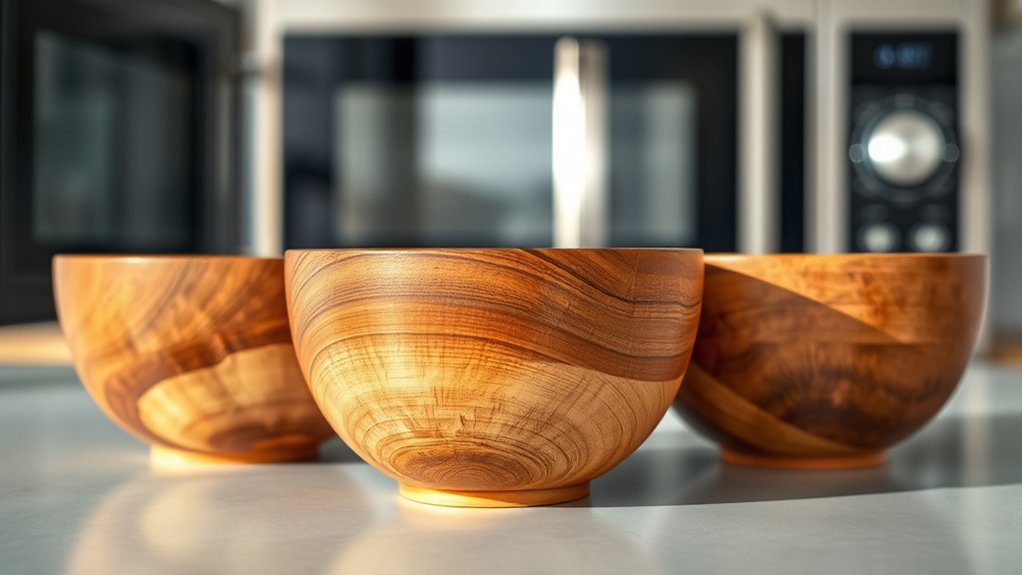
You need to understand that not all wooden bowls respond the same way to microwave exposure.
Different types of wood, along with how they’re treated and finished, can really affect how well they handle heat and whether they stay chemically stable.
Types Of Wooden Bowls
Three main types of wooden bowls, untreated, glued or varnished, and bamboo, present distinct risks when used in microwaves.
Untreated wood can warp and crack from heat exposure, so it’s really not suitable for microwave use.
Glued or varnished wooden bowls come with their own set of problems. The finishes on these bowls might contain volatile organic compounds (VOCs) that could leach into your food when heated. That’s definitely something to watch out for.
Bamboo bowls might seem like a safer option, but their safety really depends on how they’re made and treated. Often, they’re not microwave-safe either.
In fact, the USDA clearly advises against using wooden bowls in microwaves. They suggest choosing certified microwave-safe alternatives like glass or ceramic to avoid damage and any risk of chemical contamination.
Microwave Safety Variations
When evaluating the microwave safety of wooden bowls, you need to think about the specific materials and treatments used in making them. Wooden bowls often have finishes and glues that can cause safety issues when heated in the microwave. These chemicals might leach harmful substances, including volatile organic compounds, which can compromise food safety and even cause fires.
Untreated wooden bowls don’t have as many chemical concerns, but they’re still prone to warping and cracking when microwaved. So, they’re not exactly the safest choice either.
If you want to avoid these problems altogether, consider alternatives like glass, ceramic, or BPA-free silicone containers. These options don’t have the same risks and are generally much safer for microwave use.
| Wooden Bowl Type | Microwave Safety | Primary Risk |
|---|---|---|
| Untreated Wood | Low | Warping, cracking, fire risk |
| Treated Wood | Very Low | Chemical leaching, VOCs |
| Alternatives | High | None |
Choose wisely to minimize risks and make sure your food stays safe when microwaving.
How Microwave Heat Affects Wood’s Moisture and Finish
Although microwaves provide rapid heating, their interaction with wood’s moisture content can cause significant damage. When microwaving wood, the hygroscopic nature of the material means moisture evaporates unevenly due to dielectric heating, creating temperature gradients. This uneven heating causes thinner sections to heat faster, increasing internal steam pressure and risking cracking or warping.
Moisture content, typically 6%-12%, rapidly vaporizes, which speeds up these effects.
Plus, treated wood finishes can release volatile organic compounds (VOCs) under microwave heat. These VOCs present health risks because they might contaminate food.
So, the combination of moisture loss, steam pressure buildup, and VOC emissions means microwaving wood compromises both its structural integrity and surface finishes.
You should understand these factors to avoid damage and potential health hazards when considering microwaving wooden items.
Common Risks of Microwaving Wooden Bowls
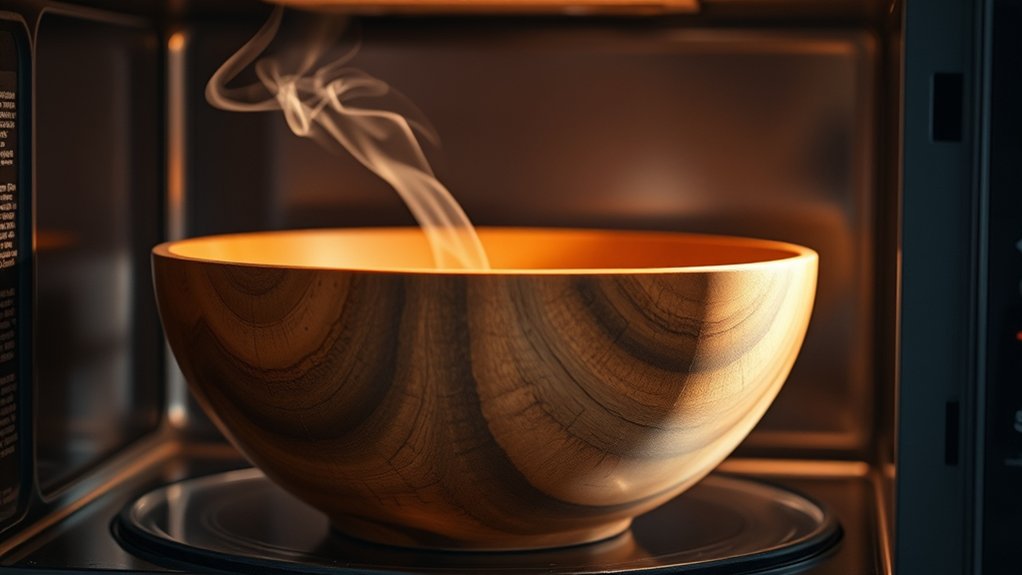
Microwaving wooden bowls introduces specific risks that come from their material composition and how they’re made.
Wood naturally absorbs moisture, and when microwaved, that moisture evaporates. This can cause the bowl to warp, crack, or become brittle.
Uneven heating inside the microwave creates steam pressure, which makes splits more likely.
On top of that, the adhesives and finishes used on wooden bowls might release harmful chemicals when heated. This isn’t just bad for the bowl—it can pose serious health risks.
There’s also the issue of volatile organic compounds (VOCs) being released. These compounds can contaminate your food and make cooking unsafe.
The USDA even warns against microwaving untreated wooden items because of fire hazards and contamination risks.
So, it’s important to understand these dangers. Microwaving wooden bowls doesn’t just damage their structure—it can also compromise food safety through chemical leaching and VOC emissions.
Better to be safe and avoid putting wooden bowls in the microwave altogether.
Best Microwave-Safe Alternatives to Wooden Bowls
When you’re looking for alternatives to wooden bowls that are safe to use in the microwave, glass containers are a great option.
They’ve nonporous surfaces, which means they resist bacteria and are super easy to clean.
Another good choice is BPA-free silicone.
It’s flexible and durable, plus it’s often rated safe for both microwave and oven use. So, you get a lot of versatility there.
And don’t forget about microwave-safe ceramics.
These combine heat resistance with a wide range of designs, making them really practical when you need to reheat your food.
Glass Container Benefits
Since glass containers are nonporous, they won’t absorb food odors or bacteria, making them a hygienic choice for microwave use. You’ll find that glass containers offer even heating, reducing hot spots common with wooden bowls and minimizing risks of uneven cooking or burns.
Borosilicate glass, in particular, stands out due to its durability and resistance to rapid temperature changes. This means you can safely shift your dish between microwave and oven without worry.
Unlike wooden materials, glass doesn’t leach harmful chemicals into your food, so it’s a safer cooking option. Plus, many glass containers come with microwave-safe lids designed to prevent splatters while letting steam escape, which really adds to the safety and convenience.
Silicone Safety Features
Glass containers offer many benefits for microwave use, but silicone alternatives provide distinct advantages that address some limitations of both wood and glass.
Silicone is a microwave-safe, FDA-approved, food-grade material that resists heat from -40°F to 446°F, ensuring safe cooking without chemical leaching.
Unlike wood, silicone doesn’t absorb moisture or odors, which helps reduce the risk of contamination. This makes it a great option if you want something easy to clean and maintain.
Consider these key silicone safety features:
- Heat-resistant flexibility enables easy food removal, minimizing sticking and eliminating excess oils.
- BPA-free composition guarantees no harmful substances leach into food during microwaving.
- Non-porous surface prevents moisture retention, maintaining a hygienic cooking environment.
Ceramic Microwave Use
Although wooden bowls often raise concerns in microwave use due to their porous nature and potential chemical leaching, ceramic bowls provide a reliable alternative designed to withstand microwave conditions safely.
Ceramic materials labeled microwave-safe distribute heat evenly, preventing warping or cracking during reheating. Unlike wooden bowls, ceramic doesn’t leach harmful substances, which makes it a safer choice for your food.
Plus, its nonporous surface reduces bacteria growth and makes cleaning a breeze. So, it’s not just safer but also more hygienic.
Ceramic bowls often endure high temperatures, offering a durable solution for frequent microwave use. Just make sure the ceramic containers you pick are explicitly marked microwave-safe to guarantee they meet safety standards.
How to Care for Wooden Bowls Without Using a Microwave
Proper care for wooden bowls involves several critical steps to maintain their structural integrity and appearance without resorting to microwave use. To avoid microwaving and heat exposure that cause warping and cracking, you should focus on effective maintenance practices.
Follow these three key steps:
Hand wash wooden bowls promptly with mild soap and warm water. Avoid soaking or using the dishwasher to protect the finish and durability.
Regularly apply food-safe mineral oil or beeswax to restore moisture and prevent drying or cracking. This keeps your bowl looking great and lasting longer.
Store the bowls properly in a cool, dark, dry environment. This helps minimize moisture fluctuations and preserves their aesthetics.
Always heat food in microwave-safe containers before transferring it to wooden bowls. This reduces health risks and avoids damaging your bowl’s structure.
This approach guarantees longevity and safety without sacrificing function.
Tips for Safely Using and Storing Wooden Bowls
When you use and store wooden bowls correctly, you preserve their structural integrity and extend their lifespan. Avoid heat exposure by never placing wooden bowls in the microwave. This causes warping, cracking, and may release harmful chemicals from finishes.
Always hand wash wooden bowls with mild soap and warm water, then dry them immediately to prevent moisture buildup that leads to deformation. To protect and restore finishes, regularly apply a food-safe mineral oil or beeswax. This helps maintain moisture balance and durability.
Hand wash wooden bowls promptly and nourish with mineral oil to prevent damage and maintain durability.
Store wooden bowls in cool, dry cabinets away from direct sunlight to prevent degradation and preserve their appearance.
When serving hot food, transfer meals from microwave-safe containers like glass or silicone into wooden bowls. This protects both the bowl and minimizes health risks associated with heat exposure.
Frequently Asked Questions
Can Microwaving Wood Affect Its Flavor or Odor?
Yes, microwaving wood can change its flavor and odor because of how microwaves heat and affect moisture unevenly.
When the wood’s density isn’t uniform, the heat can cause aromas to be released. It can also break down any treatment compounds in the wood, which changes how flavors infuse.
This matters when you’re cooking since some volatile compounds might leach into your food.
If you microwave wood repeatedly, it loses moisture and becomes brittle. That makes the wood less effective at keeping its original flavors, so both the flavor and odor end up changing over time.
Does the Type of Wood Species Matter When Microwaving?
Yes, types of wood matter when microwaving because moisture content and wood finishes affect heat distribution and wood durability.
Hardwoods with low moisture resist cracking better, but treated woods risk releasing toxins. Adjusting microwave settings won’t eliminate risks, so safety precautions and risk evaluation are essential.
Instead of experimenting with microwaving techniques on wood, consider alternative materials designed for microwave use to prevent damage and guarantee safety.
It’s just safer and more reliable that way.
Can Microwaving Wooden Utensils Cause Bacteria Buildup?
Sure, microwaving wooden utensils won’t magically sterilize them. In fact, it can actually promote bacteria growth.
Heat exposure causes moisture to get trapped in the wood’s porous surface, which leads to uneven evaporation and surface damage.
These tiny cracks and crevices end up harboring bacteria, even if you clean the utensils thoroughly. So, just adjusting your microwave settings won’t solve the problem.
Wooden utensils aren’t designed for microwave use, so it’s best to avoid risking contamination.
Instead, stick to using safe materials and proper sanitation practices to keep your food safe.
Are There Any Eco-Friendly Treatments to Make Wood Microwave-Safe?
You won’t find eco-friendly wood treatments that guarantee microwave safety. Natural oils and wood finishes help preserve wood and keep moisture in, but they don’t have enough heat resistance for microwaving.
Sustainable practices usually avoid chemical alternatives, but these wood treatments still can’t stop warping or emissions from adhesives when exposed to microwave heat.
If you want something truly microwave-safe, it’s better to pick materials made for that purpose instead of relying on wood treatments alone.
How Long Does It Take for Wood to Start Cracking in a Microwave?
Wood typically starts cracking within 1 to 3 minutes in a microwave because of uneven heat distribution and thermal expansion. The moisture content and density of the wood play a big role in how quickly it dries out and reaches those cracking temperatures.
Drier, denser wood tends to crack faster than wood that has more moisture. Microwave settings also affect the heat intensity, which can increase the risk of damage if the power is set too high.
Plus, the orientation of the wood grain impacts where stress points develop, making some areas more prone to cracking than others.
To prevent cracking, it’s best to use short, low-power intervals and keep a close eye on the wood while microwaving. Just be sure not to leave it in too long, as prolonged exposure can compromise the wood’s structural integrity and cause more serious damage.
Conclusion
Think of your wooden bowl as a delicate vessel, much like a ship steering through turbulent microwave waves. Microwaving risks cracking its integrity, drying its essence, and stripping its finish.
To preserve its strength and beauty, avoid the microwave’s harsh heat and opt for safer alternatives. By treating your wooden bowl with care and respect, you guarantee it remains a resilient, timeless tool ready to serve you without compromise.