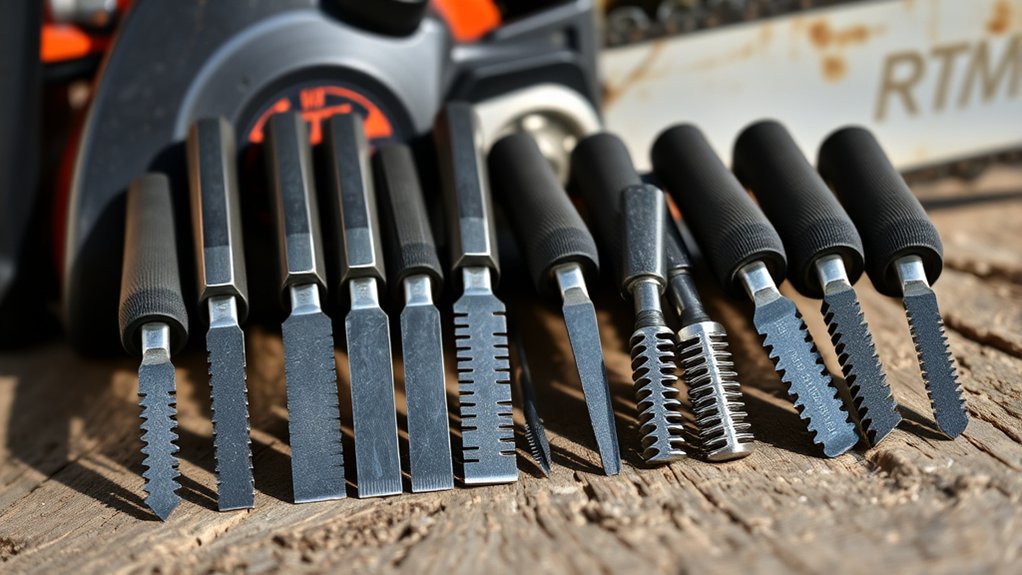
What Size Chainsaw File Do I Need – File Size Chart And Tips
If you’ve ever struggled to keep your chainsaw sharp and efficient, you’re not alone. Many people find it confusing to choose the right chainsaw file size, which can lead to ineffective sharpening and frustration.
Finding the perfect file size is crucial to maintaining your chainsaw’s performance and extending its lifespan.
To find the right chainsaw file size, first, determine your chain pitch by measuring the distance between three consecutive rivets and dividing by two.
Common sizes include 4.0 mm for mini chains, 4.8 mm for standard chains, and 5.5 mm for larger pitches.
Use round files for round tooth cutters and flat files for square grind cutters.
Matching the file type with your chain guarantees effective sharpening.
There’s more to learn about sharpening and maintenance to keep your chainsaw running smoothly.
Key Takeaways
- Determine your chainsaw chain pitch by measuring the distance between three rivets and dividing by two for accurate file size selection.
- Use a 4.0 mm (5/32”) file for mini or 1/4-inch pitch chains, and a 5.5 mm (7/32”) file for 3/8” or .404” pitch chains.
- Round files are essential for round tooth (chipper) cutters, while flat files are used for square grind (chisel) cutters.
- Maintain a 30-degree sharpening angle and use the appropriate file size for effective sharpening and improved chain performance.
- Regularly check for wear and replace the file as needed to ensure optimal cutting efficiency and safety.
Determine Your Chainsaw Chain Pitch
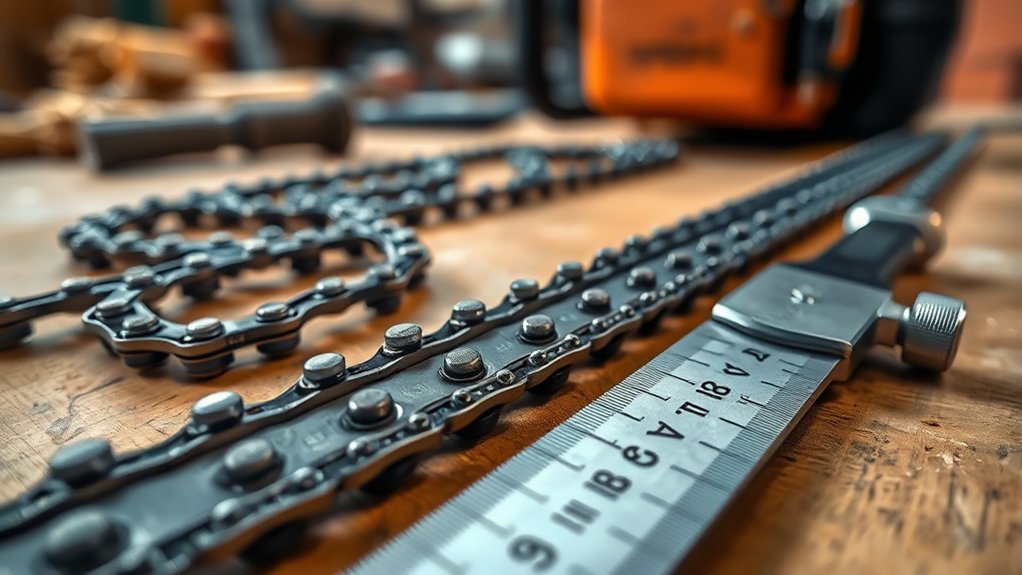
Before you can accurately choose the right file size for your chainsaw, you need to determine the chain pitch. This measurement is the distance between three consecutive rivets divided by two, and it’s vital for selecting the appropriate file size. Common pitches include 1/4 inch, 3/8 inch, .325 inch, and 404 inch.
To measure, use a caliper or ruler to find the distance between rivets and divide by two. You can often find the pitch code stamped on the drive link or bar, serving as a quick reference. Ensuring the correct chain pitch not only guarantees maximum cutting performance but also enables effective lubrication techniques and enforces safety precautions while using your chainsaw.
Identify Common Chainsaw File Sizes and Their Uses
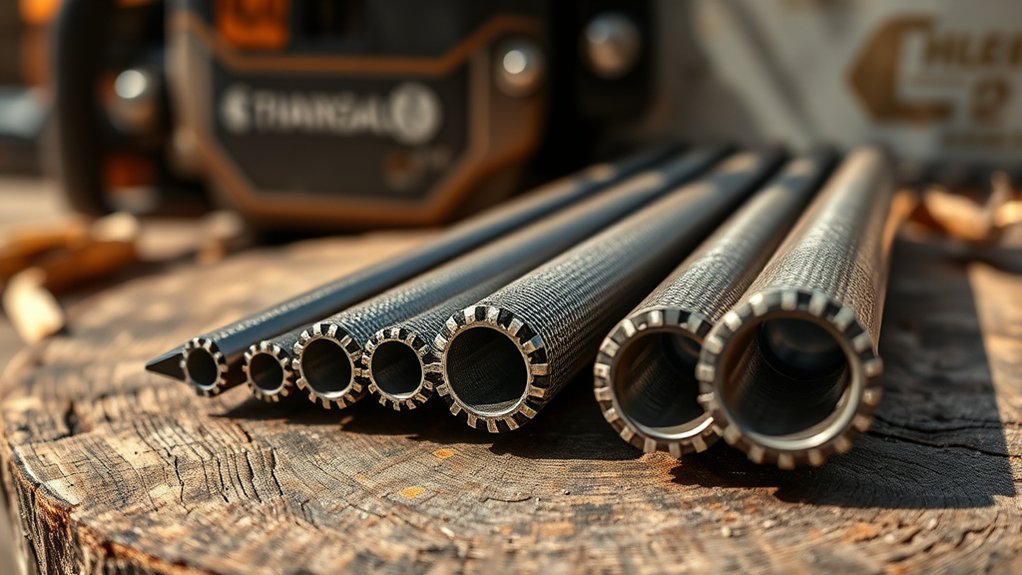
When you’re ready to sharpen your chainsaw chain, knowing the common file sizes and their applications is essential for effective maintenance. Common sizes include 4.0 mm (5/32”), 4.8 mm (3/16”), and 5.5 mm (7/32”). The smaller 4.0 mm file is suitable for mini or 1/4-inch pitch chains, while the larger 5.5 mm is intended for 3/8-inch or .404-inch pitch chains.
To ensure file size compatibility, perform a chain pitch calculation by measuring the distance between three rivets and dividing by two. Round files are generally used for round tooth cutters, whereas flat files work for square grind cutters. Always check your chain pitch and the manufacturer’s recommendations before selecting the right file size for sharpening.
Understand Cutter Types and Select the Right File Shape
Understanding the type of cutter on your chainsaw chain is essential for selecting the right file shape, as using the correct file guarantees efficient sharpening and extends the life of your chain. Round files are necessary for round tooth (chipper) cutters, while flat files are required for square grind (chisel) cutters. For semi-chisel (round grind, square tooth) cutters, round files with guides provide ideal results.
In contrast, full chisel cutters with a square grind require square files for precision sharpening. Ensuring cutter compatibility with your chosen file shape is important for maintaining chainsaw efficiency and safety. By matching the file shape to the cutter type, you can achieve the best performance and longevity from your chainsaw chain.
Sharpen Your Chainsaw Chain Effectively
Sharpening your chainsaw chain effectively is vital for ideal cutting performance and safety. To achieve precise sharpening, follow these key steps:
Effective sharpening of your chainsaw chain is crucial for optimal cutting performance and safety.
- Maintain a consistent angle, typically around 30 degrees, for effective cutting.
- Use the correct size round file that matches your chain’s pitch.
- File each tooth evenly, usually three strokes per tooth, to guarantee uniform length.
- Mark the most worn tooth to guide consistent sharpening across all cutters.
While sharpening, always check chain tension and adjust depth gauges. This prevents kickback and enhances chain life.
Don’t forget lubrication maintenance; it’s indispensable for smooth operation. Regularly maintaining your chain not only keeps it sharp but also guarantees your safety while operating the chainsaw.
When Should You Replace Your Chainsaw Chain?
How can you tell if it’s time to replace your chainsaw chain? If you notice heavy damage, broken links, or missing teeth, it’s crucial to replace that chain for safe operation. After excessive sharpening, the chain can lose cutting efficiency, making replacement necessary.
Signs like uneven cuts, chain chatter, or increased effort during cuts indicate wear. Regular inspections are important—replace the chain if depth gauges or cutters are too worn or deformed. Always prioritize chain replacement over repairs when wear exceeds the manufacturer’s limits.
Frequently Asked Questions
Can I Use One File Size for Different Chain Pitches?
You can’t use one file size for different chain pitches; it’s like trying to fit a square peg into a round hole.
Ensuring chain pitch compatibility through precise file size selection is essential for maximum performance and safety.
How Often Should I Sharpen My Chainsaw Chain?
You should sharpen your chainsaw chain every 8 to 10 hours of use, ensuring chainsaw safety and maintaining an efficient maintenance schedule.
Look for signs like dullness or increased effort to determine when sharpening’s necessary.
What Are the Signs of a Dull Chainsaw Chain?
If your chainsaw’s cutting performance is lacking, check for signs like uneven cuts, increased vibration, or a chain that catches. Maintaining proper chain tension might help, but if those signs occur, it’s time to sharpen.
What Tools Do I Need for Chainsaw Sharpening?
You’ll need a round file matching your chain’s pitch, a filing guide for angle accuracy, a depth gauge, and a cleaning brush.
Don’t forget your safety gear—chain tension’s essential for safe, efficient sharpening.
Is There a Difference Between Manual and Electric File Tools?
There’s a monumental difference between manual sharpening and electric file tools. Manual files offer precision and control, while electric tools provide speed and efficiency.
Choose based on your sharpening needs and comfort with each method.
In the Final Analysis
In conclusion, selecting the right chainsaw file size is essential for maintaining your saw’s performance, much like choosing the right tool for a craftsman. By understanding your chain’s pitch, cutter types, and file shapes, you can sharpen your chain effectively and extend its life.
Using the correct chainsaw file size ensures precise sharpening, which enhances cutting efficiency and safety. A well-sharpened chain slices through wood with ease, while a dull one struggles like a dull blade.
Regular maintenance, including using the proper file size, and timely replacements will keep your chainsaw operating at its best. Remember, the right chainsaw file size is key to achieving optimal performance and prolonging your chain’s lifespan.