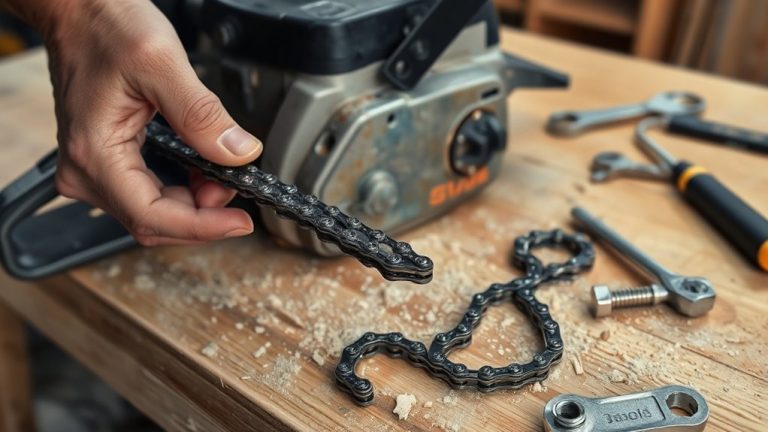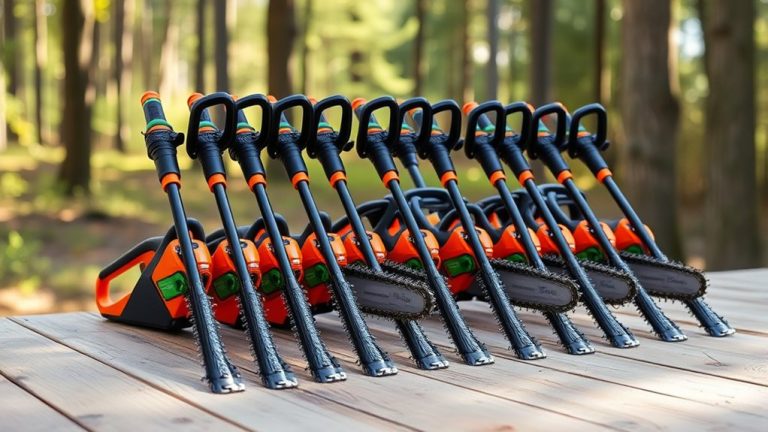

How To Safely Use A Chainsaw – Safety Tips For Beginners
To safely use a chainsaw, choose a lightweight, beginner-friendly model with safety features like a chain brake. Always wear protective gear including a hard hat, goggles, and chainsaw chaps. Check chain tension, sharpen blades, and maintain fuel and oil levels before each use.
Start with the chain brake engaged, hold the saw firmly with both hands, and avoid cutting above shoulder height. Plan an escape path and stay alert to hazards. Master these basics, and you’ll be ready to learn proper cutting techniques and advanced safety tips.
Choosing a Safe and Beginner-Friendly Chainsaw
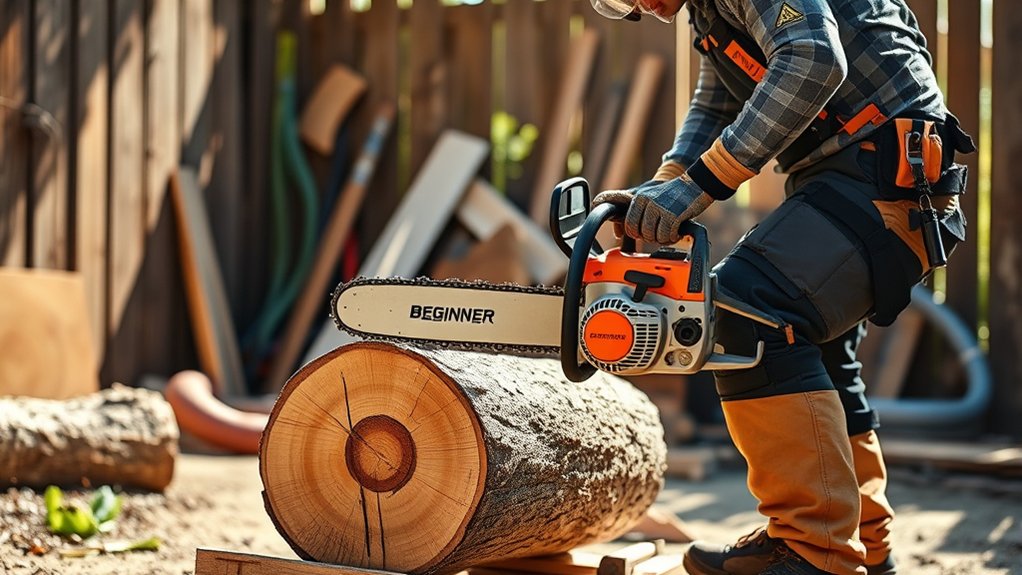
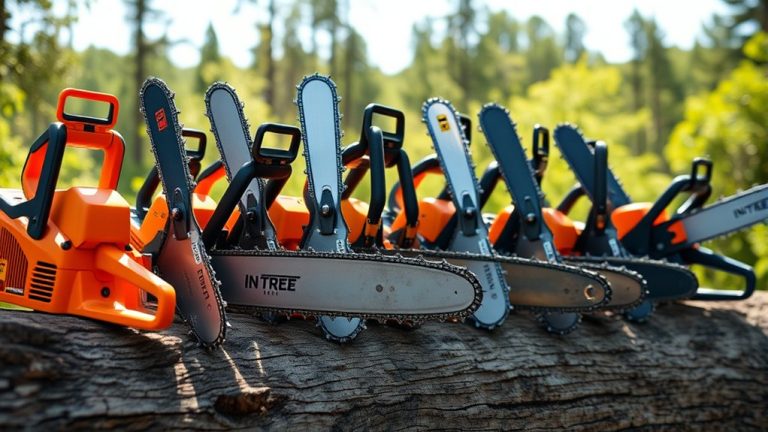
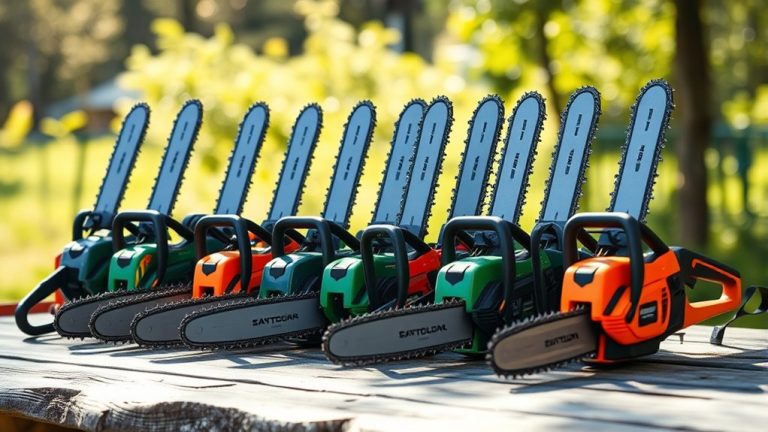
When selecting a chainsaw as a beginner, you should prioritize lighter models like the Husqvarna 120e Mark II. These offer easier handling for smaller tasks.
Opt for a beginner-friendly chainsaw with a bar length around 12-14 inches to maintain control and reduce fatigue.
Pay close attention to built-in safety features. A reliable chain brake is essential to quickly stop the chain during kickback or sudden movements.
Other safety tips include choosing models with comfortable grips and balanced weight distribution to enhance maneuverability.
Electric chainsaws with lower emissions and noise levels also improve safety by reducing distractions and environmental impact.
Essential Protective Gear for Safe Chainsaw Use
Although selecting the right chainsaw is essential, equipping yourself with necessary protective gear is equally important to guarantee safe operation. Always wear a hard hat to shield your head from falling debris, and pair it with safety glasses or goggles to protect your eyes from sawdust and flying particles.
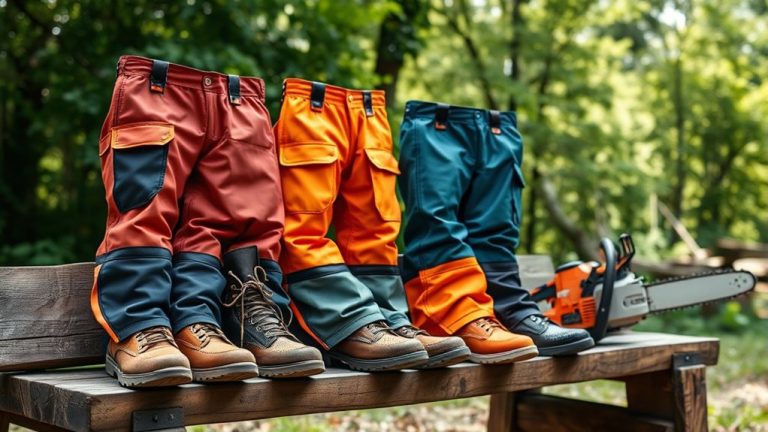
Chainsaw chaps made of ballistic nylon serve as critical personal protective equipment, reducing severe leg injury risks. Steel-toed boots with non-slip soles safeguard your feet from cutting and crushing injuries while ensuring stable footing.
Hearing protection, such as earmuffs or earplugs, prevents hearing loss from the chainsaw’s loud noise.
Finally, don reflective clothing to boost visibility, especially in environments with other workers or vehicles.
Prioritize this safety gear to maintain maximum protection during chainsaw use. It’s really about keeping yourself safe every step of the way.
Preparing Your Chainsaw: Maintenance and Checks
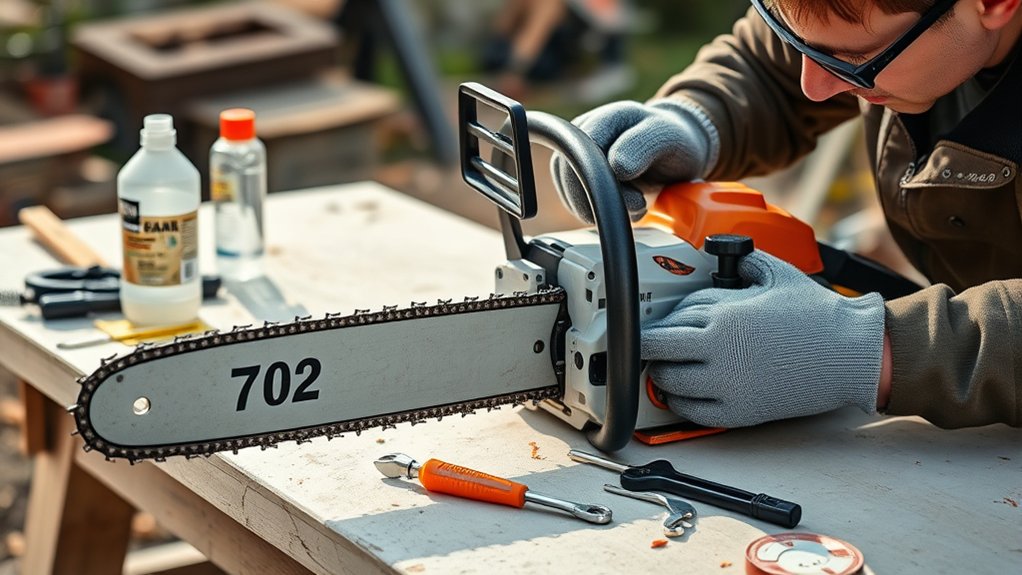
Before starting any cutting task, you must thoroughly prepare your chainsaw to guarantee safe and efficient operation. Begin by checking the chain tension; it should sit snugly against the guide bar without being too tight to prevent it from coming off. Regular maintenance is essential. Sharpen the chain and inspect for loose parts or damage.
Use the correct bar oil to lubricate the chain and bar, securing smooth cuts and extending their lifespan. Always follow the manufacturer’s guidance for maintenance schedules and procedures to keep your chainsaw in peak condition.
| Check Item | Purpose | Action Required |
|---|---|---|
| Chain Tension | Prevent chain derailment | Adjust snug, not tight |
| Chain Sharpness | Efficient cutting | Sharpen if dull |
| Air Filter | Maintain engine performance | Clean or replace |
| Bar Oil | Lubricate chain and bar | Refill with correct oil |
| Overall Condition | Detect damage or loose parts | Inspect and repair as needed |
Starting Your Chainsaw Safely
To guarantee your chainsaw starts safely, always position it on firm ground or securely between your legs to maintain stability.
Before starting, engage the chain brake to prevent accidental chain movement. Always clear the area around you of any obstacles or hazards.
Here’s how to verify a safe start: engage the chain brake firmly. Familiarize yourself with the throttle and choke controls. Clear the area of people, pets, and debris.
Grip the front handle firmly to control the saw. Then, pull the starter handle smoothly without jerking.
Taking these steps will help you start your chainsaw safely every time.
Safe Chainsaw Handling and Cutting Techniques
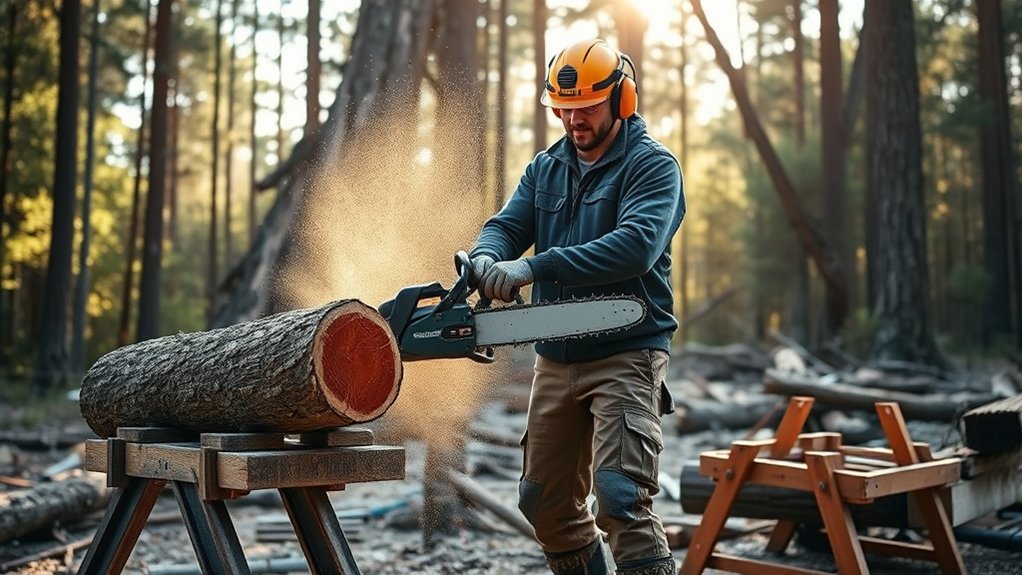
Always carry your chainsaw with the engine off, the guide bar facing backward, and the muffler away from your body. This helps reduce injury risks during transport.
When you’re ready to cut, grip the saw firmly with both hands. If you’re right-handed, hold the handle with your right hand to maintain better control.
Make sure you position yourself with stable footing. Avoid cutting above shoulder height or overreaching because these can mess with your balance and increase the danger.
It’s important to follow strict safety procedures every time. Plan your cut carefully, clear the area of obstacles and bystanders, and check that your escape route is clear.
Also, regularly check the chain tension and sharpness. This helps you work safely and prevents the chain from coming off.
Chainsaw Kickback: Recognition and Prevention
When the tip of your chainsaw’s guide bar strikes an object, it can cause a sudden, forceful kickback that throws the saw upward toward you. Recognizing and preventing kickback is vital to keep yourself safe. Always maintain a firm two-handed grip and balanced stance to control the saw.
Avoid letting the nose of the guide bar contact logs, branches, or other solid objects. It’s super important to use chainsaws equipped with an inertial safety chain brake to stop the chain during kickback.
Keep your chain sharp and properly tensioned to reduce kickback risk. Also, regularly inspect and maintain your chainsaw to guarantee all safety features function correctly.
Following these steps helps you prevent injury and operate your chainsaw confidently and safely. It’s all about being prepared and staying aware while you work.
Chainsaw Refueling and Transport Safety
Since fuel vapors can ignite easily, you should refuel your chainsaw only in a well-ventilated area with the engine completely cool. Make sure to keep at least 10 feet away from any ignition sources like open flames or cigarettes. Use a funnel to avoid spills and clean any fuel residue before starting.
When transporting, keep the chainsaw level with the fuel cap up and secure it firmly. Avoid carrying it inside the passenger area for safety. Always use a chain guard or carrying case for added protection.
| Task | Safety Tip |
|---|---|
| Refueling | Use funnel, wipe spills, cool engine |
| Location | Well-ventilated area, 10 ft from ignition |
| Transport | Keep level, fuel cap up, secure to prevent tip |
| Storage | Drain fuel, disconnect spark plug wire |
Tree Felling Safety Tips
Before you start felling a tree, make sure you’re wearing all the essential protective gear. That means a helmet, gloves, and chainsaw chaps to help reduce the risk of injury.
It’s really important to keep yourself safe.
Next, get comfortable with the proper cutting techniques. For example, the two-cut method is great because it helps the tree fall exactly where you want it to — predictably and safely.
Knowing this can make a big difference.
Also, always stay alert to what’s going on around you. Make sure you have a clear escape route planned out ahead of time.
This way, you can protect yourself throughout the entire process without any surprises.
Essential Protective Gear
Although operating a chainsaw demands skill, your safety depends equally on wearing the right protective gear. Using essential protective gear minimizes injury risks and guarantees you stay protected from hazards like flying debris and accidental cuts.
Always equip yourself with hard hats to shield your head from falling branches or debris. Chainsaw chaps made from ballistic nylon fibers guard your legs against chain contact. Steel-toed boots protect your feet from cuts and crushing injuries.
Don’t forget hearing protection such as earplugs or earmuffs to prevent noise-induced hearing loss. Gloves and reflective clothing for you and any assistants enhance grip and visibility on site.
Never underestimate the importance of proper gear. It’s your first line of defense when handling a chainsaw.
Proper Cutting Techniques
Wearing the right protective gear sets the foundation for safe chainsaw operation, but mastering proper cutting techniques is what truly controls the outcome when felling a tree.
Start by making a face cut at a 60 to 70-degree angle facing the tree’s intended fall direction; this notch guides the tree safely down.
Next, perform the back cut slightly above the face cut’s bottom, leaving a 0.5 to 1-inch hinge to control the fall and prevent premature breakage.
Always maintain a clear escape path at a 45-degree angle opposite the fall.
Avoid cutting above shoulder height or overreaching, as it compromises balance and safety.
Keep constant awareness of hazards like power lines.
Proper cutting combined with correct guide bar handling guarantees safety throughout the process.
Frequently Asked Questions
How Do I Store a Chainsaw Safely When Not in Use?
To store your chainsaw safely, follow some key maintenance tips. First, drain the fuel tank to make sure the fuel is stored properly.
Then, disconnect the spark plug wire to avoid any accidental starts.
Make sure to clean off all sawdust and debris thoroughly—that helps prevent rust from forming. It’s also a good idea to use protective gear like a chainsaw scabbard or case to keep the chain and bar safe.
When it’s time to put your chainsaw away, store it in a cool, dry place. Keep it out of reach of children, and if you can, lock it up for maximum safety.
This way, you’re taking all the right steps to keep your chainsaw safe and ready for next time.
What Are the Best Chainsaw Brands for Beginners?
For beginner chainsaw features, you want lightweight, easy-start engines, and good safety functions. Brands like Husqvarna and Stihl offer ideal chainsaw size comparison options with compact, manageable models.
If you prefer electric chainsaw options, Makita’s cordless models provide quiet, maintenance-free use, while Greenworks delivers affordability and ease.
Echo balances power and weight perfectly for novices.
Choose based on your cutting tasks, making sure you feel comfortable and in control to prevent accidents. It’s all about finding what works best for you!
Can I Use a Chainsaw Indoors or in Confined Spaces?
You shouldn’t use a chainsaw indoors or in confined spaces. Over 30% of chainsaw injuries come from poor ventilation and cramped areas.
Chainsaw ventilation requirements are critical because fumes build up quickly indoors. This poses serious health risks. You’ve got to be careful with that.
You also need to think about indoor safety precautions, like making sure there’s proper airflow and wearing ear protection. Chainsaws are loud—they produce noise levels over 100 decibels.
How Do I Sharpen a Chainsaw Chain Properly?
To sharpen a chainsaw chain properly, use the right sharpening tools like a round file that matches your chain’s teeth diameter. Keep a consistent filing angle between 25 and 35 degrees.
Make sure to apply about 3 to 5 strokes per tooth to get an even sharpness all around.
Don’t forget to adjust the depth gauges according to the manufacturer’s specs.
It’s also important to check and adjust the chain tension regularly as part of your chainsaw maintenance routine. This helps keep everything running smoothly.
And always remember to wear safety gloves and goggles. You want to protect yourself from injuries while sharpening the chain.
Safety first!
What Should I Do if the Chainsaw Stops Working Suddenly?
If your chainsaw stops suddenly, first engage the chain brake and safely lower it.
For chainsaw troubleshooting, check fuel levels and inspect the spark plug and air filter for common issues like clogging or wear. These emergency chainsaw procedures help prevent damage or injury.
If problems persist, consult the operator’s manual or contact a qualified technician for expert assistance.
Never attempt unsafe repairs on the spot.
Conclusion
Using a chainsaw might seem intimidating at first, but with proper safety gear, maintenance, and technique, you can confidently handle it without accidents. Don’t let fear hold you back. Every expert started as a beginner who prioritized safety.
By following these guidelines, you’ll reduce risks like kickback and guarantee safe cutting and felling. Remember, caution and preparation turn a powerful tool into a reliable ally for your projects.
Stay alert, stay safe.