Can You Vacuum Wood Floors: Safe Cleaning Methods You Should Follow
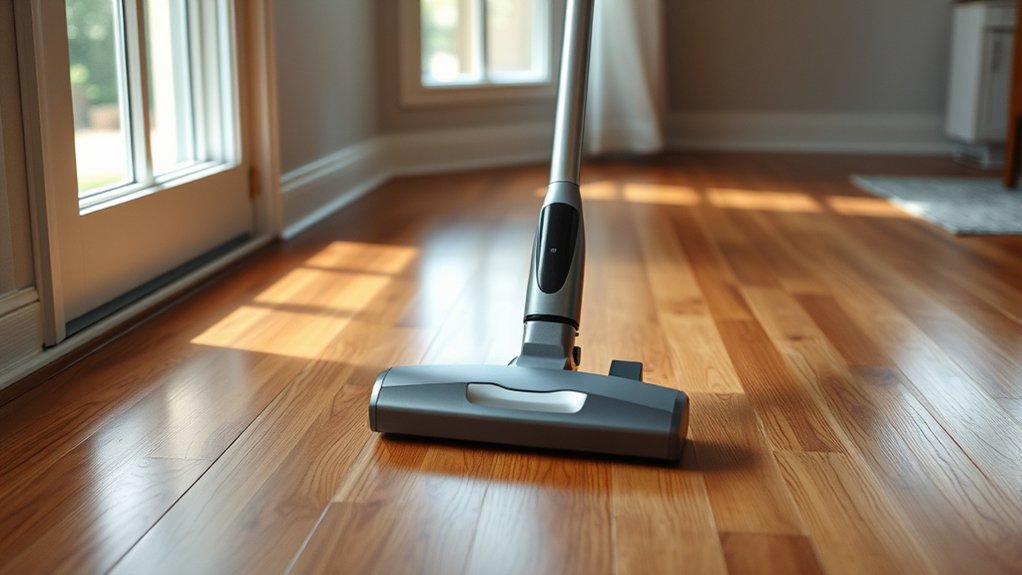
You can safely vacuum wood floors if you use the right vacuum with soft or rubber wheels. Avoid models with beater bars or hard brushes since they can scratch surfaces.
Vacuum in the direction of the wood grain and always check for debris on the vacuum head before use. This helps protect your floor’s finish.
Pair vacuuming with regular sweeping and spot cleaning to keep your floors looking great.
Want to learn effective techniques? Also, find out how to choose the best vacuum for long-lasting hardwood care.
Can You Vacuum Hardwood Floors Safely?
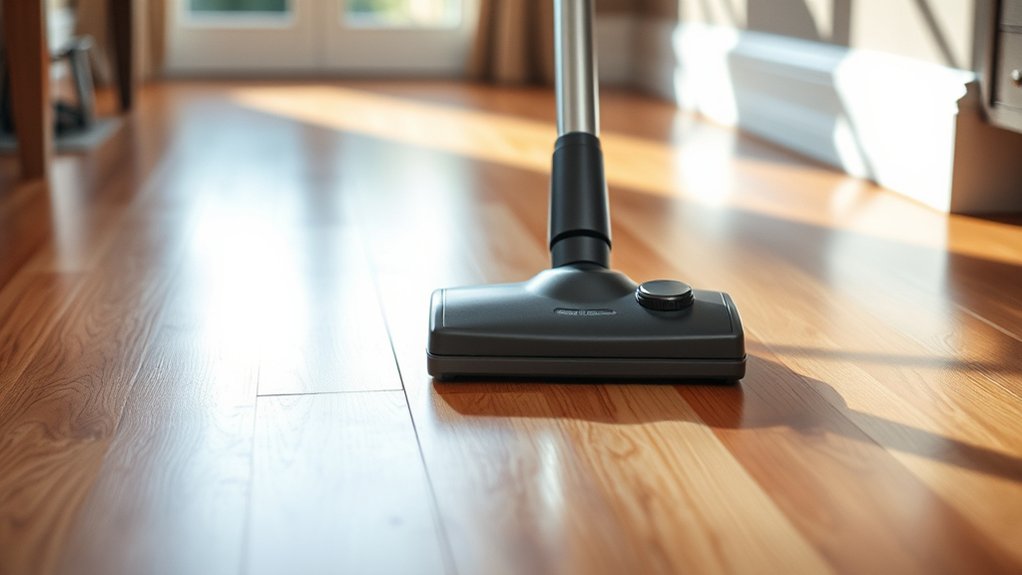
How can you safely vacuum hardwood floors without causing damage? The National Wood Flooring Association recommends vacuuming hardwood floors regularly to prevent dirt buildup and maintain their finish.
To keep your floors safe, choose a vacuum designed for hard surfaces. Avoid models with beater bars because they can scratch. Instead, opt for vacuums with switchable brush rolls.
Always vacuum in the direction of the wood grain. This helps lift dust effectively and minimizes cross-grain drag that can damage the finish.
Make sure the vacuum’s wheels are rubberized or padded to avoid scuffing. Also, check the vacuum head for any debris before you start to prevent scratches.
Why Vacuuming Hardwood Floors Is Important
You’ll want to vacuum hardwood floors regularly to get rid of dirt and debris that can scratch and dull the surface.
It’s not just about keeping them looking nice — clean floors actually last longer.
When you stay consistent with vacuuming, you’re protecting your investment and making your living space healthier, too.
Dirt Removal Benefits
Vacuuming hardwood floors regularly prevents dirt and debris buildup that can dull their natural shine.
When you vacuum, you effectively remove dust and particles that act like sandpaper, wearing down the floor’s finish. This cleaning step isn’t just about appearance; it also improves indoor air quality by eliminating allergens trapped in dust.
To clean your hardwood floors properly, use a vacuum specifically designed for them, one with soft wheels and no beater bars to avoid surface damage.
The National Wood Flooring Association suggests vacuuming two to three times per week to maintain cleanliness and protect the finish.
By incorporating regular vacuuming into your cleaning routine, you keep your floors looking vibrant and fresh.
Plus, you preserve both their beauty and the health of your home environment. It really makes a difference!
Floor Longevity Support
Although it might seem like a small task, regularly cleaning your hardwood floors with the right vacuum plays an essential role in extending their lifespan. Vacuuming removes dirt and debris that cause micro-scratches, which gradually dull finishes and reduce floor longevity. The National Wood Flooring Association recommends vacuuming 2-3 times weekly to minimize this damage.
Using the appropriate vacuum type, one without beater bars and with soft wheels, prevents further harm to your hardwood floors.
Consistent maintenance like this not only preserves the wood’s appearance but also improves indoor air quality by eliminating trapped allergens.
How to Choose a Vacuum Safe for Hardwood Floors
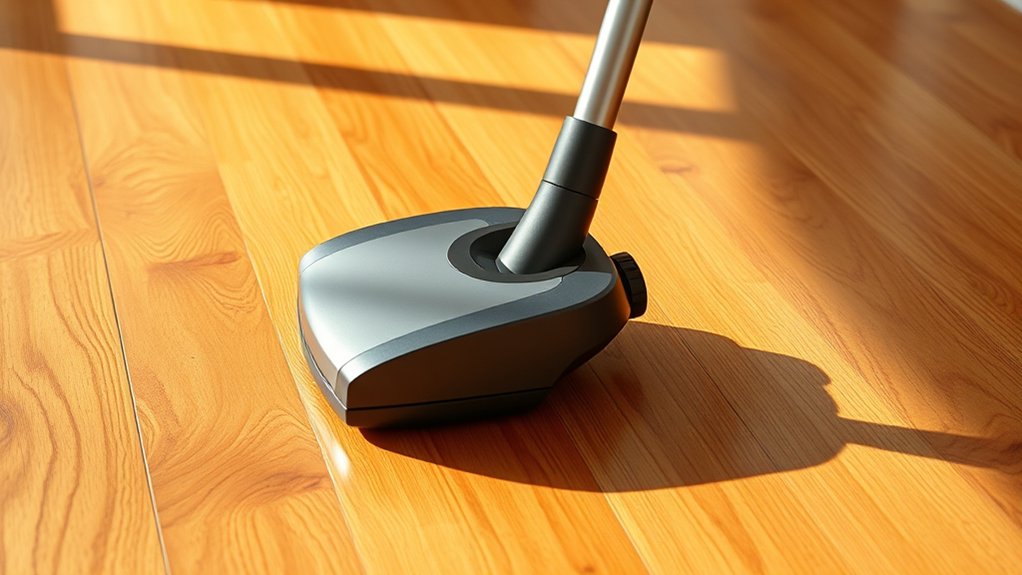
You’ll want to pick a vacuum that’s specifically labeled as safe for hardwood floors to avoid any damage.
It’s a good idea to steer clear of models with beater bars. Instead, look for ones that have switchable brush rolls and wheels padded with rubber or felt.
What really matters is strong suction combined with soft bristles—that way, you can clean effectively without worrying about scratching your wood.
Key Vacuum Features
When selecting a vacuum safe for hardwood floors, choose one specifically labeled for that purpose to protect your wood from damage. A vacuum for hardwood should avoid beater bars, as these can scratch or scuff the finish.
Instead, look for models with soft rollers or rubber wheels to prevent marks and guarantee smooth movement. Strong suction is essential for cleaning wood floors effectively, lifting dirt without aggressive agitation.
Prioritize vacuums with gentle bristles or no brush roll to maintain the floor’s integrity. Lightweight designs help you maneuver easily around furniture and tight spaces, making regular cleaning simpler.
Avoiding Floor Damage
Protect your hardwood floors by choosing a vacuum designed specifically to prevent damage. To vacuum your hardwood safely and keep your floors looking pristine, avoid damaging the wood by selecting a model without beater bars and equipped with soft rubber wheels. These features help pick up dust and debris effectively while protecting the finish.
Make it a habit to regularly inspect vacuum head components to remove trapped grit. This grit could scratch the surface during use, so keeping the vacuum clean is key.
For a deep clean hardwood flooring routine, opt for vacuums with strong suction and soft bristles. Plus, a lightweight design makes handling much easier.
Here are some quick tips to remember:
- Choose vacuums labeled “safe for hardwood” without beater bars
- Use soft rubber wheels to prevent surface scratches
- Regularly inspect the vacuum head for trapped debris
Vacuums That Can Damage Hardwood Floors
Although vacuuming is essential for maintaining hardwood floors, certain vacuum features can cause more harm than good.
Vacuums that can damage your hardwood flooring often have rotating brushes or beater bars. These parts can scratch your floors and dull the finish over time.
Rotating brushes and beater bars on vacuums can scratch and dull hardwood floors over time.
Also, vacuums with unpadded plastic wheels can scratch softwoods and delicate finishes. Metal bottom plates or nozzles on upright models can cause significant damage if used the wrong way.
Dirty vacuum heads make scratching even more likely, so regular cleaning of vacuum components is really important.
To protect your floors, avoid vacuums with these damaging features. Instead, look for models made specifically for hardwood floors, with soft wheels and no rotating brush heads.
How to Vacuum Hardwood Floors Without Scratches
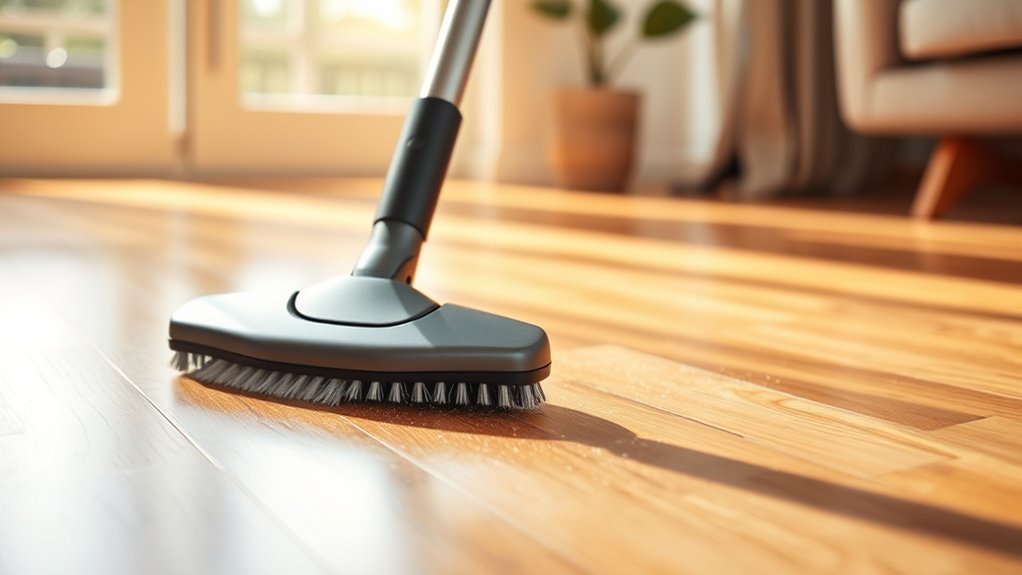
Vacuuming hardwood floors without causing scratches requires choosing the right vacuum and using proper techniques. To vacuum hardwood safely, select a vacuum designed for hard floors that disables the brush roll or beater bar. This prevents damage to the finish and avoids scattering small particles that can scratch the surface.
Use a hardwood floor cleaner setting if available to optimize cleaning without harsh agitation. Keep the vacuum head and wheels clean to avoid trapping debris that might scratch your floors. Maintain a vacuuming frequency of 2-3 times per week to minimize micro-scratches and keep floors pristine.
Vacuum in the direction of the wood grain for better dirt pickup. Choose vacuums with rubber or felt-padded wheels to avoid scuff marks. Regularly inspect and clean the brush roll and vacuum head to keep them clean.
Tips to Maintain Hardwood Floors Between Vacuums
While regular vacuuming keeps hardwood floors clean, maintaining them between sessions is just as essential.
The best way to keep hardwood floors clean is by incorporating sweeping and vacuuming daily with a microfiber dust mop. This method excels at picking up small particles that can cause scratches if left unattended.
Daily sweeping and vacuuming with a microfiber dust mop prevents scratches by removing fine particles effectively.
Use area rugs at entry points to trap dirt before it reaches your floors. Immediately wipe spills with a damp cloth to prevent stains and damage.
You should also inspect vacuum attachments regularly to avoid debris buildup that might scratch surfaces.
Implementing a no-shoes policy can greatly reduce dirt accumulation, helping you keep hardwood floors clean multiple times between deep cleanings.
These tips preserve your floors’ appearance and extend their lifespan effectively.
Should You Sweep Instead of Vacuum Hardwood Floors?
How often you should sweep instead of vacuuming hardwood floors depends on the type of debris and the condition of your flooring.
Sweeping effectively removes larger dust and dirt but can push finer particles into the floor’s finish, risking scratches. The National Wood Flooring Association recommends vacuuming 2 to 3 times weekly to capture small debris and protect your hardwood’s shine.
Using a vacuum with a hard floor setting and no beater bar is essential to avoid damage.
To balance cleaning and care, consider this:
Sweep daily for visible larger debris and dust.
Vacuum multiple times a week for finer dirt and thorough cleaning.
Always use appropriate vacuum settings for hardwood floors.
Combining both methods keeps your floor clean without compromising the finish.
Frequently Asked Questions
Can Vacuuming Remove Pet Hair From Hardwood Floors Effectively?
Yes, vacuuming can effectively remove pet hair from hardwood floors if you choose the right vacuum type.
Look for models with strong suction power and soft brush attachments designed for hard surfaces. This helps avoid scratches and keeps your floors safe.
Cleaning regularly, about 2 or 3 times a week, prevents hair buildup and keeps things hygienic.
It’s a simple routine that really makes a difference.
Also, remember to empty the vacuum often and check the brushes for debris.
Doing this keeps your vacuum working well and your floors looking great.
How Often Should Vacuum Filters Be Cleaned When Used on Wood Floors?
Think of filter maintenance as a gentle nudge for your vacuum’s performance.
You should clean your vacuum filters every 2-4 weeks, especially if you’re targeting dust removal or pet hair on hardwood floors. This keeps vacuum efficiency high and supports hardwood care.
Stick to cleaning schedules and replace filters every 6-12 months.
Using pet-friendly options when possible is a smart move. Regular filter upkeep guarantees your floors stay pristine and your indoor air quality remains fresh.
Is It Safe to Use a Handheld Vacuum on Hardwood Stairs?
Yes, using a handheld vacuum on hardwood stairs is safe if you consider safety considerations like avoiding rotating brush heads and choosing models with soft wheels to protect the hardwood surface.
Handheld vacuum benefits include lightweight design and strong suction power, ideal for stair cleaning techniques.
Compare vacuum brush types to prevent scratches, and opt for low vacuum noise levels to maintain comfort.
Regular maintenance guarantees effective, damage-free cleaning on delicate wood finishes.
Can Vacuuming Wood Floors Help Prevent Allergens in the Home?
Think of vacuuming as a shield that blocks allergen buildup on your wood floors. By increasing your vacuuming frequency to 2-3 times weekly, you reduce dust accumulation and improve air quality.
Choosing the right vacuum types with HEPA filters really helps with hardwood maintenance because they trap tiny particles.
Using proper cleaning techniques keeps your floors spotless and allergen-free.
This creates a healthier home environment and protects your family from airborne irritants. It’s a simple step that makes a big difference!
Are Cordless Vacuums Better for Hardwood Floors Than Corded Ones?
Yes, cordless vacuums often beat corded ones for hardwood floors because of cordless convenience and better maneuverability ease.
You’ll appreciate the lighter weight comparison, making it easier to navigate tight spots without scratching.
Modern models pack strong suction power, ensuring cleaning efficiency, though battery life varies between 20 to 60 minutes, so plan accordingly.
Keep cost considerations in mind, as cordless models can be pricier, but their portability and ease usually justify the investment.
Conclusion
You might wonder if vacuuming hardwood floors is risky, but with the right tools and techniques, it’s not only safe, it’s smart. Like a gentle breeze that clears leaves without harm, a vacuum designed for hardwoods keeps your floors spotless without scratches.
So, choose wisely, vacuum carefully, and maintain regularly to preserve their beauty. After all, your floors deserve care that’s both thorough and tender.