Can Bunnies Eat Wood: True Facts Discussed
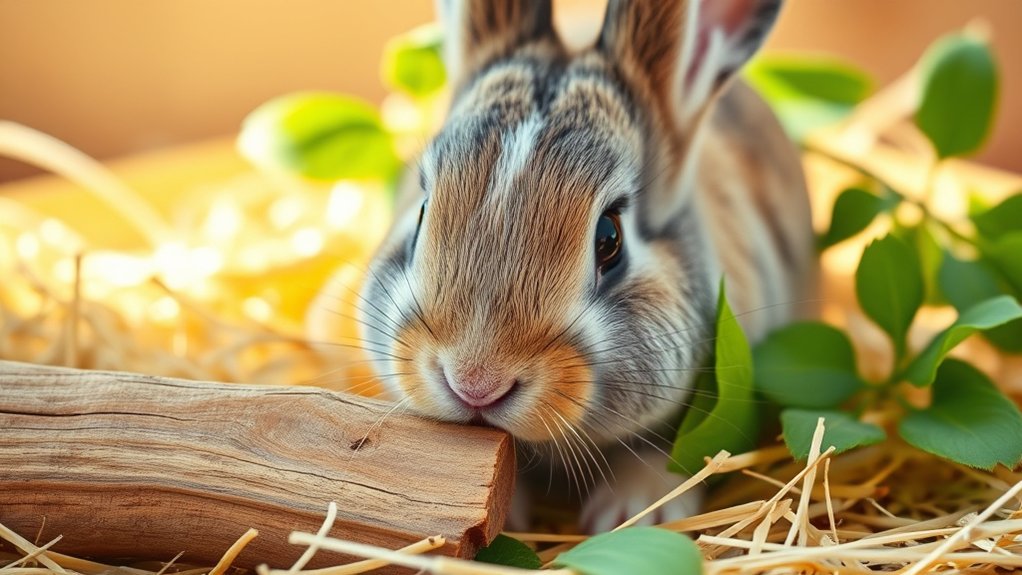
You can safely let your bunny chew on certain untreated woods like apple, willow, and birch. These help wear down their teeth and provide mental stimulation.
Avoid toxic woods such as cedar and stone-fruit trees, especially plum wood. These can pose serious health risks.
Always prepare wood properly by cleaning and drying it. Then, regularly inspect it for splinters or wear.
Understanding these details guarantees your rabbit’s chewing is both safe and beneficial. There’s even more to discover about keeping your bunny happy and healthy!
Why Do Bunnies Chew Wood?
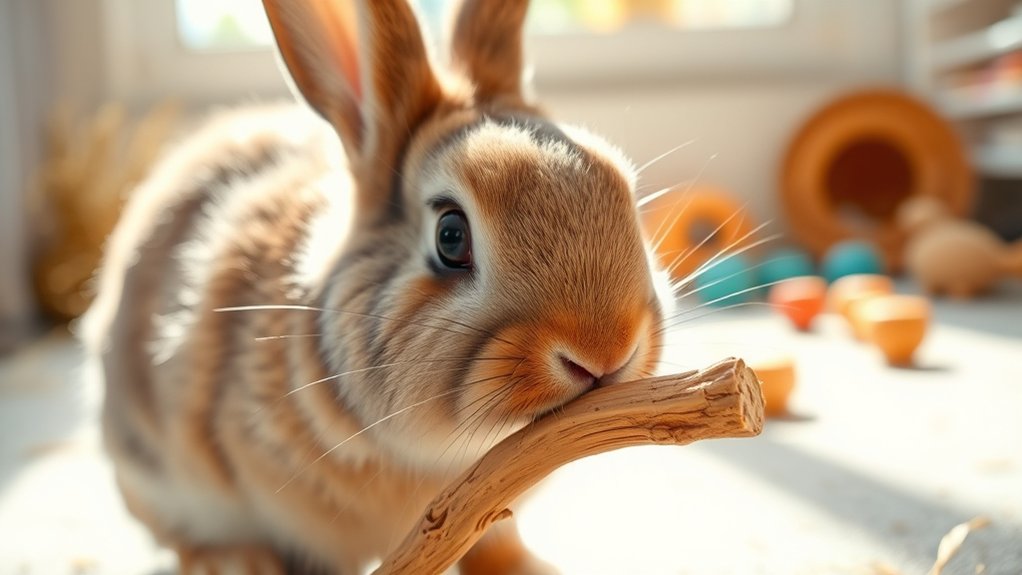
One key reason bunnies chew wood is to wear down their constantly growing teeth. This helps prevent painful dental problems like ulcers. You’ll notice rabbits chew not just safe wood like untreated apple but sometimes even their hutch. That’s driven by their natural instinct to gnaw.
This behavior isn’t just about dental issues. It also provides essential mental stimulation, which helps reduce boredom and encourages overall well-being. When they chew appropriate chew toys made from safe wood, they satisfy this instinct without damaging their environment.
Chewing can also be a way for bunnies to cope with stress or anxiety. So, providing safe wooden items helps redirect their needs in a productive way.
Is Chewing Wood Safe for Rabbits?
You’ll want to pick safe wood options like untreated apple, willow, or birch to keep your rabbit healthy. These types are generally good for chewing and won’t cause problems.
Just be sure to avoid toxic woods like cedar and those from stone-fruit trees because they can be really harmful to your bunny.
Also, always double-check that the wood is free from any chemicals, paints, or varnishes before letting your rabbit chew on it.
It’s better to be safe than sorry when it comes to your pet’s health!
Safe Wood Options
Several types of untreated wood, such as willow, apple, and birch, are safe for rabbits to chew and support their natural dental health.
These safe wood options mimic your rabbit’s chewing behavior and help wear down their continuously growing teeth, preventing dental problems.
When selecting types of wood, apple sticks are particularly popular because they’re both safe for rabbits and appealing to chew.
Always make certain the wood is untreated, free from chemicals, paints, or varnishes to avoid health risks.
Providing a variety of untreated woods encourages healthy chewing habits and enriches your rabbit’s environment.
Regularly inspecting and replacing worn chew toys keeps things safe and effective.
Risks Of Toxic Wood
Although chewing wood is a natural behavior for rabbits, not all types of wood are safe for them. Some woods, like cedar and stone-fruit trees, contain toxic substances such as cyanide that pose serious health risks if ingested. These toxins can cause liver and digestive problems.
So, it’s really important to avoid letting your rabbit chew on untreated or unknown wood. To keep your pet safe, offer only untreated, non-toxic options like willow, apple, or birch wood sourced from reputable suppliers.
Regularly checking your rabbit’s chewing habits helps you spot early signs of health issues caused by toxic wood exposure.
Prioritize giving safe wood to promote your rabbit’s well-being and prevent avoidable health problems linked to toxic wood ingestion.
Which Woods Are Safe for Rabbits to Chew?
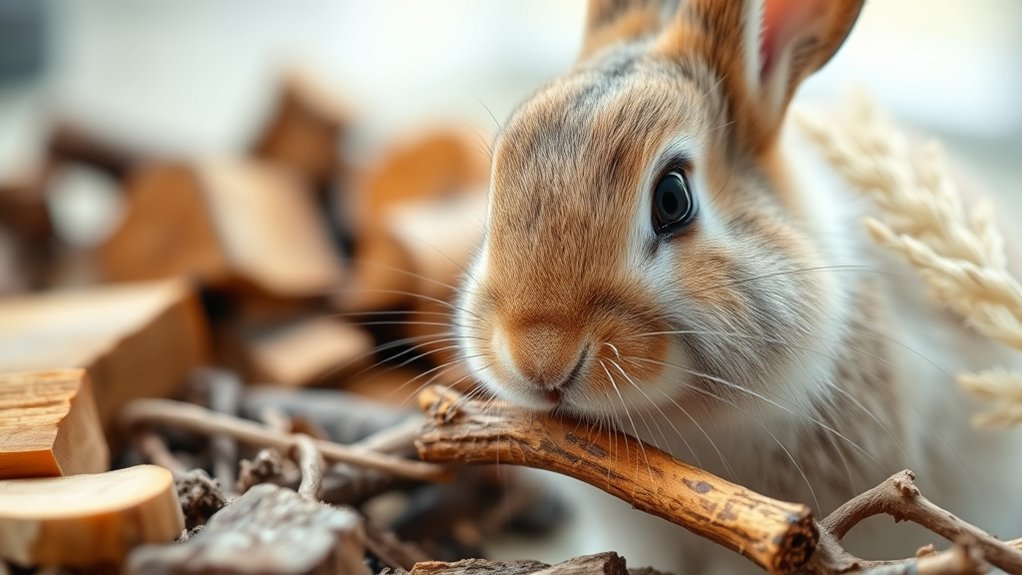
When selecting wood for your rabbit to chew, it’s important to choose safe options that support their dental health and mental stimulation. Some kinds of wood safe for bunnies include untreated pine, apple, willow, and birch wood. Birch wood contains salicylates, so monitor your rabbit for any adverse reactions.
Always make sure the wood is untreated and chemical-free. This keeps your bunny safe while they enjoy their chew time.
| Kind of Wood | Safety Notes |
|---|---|
| Untreated Pine | Safe for chewing, supports teeth |
| Apple | Safe, tasty, stimulates chewing |
| Willow | Safe, encourages natural behavior |
| Birch Wood | Generally safe, watch for reactions |
Providing these woods promotes healthy chewing habits without risking toxicity or harm. It’s a simple way to keep your rabbit happy and healthy.
Toxic Woods to Avoid, Including Plum Wood
If you want to keep your rabbit safe, you must avoid toxic woods like plum wood, which contains cyanide and poses a serious health risk.
Alongside plum wood, there are other toxic woods to avoid, such as cedar and yew, which can irritate your rabbit’s digestive system.
Many fruit trees, especially those with pits, also present dangers. Always provide untreated wood from reliable sources to prevent exposure to harmful chemicals.
Choosing safe wood options for your rabbits is essential to promote health and prevent illness.
Selecting safe woods for your rabbits is key to ensuring their health and avoiding sickness.
To guarantee your bunny’s well-being, make it a habit to regularly educate yourself on safe and unsafe woods.
This knowledge helps you make informed decisions and avoid potential health risks associated with toxic woods.
It’s worth staying up-to-date to keep your furry friend happy and healthy!
How to Prepare Safe Wood for Your Rabbit
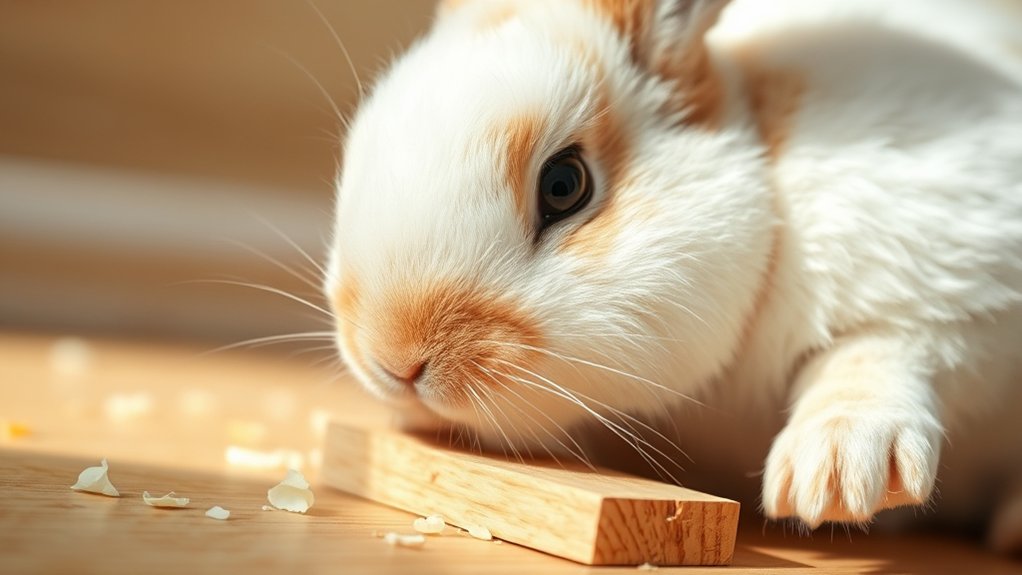
Since your rabbit’s safety depends on the wood you provide, you should always choose untreated branches like apple, willow, or birch and prepare them carefully before offering them as chew toys.
Start by sourcing wood only from untreated trees to avoid harmful chemicals. Next, wash it thoroughly to remove dirt, pesticides, and parasites.
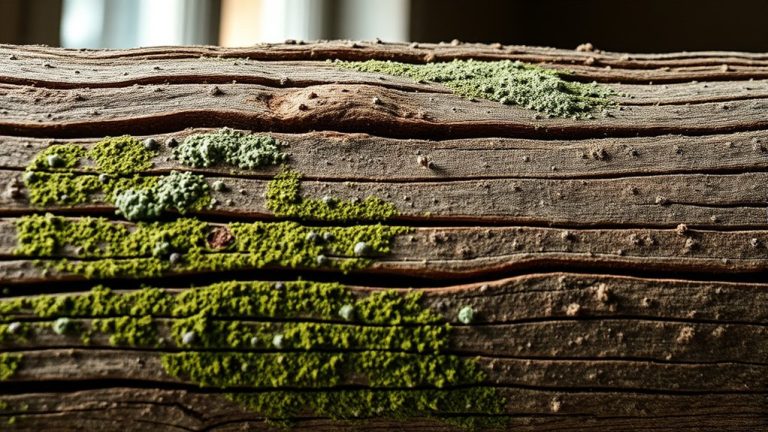
Cut wood into manageable pieces suitable for your rabbit, preventing choking hazards. Dry any fresh wood completely to inhibit mold growth.
Finally, inspect wood regularly for splinters or wear and replace it promptly to maintain a safe chewing environment.
Following these steps guarantees your bunny enjoys wooden chew toys safely, promoting dental health and enrichment without risking exposure to toxins or hazards.
- Source wood from untreated trees
- Wash it thoroughly
- Cut wood into safe pieces
- Dry any fresh wood completely
Signs Your Rabbit Ate Unsafe Wood
Although rabbits enjoy chewing on wood, eating unsafe types can quickly lead to serious health problems. You need to watch for signs that your rabbit is chewing unsafe wood, such as lethargy, loss of appetite, and unusual droppings. These signs usually indicate digestive distress.
Rabbits chewing unsafe wood may show lethargy, appetite loss, and unusual droppings, signaling digestive distress.
If your rabbit shows symptoms like vomiting or diarrhea, you should get immediate vet attention because these might signal toxicity. Excessive chewing on unsafe wood can also cause dental issues, like broken teeth or ulcers from improper wear.
You might notice behavioral changes too, like increased aggression or anxiety, which often point to discomfort.
It’s important to monitor for signs of liver toxicity, such as jaundice or changes in urine color, if you think your rabbit has ingested unsafe wood. Catching these signs early means you can get your rabbit the help it needs right away.
Alternatives to Wood Chews for Healthy Teeth
Keeping your rabbit’s teeth healthy means offering safe alternatives to potentially harmful wood chews. To provide your rabbit with effective chew options that support dental health, consider these natural and safe materials. Unlimited access to grass hay supplies essential fiber that naturally wears down teeth.
Unprinted, untreated cardboard boxes offer a biodegradable and fun chewing surface. Dried apple sticks encourage natural foraging behavior while promoting dental care. Bamboo provides a lightweight, renewable option mimicking natural chewing habits.
Willow twigs are favored by rabbits for enrichment and safe gnawing. By rotating these chew options, you guarantee your rabbit stays engaged and maintains peak dental health without risking exposure to harmful substances found in some wood products.
Frequently Asked Questions
How Often Should I Replace Wood Chew Toys for My Bunny?
You should replace wood chew toys for your bunny every 1 to 2 weeks, depending on how often they chew and what they like.
Keep an eye on your bunny’s chewing habits so you can spot any wear or splinters early. This helps make sure the toys stay durable and safe.
Always pick wood types that are safe and have low toxicity levels.
You might even want to make your own chew toys from untreated wood to have better control over the quality.
Changing the toys regularly keeps your bunny interested and helps protect their dental health in the best way possible.
It’s a simple way to keep your furry friend happy and healthy!
Can Wood Dust From Chewing Cause Respiratory Issues in Rabbits?
Yes, wood dust from chewing can cause respiratory issues in rabbits. You should choose safe materials and non-toxic wood types to protect your bunny’s respiratory health.
Since chewing behavior supports dental health and environmental enrichment, opt for untreated woods to reduce wood toxicity and allergy concerns.
Regularly cleaning their environment helps minimize dust buildup. This way, your rabbit stays healthy while enjoying their chew toys safely.
It’s all about keeping things safe and comfy for your furry friend!
Are There Specific Wood Sizes or Shapes That Bunnies Prefer?
You’ll find that bunnies prefer wood sticks about 1/4 to 1/2 inch in diameter and 6 to 12 inches long. Size matters for easy handling and chewing.
Preferred shapes mimic natural twigs, which engage their chew preferences and encourage natural bunny behavior. Texture also impacts their interest, with rough bark adding sensory appeal. Fresh, untreated wood offers flavor attraction too.
Always consider wood types carefully to avoid safety concerns. This way, you ensure a healthy, enjoyable experience for your pet.
Can Baby Rabbits Start Chewing Wood, or Is It for Adults Only?
Yes, baby rabbits can start wood chewing as part of their natural baby rabbit behavior. Wood chewing is important for their dental health because it helps wear down their continuously growing teeth.
You should provide safe wood types, like untreated apple or willow. Also, offer chew toy alternatives to keep playtime fun and enriching.
Keep an eye on their chewing habits to make sure they don’t overdo it.
And remember to consider their age when choosing the right wood sizes and textures for your young bunny.
How Do I Clean Wooden Chew Toys Safely Without Harming My Rabbit?
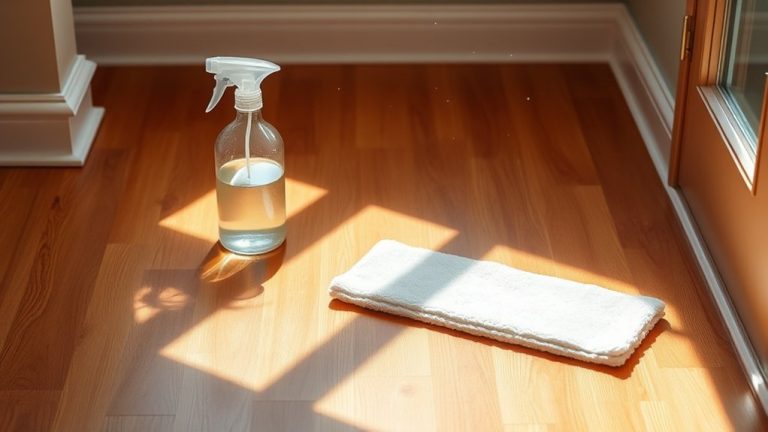
To clean wooden chew toys safely, use mild soap and warm water. Focus on natural wood options to avoid any toxic coatings.
Disinfect wooden toys with a vinegar solution—1 part vinegar to 3 parts water—and then rinse thoroughly.
Avoid harsh chemicals because they can be harmful to your rabbit. It’s really important to clean and inspect the toys regularly. This helps you catch any wear and tear early.
Keeping up with regular maintenance not only keeps the wood safe but also makes the chew toys last longer. Plus, it guarantees your bunny stays healthy and happy.
Conclusion
If you think letting your bunny chew any old wood is harmless, think again. It could be a recipe for disaster! Chewing wood is natural, but only safe, non-toxic types should touch their teeth.
Ignoring this can lead to serious health issues, so always prepare and choose wood carefully. Remember, your bunny’s dental health depends on you. Don’t take shortcuts.
Safe wood and proper alternatives keep your furry friend happy and healthy. No exceptions!