Can You Use Wood Cutting Board For Meat: Hygiene Guide
You can use a wooden cutting board for raw meat safely if you follow strict hygiene practices. Always wash it immediately with hot, soapy water, sanitize with a diluted bleach solution, and avoid soaking to prevent warping.
It’s a good idea to use separate boards or color-coding to avoid cross-contamination. Also, regularly check for deep grooves or cracks because bacteria can hide there.
Don’t forget to oil the board monthly to keep it smooth. Proper care not only extends its life but also keeps it safe to use. The following details will help you master safe handling and maintenance.
Can You Safely Use Wood Cutting Boards for Raw Meat?
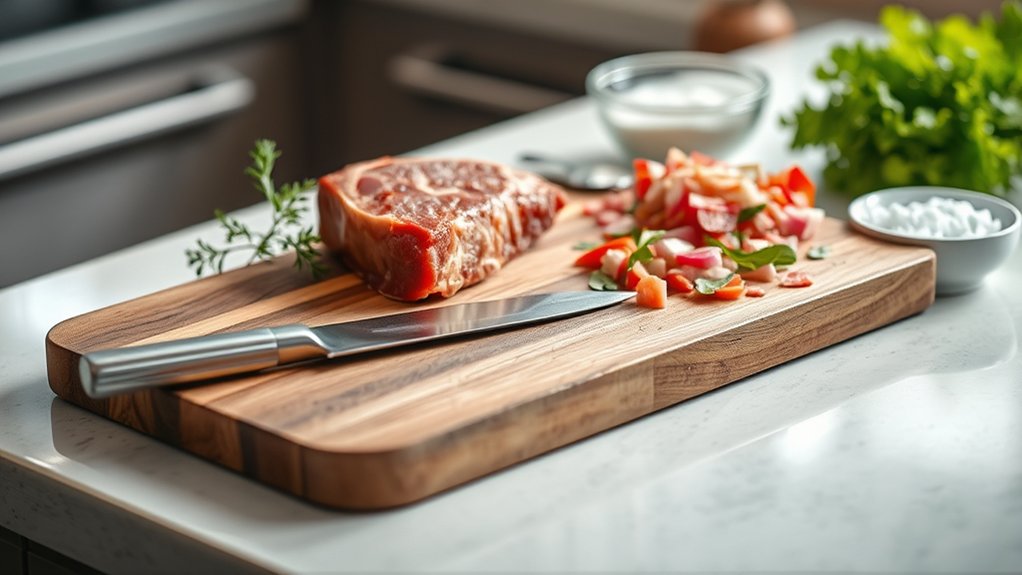
Although wooden cutting boards, particularly those made from hardwoods like maple, have natural antibacterial properties, you need to handle them carefully when using them with raw meat.
Wood cutting boards offer antimicrobial properties that can reduce bacteria like Salmonella, but grooves and scratches may trap harmful microbes if you don’t clean them properly.
Wood cutting boards naturally fight bacteria but require thorough cleaning to prevent trapped microbes in scratches.
After cutting raw meat, always wash your board immediately with hot, soapy water and sanitize it using a diluted bleach solution or vinegar to maintain food safety. Avoid soaking the board to prevent warping and cracking.
Regularly applying food-safe mineral oil keeps the wood hydrated and smooth, reducing bacteria harborage in grooves.
Preventing Cross-Contamination on Wood Cutting Boards
Using wood cutting boards safely with raw meat takes more than just proper cleaning. To prevent cross-contamination, always use separate wooden cutting boards for raw meat and other foods.
It’s a good idea to implement a color-coding system to clearly designate which board is for what. This really helps boost food safety.
After each use, make sure to clean the board thoroughly. Then, sanitize it using a vinegar solution or diluted bleach to get rid of bacteria.
Keep an eye on your wooden cutting boards for any deep grooves or cracks. These can trap bacteria and mess with hygiene. If a board shows significant wear, it’s best to replace it.
Regular maintenance also goes a long way. Oiling your boards regularly reduces how much moisture they absorb, which helps minimize bacterial risks.
Cleaning Wood Cutting Boards After Cutting Raw Meat
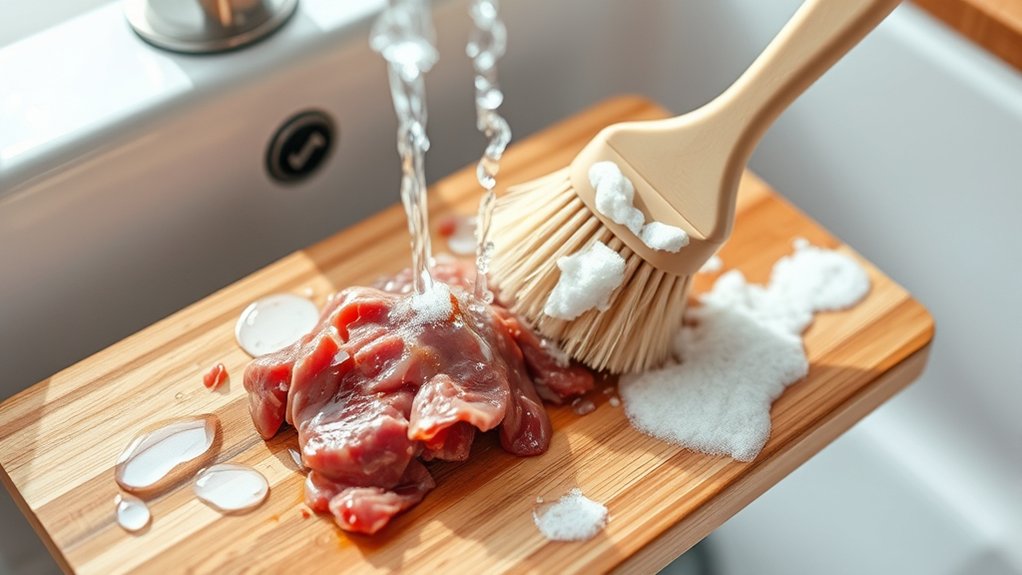
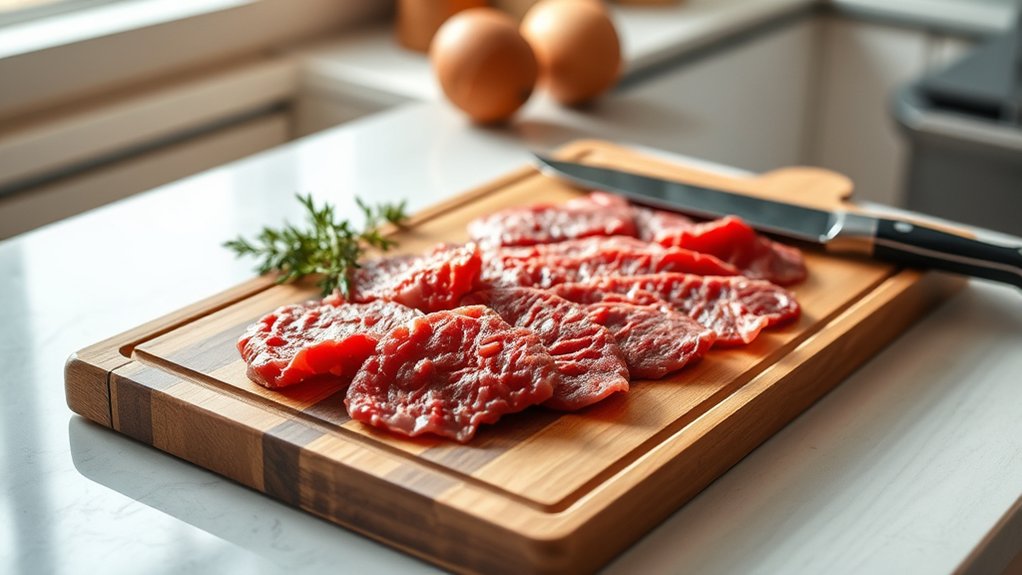
After you’ve finished cutting raw meat, go ahead and wash your wooden board right away with hot, soapy water. This helps get rid of bacteria and any leftover bits.
Then, to make sure it’s really clean, sanitize the board with a diluted bleach solution. Let it sit for a little while before you rinse it off.
Finally, be sure to dry the board completely—this stops it from warping and keeps bacteria from growing.
Immediate Washing Protocol
Wash your wooden cutting board immediately after cutting raw meat to prevent harmful bacteria like Salmonella and E. coli from lingering.
Immediate washing is essential to maintain hygiene and safety. Use hot soapy water to scrub the surface thoroughly, focusing on any deep grooves where bacteria might hide.
After washing, rinse thoroughly with clean water to remove all soap residues. Avoid soaking the board to prevent warping and bacteria buildup.
Follow these steps for effective cleaning:
- Scrub with hot soapy water right after use
- Rinse thoroughly to remove all soap and debris
- Air dry completely or pat dry with clean paper towels
Taking these simple steps right away really helps keep your kitchen safe and your cutting board in good shape.
It’s easier to clean when you do it immediately, so don’t wait!
Sanitizing With Bleach
Though thorough washing removes most contaminants, you should sanitize your wooden cutting board with a bleach solution to eliminate lingering harmful bacteria after cutting raw meat.
Prepare a bleach solution using 1 tablespoon of unscented liquid chlorine bleach per gallon of water. Flood the board’s surface with this solution and let it soak for at least 1 minute to guarantee effective disinfection.
After soaking, rinse the board thoroughly with clear water to remove any bleach residue. This step helps protect food safety.
Sanitizing your board like this is essential for maintaining proper hygiene and preventing bacteria buildup on wooden boards.
Also, regularly check your board for deep grooves or cracks. These can harbor bacteria even after cleaning and might compromise overall hygiene.
It’s a good idea to replace your board if it gets too worn out.
Thorough Drying Methods
Sanitizing your wooden cutting board with a bleach solution helps eliminate harmful bacteria, but proper drying is just as important to prevent moisture buildup that encourages bacterial growth.
After you cut raw meat, always wash your board immediately with hot, soapy water to remove bacteria and juices. Then, rinse thoroughly to get rid of any soap residue before drying.
Effective drying methods include air drying your board upright in a well-ventilated area. This helps guarantee complete moisture evaporation. If air drying isn’t an option, pat dry with clean paper towels instead.
Also, regularly condition your wood cutting boards with food-grade mineral oil. This reduces moisture absorption and keeps your board hygienic.
These steps help you sanitize effectively and keep your board safe for food prep by minimizing bacteria risks from dampness.
Inspecting and Maintaining Wood Boards Used for Raw Meat
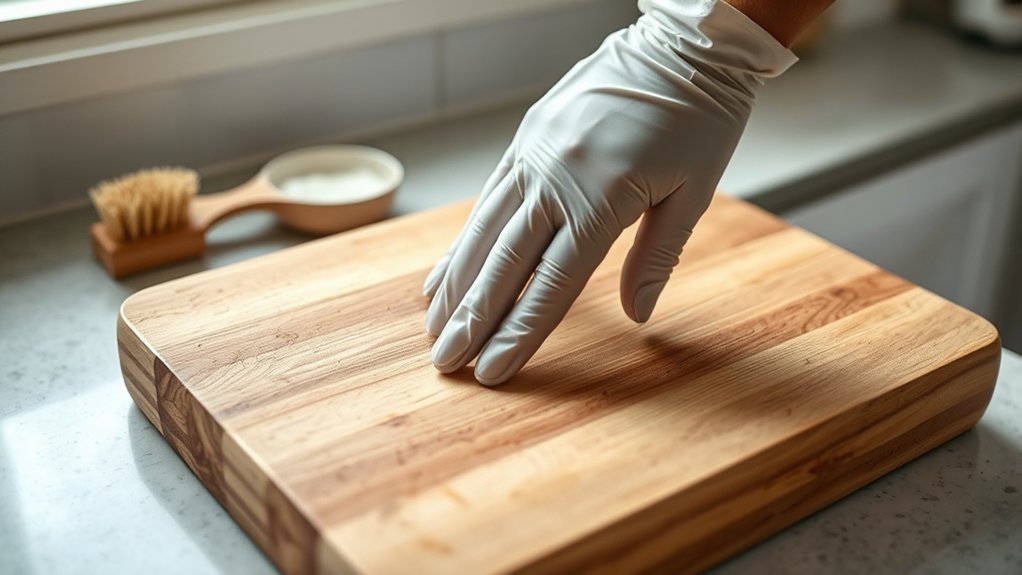
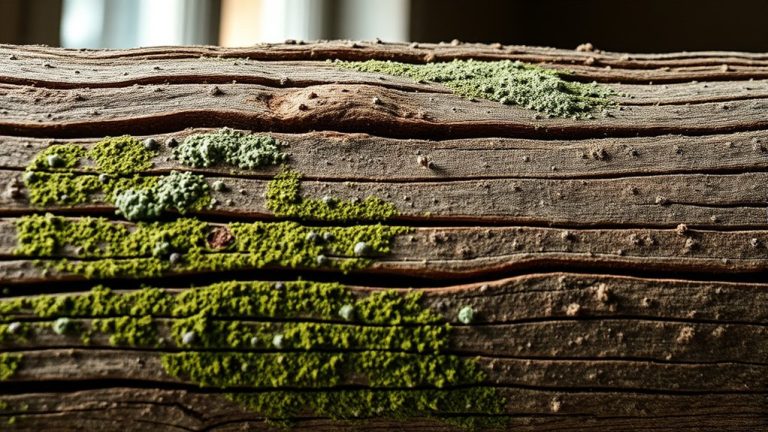
You should regularly check your wooden cutting board for deep grooves, cracks, or warping because these can harbor bacteria from raw meat.
It’s important to keep an eye out for any damage that might be hard to clean properly.
After cleaning your board, try to apply food-grade mineral oil about once a month.
This helps maintain the surface and reduces moisture absorption, which keeps the wood in good shape.
If your board shows excessive wear, it’s a good idea to replace it.
This way, you can keep your kitchen safe and hygienic without any worries.
Board Condition Assessment
Regularly evaluating the condition of your wooden cutting board is essential when preparing raw meat. Damaged surfaces can harbor harmful bacteria, so it’s important to keep an eye on your board’s condition.
Conduct a thorough board condition assessment to maintain hygiene and safe food preparation. Look out for deep grooves or cracks that can trap bacteria and compromise sanitation. Also, watch for warping or splintering, which signal the board’s surface is deteriorating. Signs of excessive wear mean it’s time to replace the board.
After inspection, sand down rough areas to smooth the surface and prevent moisture absorption. Use food-grade mineral oil periodically to seal the wood, which helps enhance durability and hygiene.
Always sanitize the board after use to eliminate pathogens. Ignoring these checks risks contamination.
Cleaning And Oiling
Always clean wooden cutting boards used for raw meat immediately with hot, soapy water to remove bacteria and prevent cross-contamination.
After washing, sanitize the boards using a bleach solution (1 tablespoon per gallon of water) or a food-safe alternative like diluted vinegar. This step guarantees thorough disinfection.
Make sure to inspect your wooden cutting boards regularly for deep grooves or cracks, as these can trap bacteria and compromise hygiene.
If you notice excessive wear, it’s best to replace the board.
To keep your boards in good shape, condition them monthly with food-grade mineral oil. This helps maintain moisture levels and prevents cracking.
Avoid soaking wooden boards or putting them in the dishwasher. Moisture can warp the wood and reduce how long your board lasts.
When to Replace or Resurface Your Wood Cutting Board
How can you tell when your wood cutting board needs replacing or resurfacing? Regularly inspect your cutting boards for signs of wear that could compromise hygiene and food safety.
You should replace or resurface your board if you notice deep grooves or cracks that harbor bacteria and increase moisture absorption.
Also, watch out for excessive wear like splintering, warping, or persistent stains and odors. These issues can make your board unsafe to use.
Surface damage that sanding and resurfacing can fix is a good sign you might just need a little TLC.
Oiling your board monthly helps prevent cracking and reduces moisture absorption, which prolongs its usability.
But if damage or odors stick around despite your best efforts, it’s safer to replace the board.
Taking these steps ensures your wood cutting board stays hygienic and safe for meat preparation.
Wood vs. Plastic and Bamboo: Choosing the Best Board for Meat
Although wooden cutting boards offer natural antibacterial properties, choosing the best board for meat really depends on what you prioritize—like maintenance, sanitation, and durability.
Wooden boards, especially those made from hardwood, need diligent cleaning and regular oiling to keep bacteria from building up in grooves.
Plastic cutting boards have a nonporous surface, which makes them easier to sanitize. They’re often preferred for raw meat because they can handle dishwasher cleaning and help reduce the risk of cross-contamination.
Bamboo boards fall somewhere between wood and plastic. They absorb less moisture but can dull your knives faster and need conditioning to stay in good shape.
No matter which type you go for, it’s super important to use separate cutting boards for raw meat to keep things safe.
Using proper sanitation practices and even a color-coded system can really help minimize cross-contamination. This way, you keep your prep surfaces hygienic and tailored to your needs.
Tips for Handling Raw Meat Safely on Wood Cutting Boards
Choosing a hardwood cutting board like maple sets a strong foundation for safe raw meat handling, thanks to its natural antibacterial qualities.
To maintain hygiene and prevent cross-contamination, you should clean wood cutting boards properly after handling raw meat. Always wash with hot, soapy water immediately, then sanitize using a diluted bleach solution.
Avoid soaking the board to prevent warping and cracking, which can harbor bacteria. Regularly inspect for deep grooves or cracks and replace boards showing excessive wear.
To maintain your board’s condition and enhance safety, apply food-safe mineral oil monthly.
Remember these tips for safe handling:
- Sanitize after each use to eliminate pathogens.
- Check and replace boards with deep grooves.
- Condition monthly to prevent drying and cracking.
Following these steps helps you keep wood cutting boards safe and hygienic.
Frequently Asked Questions
Can Wood Cutting Boards Be Sanitized With Bleach Safely?
Yes, you can safely sanitize wood cutting boards with bleach, but you need to be cautious. Avoid soaking the board because it can absorb the bleach, which might cause damage like warping or surface scratches.
Always use diluted bleach and rinse the board thoroughly for effective bacteria resistance.
If you clean your cutting board frequently, consider using bleach alternatives to help preserve the wood. This way, you keep your board in good shape while still maintaining cleanliness.
The key is to prioritize food safety by balancing how often you disinfect with proper cleaning methods. That ensures your kitchen stays hygienic and your cutting board lasts longer.
Does the Type of Wood Affect Bacterial Growth on Cutting Boards?
Imagine slicing meat on a smooth, dense maple board. Its tight grain reduces wood porosity and limits bacterial survival.
So yeah, the type of wood really does matter.
Hardwoods with antimicrobial properties help lower the risk of bacteria transfer.
You’ll want to focus on cutting board maintenance, keeping the surface texture intact through proper cleaning and regular oiling.
This kind of care boosts the wood’s durability and food safety.
It helps ensure your board effectively resists harmful bacteria growth.
How Often Should Wood Cutting Boards Be Oiled When Used for Meat?
You should oil your wood cutting board every month to guarantee proper wood maintenance and surface protection.
Using food-grade mineral oil helps with bacteria prevention by creating a moisture barrier.
Combine this with thorough cleaning techniques after meat use for the best cutting board care.
Different wood types absorb oil differently, so follow usage guidelines and longevity tips to maintain food safety.
Regular oiling prolongs your board’s life and keeps it hygienic.
It’s a simple step that really makes a difference in how your board holds up over time.
Can Wooden Boards Be Used for Both Cooked and Raw Meat?
Yes, you can use wooden boards for both cooked and raw meat, but you need to be careful about cross contamination risks.
It’s important to follow food safety guidelines by cleaning your boards thoroughly with hot, soapy water. After that, make sure to sanitize them after each use.
Using separate boards for raw meat and cooked meat is a smart move. This helps prevent bacteria from spreading and keeps your food safer.
Regular maintenance of your boards, like oiling them and checking for deep grooves, can make them last longer.
Also, think about the material of your board. Comparing different cleaning methods can help you handle meat more safely.
Are There Specific Wood Finishes Safe for Cutting Boards Used With Meat?
Think of your cutting board as a fortress. Its defenses depend on the right wood finishes. For meat, you want food-safe oils like mineral oil or beeswax. These seal the surface to prevent bacteria.
Avoid chemical-laden finishes that can harm food safety. Regular maintenance, including reapplying oil after cleaning, boosts your board’s longevity and hygiene.
Choose finishes suitable for your wood type and let them cure fully. Always follow thorough cleaning methods for safe meat prep.
Keeping your board well-maintained makes a big difference. It’s all about protecting your food and your cutting board.
Conclusion
You might hesitate to use wood cutting boards for raw meat, fearing bacteria. Yet with proper cleaning and maintenance, they can be just as safe as plastic or bamboo. The key is vigilance. Scrub thoroughly, inspect regularly, and replace when worn.
Wood’s natural properties resist bacteria if cared for right. This proves that with attention, tradition and hygiene can coexist. So, don’t dismiss wood. Handle it wisely, and it’ll serve you well.