Can You Clean Wood Floors With Bleach: What To Avoid
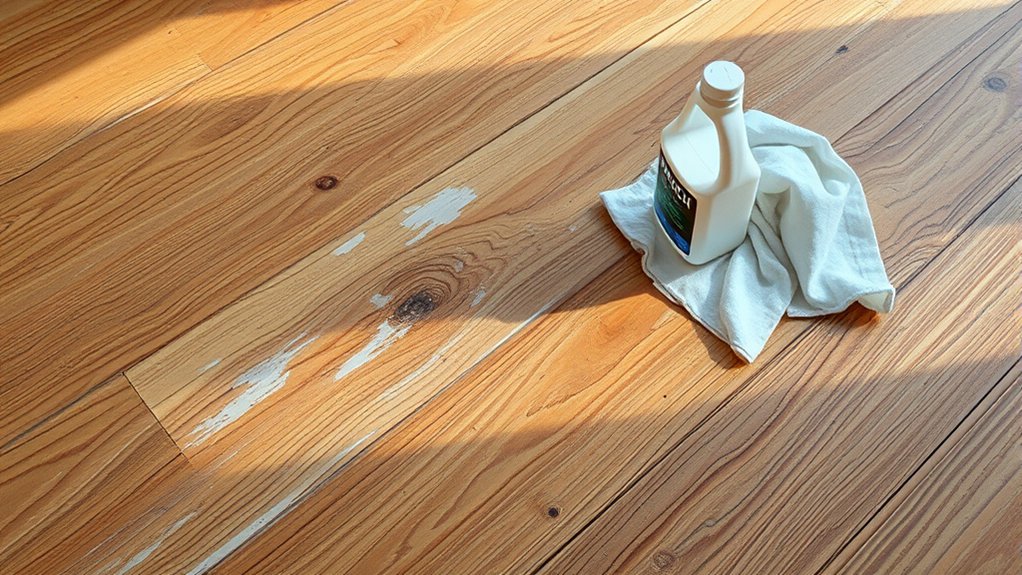
You shouldn’t clean wood floors with bleach because it strips the finish and damages the protective layer, leaving the wood dull and vulnerable. Bleach seeps into the pores, causing discoloration and weakening the floor’s structure over time.
If bleach spills, you need to act quickly to blot and rinse the area gently. Instead, use mild soaps or hardwood cleaners to protect your floors.
Keep going to discover how to spot damage and safe cleaning alternatives.
Why Bleach Is Risky for Wood Floors
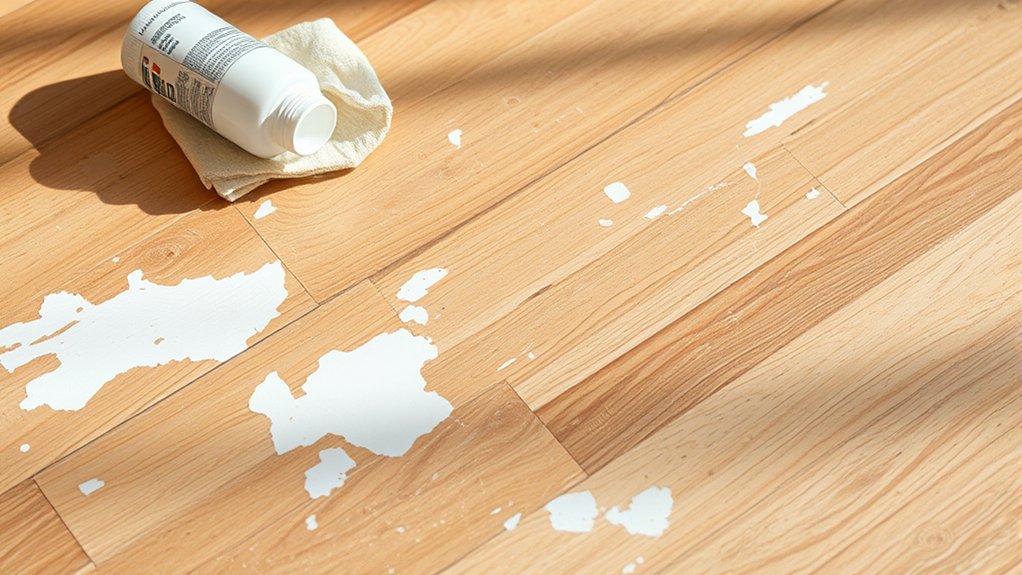
Although bleach is a powerful cleaner, you should avoid using it on wood floors because it can strip the finish, leaving your hardwood dull and vulnerable to stains.
Bleach can strip your wood floor’s finish, leaving it dull and susceptible to stains.
Bleach should never be part of your routine for cleaning wood floors, as its sodium hypochlorite content can break down the wood’s protective coating.
The porous nature of hardwood means bleach can seep in, causing permanent damage like discoloration and weakening the wood’s structure.
Even diluted bleach solutions pose risks by altering color and increasing porosity.
Over time, repeated exposure to bleach can damage hardwood by breaking chemical bonds, making floors more fragile and prone to wear.
How Bleach Can Damage Hardwood Floors
When you use bleach on hardwood floors, its harsh chemicals start breaking down the finish by attacking the chemical bonds that protect the wood. This leads to irreversible damage over time, affecting both the look and strength of your hardwood flooring.
Even diluted bleach on wood can seep into its porous structure, causing discoloration and a dull surface. Regular use only worsens the problem, exposing the wood beneath to stains and increased porosity.
So, it’s really not worth the risk when it comes to keeping your floors looking great.
Here’s how bleach can damage hardwood floors:
- Weakens the wood’s structure, making it vulnerable to water damage and stains
- Causes discoloration and dullness, ruining the floor’s appearance
- Breaks down protective finishes, accelerating wear and deterioration
Avoid bleach in your cleaning solutions to preserve your hardwood floors. It’s better to stick with gentler cleaners that won’t harm your beautiful wood.
How to Spot Bleach Damage on Wood Floors
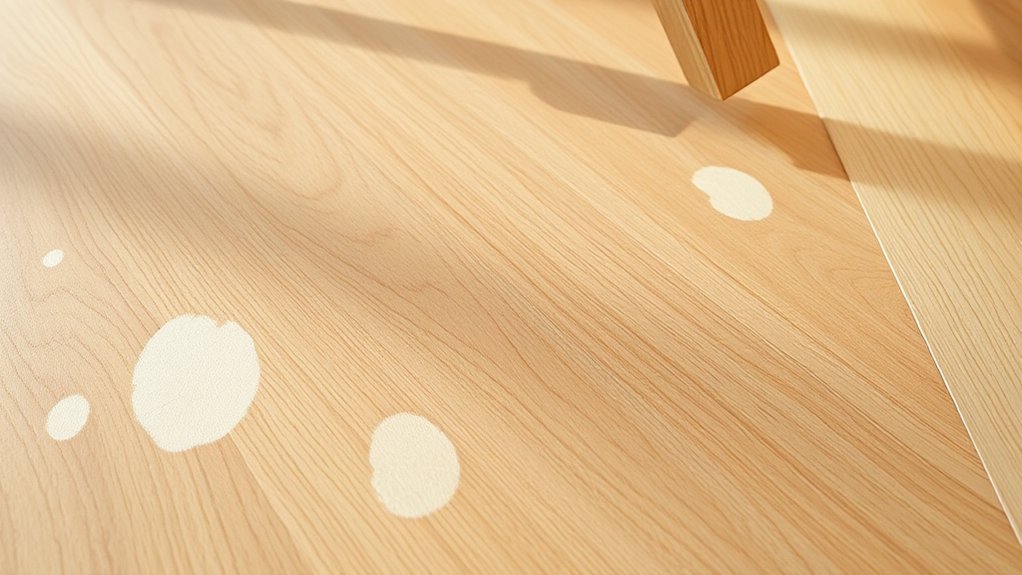
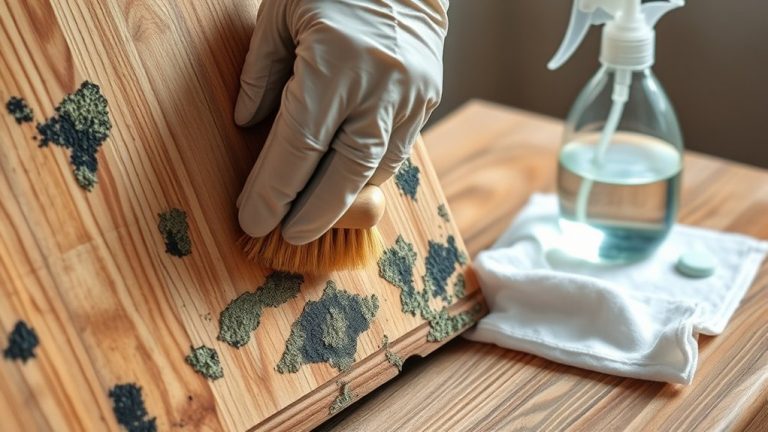
How can you tell if bleach has damaged your wood floors? Bleach damage often shows up as discoloration. You might see patches that look lighter or uneven compared to the rest of the floor.
You might also notice a dull or cloudy surface finish. This means the bleach has stripped away the protective finish.
If the wood feels rough or splintered, that’s another sign the bleach has compromised its structure.
A lingering chemical smell after cleaning can indicate bleach residue. This residue can further harm your floors.
Also, if your wood floors absorb moisture more easily, that increased porosity suggests the protective finish is damaged.
Recognizing these signs early helps you understand the extent of bleach damage. It also lets you take care to avoid making it worse.
What to Do If Bleach Spills on Your Wood Floor
If you spill bleach on your wood floor, act quickly to minimize damage. First, blot the area gently with a clean, dry cloth to absorb as much bleach as possible without rubbing it deeper into the wood.
If bleach spills on wood floors, blot gently with a dry cloth immediately to prevent further damage.
Next, rinse the spot thoroughly with warm water to neutralize the bleach and remove residue. Use a damp cloth and make sure you test a small hidden area first to avoid any adverse reactions.
Finally, dry the floor completely with a towel and let it air dry to prevent moisture damage. To help restore the finish and protect your hardwood floor, consider applying a wood floor conditioner or polish after cleaning.
- Blot immediately without rubbing
- Rinse thoroughly with warm water
- Dry completely and condition the wood
How to Safely Test Bleach on Hardwood Floors
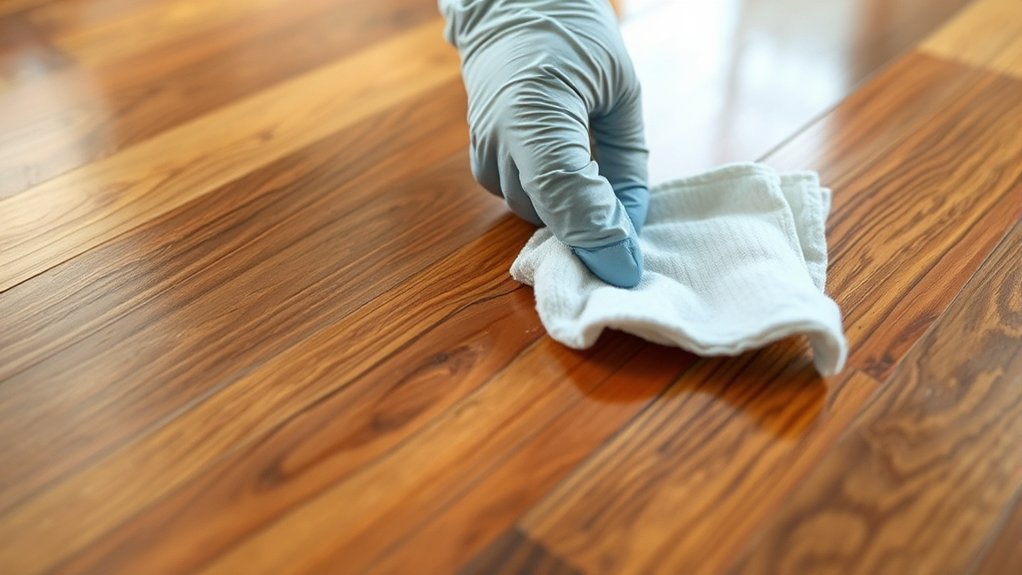
Start by applying a diluted bleach solution to a small, hidden spot on your hardwood floor.
Keep a close eye on it for any immediate changes.
Then, wait about 24 hours to see if any discoloration or damage shows up.
This careful monitoring will help you figure out if it’s safe to go ahead and clean the entire floor.
Preparing A Test Spot
Although bleach can effectively clean certain surfaces, you should always prepare a test spot on your hardwood floor before applying it widely. This helps you avoid unexpected damage and guarantees your cleaning methods are safe for hardwood floors.
To prepare a reliable test spot, choose an inconspicuous area where potential discoloration won’t be obvious. Dilute bleach properly by mixing ⅓ cup of bleach with 1 gallon of water to minimize harsh effects.
Then, apply a small amount of the diluted bleach to the spot and let it sit for 6 minutes before rinsing thoroughly with clean water. After rinsing, let the area dry completely and wait 24 hours to check for any delayed damage.
This careful approach protects your floors and helps you make informed cleaning decisions. It’s always better to be safe than sorry when it comes to your hardwood floors!
Observing Immediate Reactions
Once you’ve prepared and applied the diluted bleach solution to your test spot, watch closely for any immediate changes in the wood’s color, texture, or finish.
This test area shows how your hardwood will react, helping you avoid damage. If you notice fading, discoloration, or a rough texture, bleach should never be used to clean hardwood floors in that space.
Even small amounts can cause irreversible harm. After observing, rinse the test area thoroughly with clean water to neutralize any bleach residue.
Remember, if the test area shows signs of damage, stop using bleach and choose safer cleaning alternatives instead.
Testing and observing immediate reactions guarantees you protect your floors from bleach’s harsh effects. It’s always better to be safe than sorry when it comes to your hardwood floors!
Monitoring Long-Term Effects
Because bleach can cause subtle damage that shows up over time, you should always monitor the test area for at least 24 hours before considering broader use.
Start by testing a diluted bleach solution on a hidden spot of your hardwood floor. After application, watch for any discoloration or finish breakdown.
Even mild bleach exposure can alter the wood’s appearance. To minimize damage, thoroughly rinse with a pH-neutral hardwood floor cleaner to neutralize leftover chemicals.
When monitoring long-term effects, focus on observing color or texture changes over several days. Avoid harsh cleaning products that may make the damage worse.
And if you notice significant issues, don’t hesitate to consult flooring professionals.
This careful monitoring helps you avoid irreversible harm and keeps your floors safe.
Best Bleach Alternatives for Wood Floors
When you want to keep your wood floors clean without risking damage from harsh chemicals like bleach, you’ll find several safer and effective alternatives.
The best way to clean hardwood is using a mild soap and water mixture. It gently removes dirt without harming the finish.
Commercial hardwood cleaners offer another reliable option because they’re designed specifically for cleaning hardwood without harsh chemical ingredients.
You can also try a vinegar and water solution to tackle sticky residues while maintaining the wood’s integrity.
For disinfecting, an isopropyl alcohol solution mixed with water and dish detergent works well.
And finally, using microfiber mops guarantees effective cleaning by trapping dirt and grime without scratching your floors.
These methods protect your wood while delivering thorough, safe cleaning results.
Safe Cleaning Tips to Protect Hardwood Floors
You should always use gentle cleaners and avoid using too much water to keep your hardwood floors safe from damage.
It’s a good idea to test any cleaning solution on a hidden spot first to make sure it won’t harm the finish.
Following these simple steps helps protect your floors and keeps them looking their best.
Use Gentle Cleaners
Although hardwood floors are durable, using gentle cleaners is essential to preserving their finish and longevity. When you choose the right products for hardwood floor cleaning, you avoid damaging the wood and maintain its natural beauty.
Stick to mild soaps and pH-balanced, non-toxic cleaners designed specifically for hardwood. Always test new cleaners on a hidden spot before applying them broadly to prevent discoloration or damage.
For best results, incorporate professional cleaning services regularly. They use safe products that extend your floors’ lifespan.
Here are key tips to follow:
- Use mild soap and water mixtures for routine cleaning to protect the finish.
- Select pH-balanced, non-toxic cleaners to remove dirt without harming the wood.
- Schedule professional cleaning to maintain and preserve your hardwood floors effectively.
Avoid Excess Water
One essential rule for maintaining hardwood floors is to avoid using excess water during cleaning. Excess moisture can seep into seams, causing warping, buckling, and swelling over time.
To prevent water damage, use a damp mop, just enough to clean without soaking the wood. Avoid steam mops and always dry spills immediately to protect the finish and prolong your floor’s life.
| What Happens | Why It Matters | Your Floor’s Reaction |
|---|---|---|
| Excess water seeps in | Causes wood to swell | Warping and buckling |
| Over-wetting | Damages finish | Stains and dullness |
| Using damp mop | Controls moisture | Safe, effective cleaning |
| Ignoring spills | Water penetrates | Permanent damage |
| Avoid steam mops | Too much moisture | Weakens hardwood floors |
Test Cleaning Solutions
After managing moisture levels carefully, the next step is to confirm any cleaning solution you use won’t harm your hardwood floors.
Always test the label and try the solution on a hidden spot first, especially when using bleach. This helps you avoid damage like discoloration or dullness.
Keep an eye on the test area for at least 24 hours before proceeding. Remember, bleach can worsen worn or discolored finishes, so it’s best to avoid it on delicate spots.
Instead, consider safer alternatives for tough stains.
Test any cleaner on a hidden section before full use. Avoid bleach on worn or sensitive hardwood finishes.
Use mild soap, water, or commercial hardwood cleaners without harsh chemicals.
Testing first protects your floors and confirms safe cleaning.
When to Call a Pro for Bleach Damage Repair
If you notice discoloration or fading on your hardwood floors following bleach exposure, it’s crucial to call a professional for an assessment.
Bleach treatment can weaken the wood structure, and experts can accurately evaluate the extent of damage.
Trying to fix this yourself risks further harm or costly mistakes.
Professionals have the tools and knowledge to restore your hardwood floors effectively. They may recommend sanding or refinishing to bring back the floor’s original look and apply sealants to protect it from future damage.
By seeking professional help, you guarantee that your hardwood floors receive the right care to restore both their beauty and durability.
Don’t hesitate to get expert advice for bleach damage repair to preserve your floors long-term.
Frequently Asked Questions
Can Bleach Be Diluted to Safely Clean Wood Floors?
You shouldn’t rely on diluted bleach to safely clean wood floors because even in smaller amounts, it can damage finishes and wood fibers.
Instead, focus on safer wood floor care by using bleach alternatives like mild soap and water or specialized hardwood cleaners.
Always follow proper cleaning methods and safety precautions to protect your floors from harm.
Testing any solution on a small area first helps guarantee your wood stays beautiful and intact.
Does Bleach Affect All Types of Wood Floors Equally?
Bleach doesn’t affect all wood floor types equally. Softer woods tend to absorb it more, which can cause discoloration and damage.
On the other hand, harder varieties like maple resist it better but still aren’t completely safe.
You should avoid using bleach altogether and opt for bleach alternatives made specifically for wood. It’s better to focus on gentle cleaning methods instead.
Also, make sure to protect your floors with the right sealants. This approach helps keep your floors in good shape without risking the damage bleach can cause to different wood types.
How Often Can I Clean Wood Floors Without Damaging Them?
You should stick to a cleaning frequency of about once a month to keep your wood floors in great shape.
Regular wood floor maintenance, including sweeping and using safe cleaning products like mild soaps or specialized hardwood cleaners, helps prevent damage.
Over-cleaning or harsh chemicals can harm your floors, so follow these floor care tips to maintain their beauty and durability without risking warping or finish wear.
Just remember, a little care goes a long way!
Can Bleach Fumes Harm Wood Floor Finishes?
Yes, bleach fumes can harm wood floor finishes by breaking down their protective layers. This can lead to long-term damage like dullness and discoloration.
These bleach fume effects increase the floor’s porosity, making it more prone to stains and wear.
To protect your floors, avoid bleach and opt for safe cleaning alternatives like pH-neutral wood cleaners or mild soap solutions.
This way, you keep your wood floor finishes intact and looking great for longer. It’s a simple step that really makes a difference!
Are There Specific Brands of Bleach Safer for Wood Floors?
You won’t find specific brands of bleach that are safer for wood floors because bleach’s harsh chemicals damage wood finishes no matter the brand.
Instead, it’s better to focus on bleach alternatives made specifically for wood floor maintenance. Using safe cleaning products regularly helps you keep your floors clean without causing harm.
Stick to gentle, wood-friendly cleaners to preserve your floor’s beauty and durability. That way, you avoid any risks bleach might pose to your investment.
Conclusion
Bleach can be a wolf in sheep’s clothing for your wood floors. It seems powerful but hides damage beneath. You don’t want to watch your beautiful hardwood fade or warp like a storm-tossed ship.
Instead, test carefully, choose gentler cleaners, and act fast if spills happen. Protect your floors like a treasure. And don’t hesitate to call a pro if bleach leaves its mark.
Your wood deserves nothing less than gentle care and respect.