Can You Waterproof Wood: Best Methods Explained
Yes, you can waterproof wood by first cleaning it thoroughly and making sure it’s dry, with moisture below 15%. You can use natural oils like tung oil for indoor wood or synthetic sealants such as polyurethane for outdoor pieces. Just apply multiple thin coats in ideal temperatures, usually between 50°F and 85°F.
Regular maintenance is key. This includes cleaning and timely reapplication every 2 to 3 years to keep wood protected and looking great.
Keep following to discover the best waterproofing methods and care tips for lasting results.
Why Waterproofing Wood Is Essential
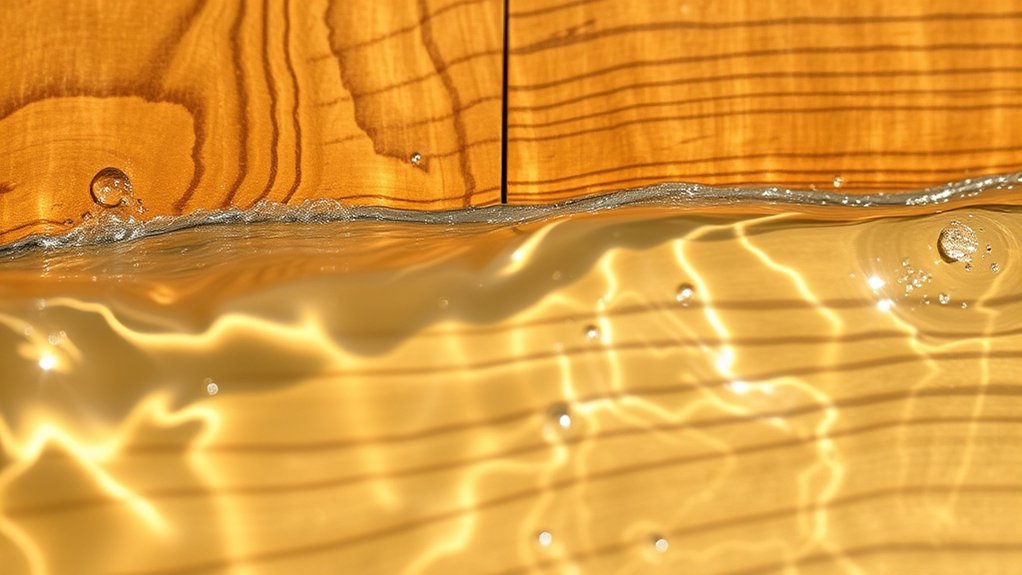
When you waterproof wood, you protect it from absorbing moisture that causes swelling, cracking, and mold growth. Unprotected wood can soak up to 30% of its weight in water, which leads to deterioration and structural damage.
By applying waterproofing treatments, you boost water resistance and extend the life of your outdoor wood products considerably.
Applying waterproofing treatments significantly enhances water resistance and prolongs the lifespan of outdoor wood.
You’ll want to choose the right method. Natural oils work well for indoor wood, while stain and sealer combos provide strong UV protection for exterior surfaces. These treatments not only prevent moisture damage but also shield wood from harmful sun exposure and mildew.
Make sure to reapply regularly every two to three years, depending on your climate. This keeps the protective barrier effective and saves you from costly repairs.
Plus, it helps maintain your wood’s appearance and strength over time.
How to Prepare Wood for Waterproofing
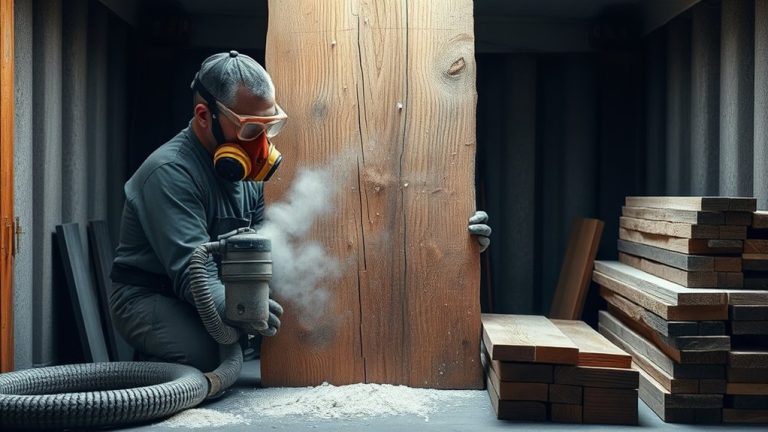
Start by giving the wood a good clean with a heavy-duty cleaner. This will help get rid of dirt, mildew, and any sap or mill glaze that might stop the sealant from soaking in properly.
Once you’ve cleaned it, let the wood dry completely—this usually takes at least 24 hours.
It’s a good idea to check that the moisture content is below 15% before you apply any waterproofing product. Doing this ensures the sealant sticks well and lasts longer.
Cleaning Surface Thoroughly
Although it might be tempting to skip this step, thoroughly cleaning your wood surface is essential before waterproofing. Start by applying Thompson’s WaterSeal Heavy Duty Deck Cleaner with a stiff-bristle brush to remove dirt, mildew, and blemishes. Let the cleaner sit for 10-15 minutes to break down contaminants effectively.
Then, rinse off the cleaner completely to prepare the wood surfaces for sealing. This cleaning step removes natural sap and mill glaze, allowing the waterproofing wood product to penetrate deeply and form a strong protective barrier.
Make sure your wood is clean and free of debris so you don’t trap moisture later on. Proper cleaning guarantees better adhesion and durability.
Always let the wood dry completely before moving to the next step. This helps maintain the seal’s effectiveness and keeps your wood protected for longer.
Ensuring Wood Is Dry
Since moisture can compromise your waterproofing efforts, you need to make certain your wood’s moisture content stays below 15% before you apply any sealant.
Start by using a moisture meter to check the wood’s moisture content accurately. This step guarantees you’re working with dry wood, which is essential for effective waterproofing.
After cleaning wood surfaces to remove dirt and mildew, allow the wood to dry for at least 24 hours. This waiting period assures the surface is completely dry, preventing trapped moisture that can cause damage later.
Avoid applying waterproofing products in direct sunlight or extreme temperatures, as these conditions can hinder product adhesion and drying.
Removing Sap And Glaze
Once your wood is completely dry, the next step is to remove any natural sap and mill glaze that can block sealants and stains from soaking in properly. Removing sap guarantees waterproofing your wood is effective by allowing better adhesion of sealants and stains.
Start by applying Thompson’s WaterSeal Heavy Duty Deck Cleaner with a stiff-bristle brush, focusing on thorough cleaning. Let it sit for 10-15 minutes, then rinse well. This cleaning surface prep is essential for your wood needs before sealing.
| Step | Product Used | Purpose |
|---|---|---|
| Apply cleaner | Thompson’s WaterSeal Deck Cleaner | Break down sap and dirt |
| Scrub surface | Stiff-bristle brush | Remove sap and glaze |
| Rinse & dry | Water & air drying | Guarantee better adhesion |
How to Choose the Right Waterproofing Method
How do you decide which waterproofing method suits your wood project best? Start by considering the wood’s porosity and location. For indoor pieces with minimal moisture, natural wood oils like tung or linseed offer a water resistant, natural finish that penetrates deeply.
Outdoor furniture faces moisture and UV exposure, so choose stain and sealer combinations. They add color and protect effectively. Water-based options dry quickly, while oil-based stain and sealer penetrate deeply, which is ideal for porous woods.
For outdoor wood, stain and sealer combos protect against moisture and UV while enhancing color beautifully.
For denser woods or high-traffic areas, synthetic sealants such as polyurethane provide a durable barrier against damage.
Also, factor in seasonal timing. Applying waterproofing before rainy or cold seasons guarantees maximum protection.
Matching your method to wood type and use ensures long-lasting, effective waterproofing. It’s all about giving your project the best chance to stand up to the elements.
How to Apply Natural Oils for Waterproofing Wood
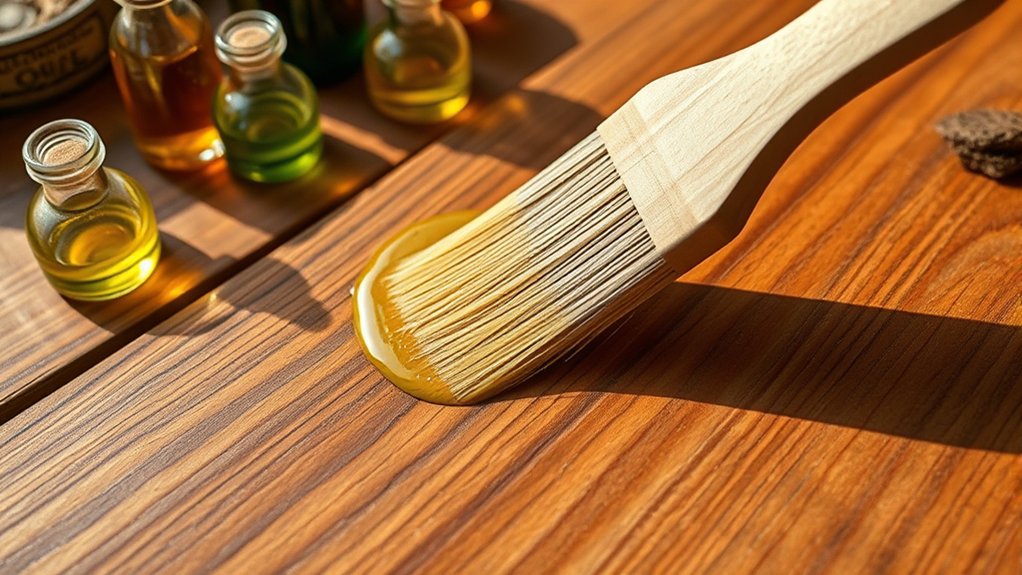
Prepare your wood surface by making sure it’s clean and dry. The moisture content should be below 15% to help the oil soak in better.
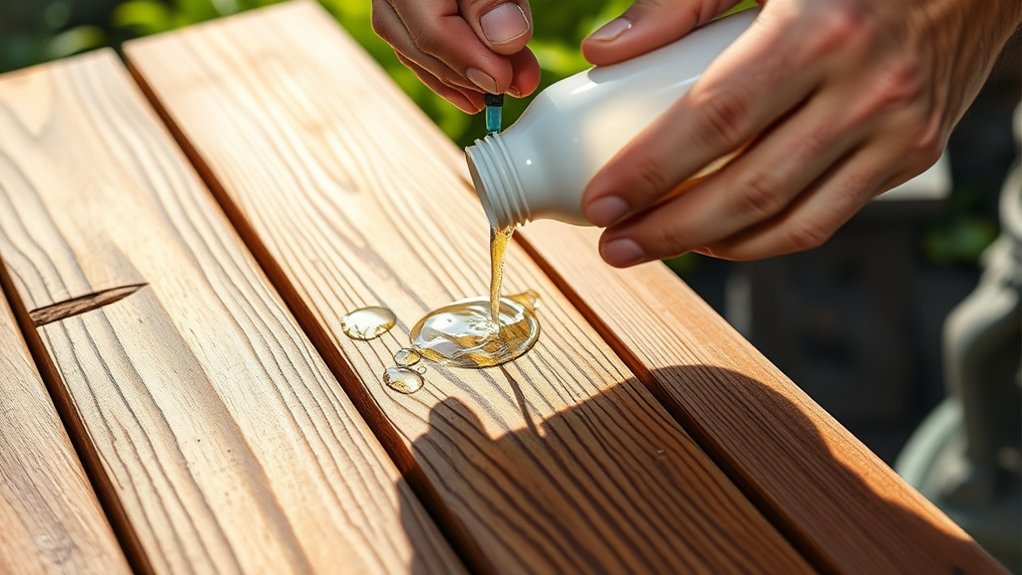
Pick a natural oil like tung oil because it goes deep into the wood grain and creates a flexible, waterproof barrier. Use a lint-free cloth or a brush to apply the oil, working along the grain so the coverage is even.
Let the oil soak in for about 15 to 30 minutes. Then, wipe off any extra oil so you don’t end up with a sticky finish.
After letting it dry for around 24 hours, put on a second thin coat to improve water resistance. You can repeat this for more coats if you want.
To keep your wood protected and looking natural, reapply tung oil every 6 to 12 months. It’s an easy way to maintain that waterproof finish.
How to Use Synthetic Sealants for Long-Lasting Protection
You’ll want to start with clean, dry wood and choose a synthetic sealant like polyurethane for strong, long-lasting protection against moisture.
It’s best to apply multiple thin coats, especially when the temperature is between 50°F and 85°F. Make sure each layer dries fully before you add the next one.
Also, remember to pick a finish that matches your style.
And don’t forget—regular maintenance is key to keeping your wood sealed and durable over time.
Benefits of Synthetic Sealants
When you apply synthetic sealants like polyurethane or varnish, you create a tough protective layer that shields your wood from moisture, UV damage, and daily wear.
These synthetic sealants form a durable protective barrier, especially useful for outdoor spaces exposed to harsh elements.
Choosing between water-based and oil-based options affects the application process. Water-based sealants dry faster and clean up easily. Oil-based ones penetrate deeper for longer-lasting protection.
Before sealing, make sure the wood is clean, dry, and has less than 15% moisture content.
Applying multiple thin coats enhances durability and prevents peeling.
With regular maintenance and timely reapplication, synthetic sealants keep your wood resilient. They preserve its appearance and extend its lifespan in any high-traffic or outdoor environment.
Application Tips and Techniques
Start by ensuring the wood surface is completely dry and clean, with moisture content below 15%. This helps the synthetic sealant adhere properly.
Apply synthetic sealants like polyurethane between 50°F and 85°F. Make sure to avoid direct sunlight and high humidity for the best results.
Work in 60 sq. ft. sections for an even application, and keep the sealant wet to prevent lap marks. Allow each coat to dry faster by waiting two hours before reapplying. Try to finish within four hours to get durable, long-term protection.
| Step | Emotion | Result |
|---|---|---|
| Prep wood | Confidence | Better adhesion |
| Apply evenly | Satisfaction | Smooth, protective layer |
| Allow to dry | Patience | Long-lasting defense |
Follow these tips to protect wood from water damage using synthetic sealants effectively. It’s easier than you might think!
How to Apply Stain and Sealer Combos on Outdoor Wood
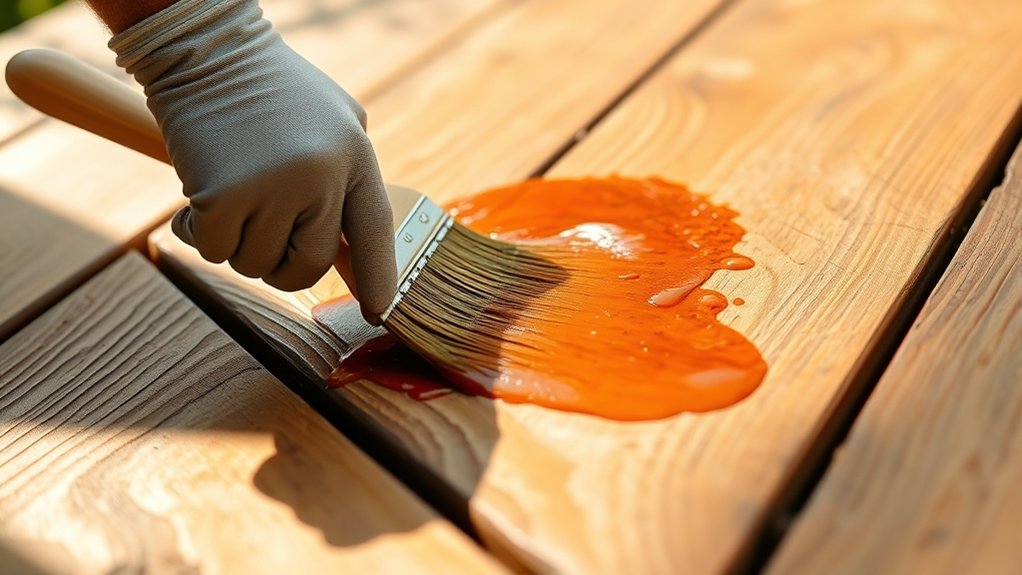
Selecting the right stain and sealer combo is the first essential step in protecting your outdoor wood effectively. Choose stains and sealers that suit your wood type. Water-based options offer faster dry time, while oil-based ones penetrate older wood deeply to help it absorb moisture better.
Choose the right stain and sealer for your wood—water-based dries fast, oil-based penetrates deeply.
Before application, clean the wood thoroughly to remove dirt and mildew. Then let it dry completely for at least 24 hours.
Apply the combo using brushes, rollers, or sprayers in sections around 60 sq. ft., maintaining a wet edge for even coverage. Avoid direct sunlight and rain during application.
One coat usually suffices, but if you want richer protection, wait until the first coat dries, about two hours. Then apply a second coat within four hours to improve durability and keep wood water-resistant.
Best Weather and Seasons to Waterproof Wood
Why does timing matter so much when waterproofing wood? Choosing the right weather and season guarantees the best products perform effectively. Aim for an ideal temperature between 50°F and 85°F, avoiding extremes that hinder adhesion and drying.
Low humidity, ideally below 70%, is essential to prevent moisture from compromising the finish. Spring and early fall provide the perfect window, offering mild temperatures and stable conditions without the risk of changing temperatures or sudden rain.
Avoid applying waterproofing during direct sunlight or high heat, as this causes rapid drying and uneven coverage.
Take time to prepare by testing wood moisture—it should be below 15%. Following these guidelines helps you achieve a durable, even seal that stands up to outdoor elements.
How to Maintain Waterproofed Wood for Durability and Look
Maintaining waterproofed wood requires regular care to preserve both its durability and appearance. Start by cleaning the wood frequently. Sweep off debris and use a mild cleaner if needed to prevent dirt buildup that can weaken protection.
Avoid harsh chemicals or abrasive tools because they can damage the waterproofing layer. To keep moisture resistance, do an annual splash test. If water beads up, your treatment is working; if it soaks in, it’s time to reapply.
Generally, you should reapply your waterproofing every two to three years, but adjust based on your local climate.
Also, try to minimize UV exposure by storing waterproofed wood items in shaded areas when you’re not using them. These simple steps will help keep your wood looking great and extend its lifespan effectively.
Frequently Asked Questions
Can Waterproofing Wood Change Its Color or Texture Permanently?
Yes, waterproofing wood can cause permanent color change and texture alteration. Oil-based finishes darken wood and enhance the grain, while water-based products preserve color but may add sheen. Different finish types affect results, so it’s a good idea to compare products carefully.
Your application techniques really matter. Uneven coats can cause blotchy colors, which nobody wants. To keep the appearance looking great, apply multiple thin coats evenly.
Also, follow maintenance tips like regular cleaning and reapplication to keep the wood protected without unwanted changes. It’s all about taking care of your wood over time.
Is Waterproofing Wood Safe for Children’s Toys and Furniture?
Waterproofing wood for children’s toys and furniture is absolutely essential for children’s safety. You don’t want harmful chemicals near them!
Always choose non-toxic options like water-based or food-safe wood finishes certified for kids. These provide durability without toxic risks.
Keep an eye on maintenance, as wear can expose the wood.
Product recommendations include Tung Oil or ASTM D4236-certified finishes. Regular upkeep guarantees both safety and lasting protection.
It’s really worth the effort to make sure everything stays safe and durable.
How Long Does Each Waterproofing Method Typically Last Before Reapplication?
Waterproofing techniques vary in longevity: natural oils last 6-12 months, synthetic sealants 2-5 years, and stain-sealer combos 1-3 years depending on wood types and exposure.
Marine varnish and spar urethane handle up to 5 years but need touch-ups in wet areas.
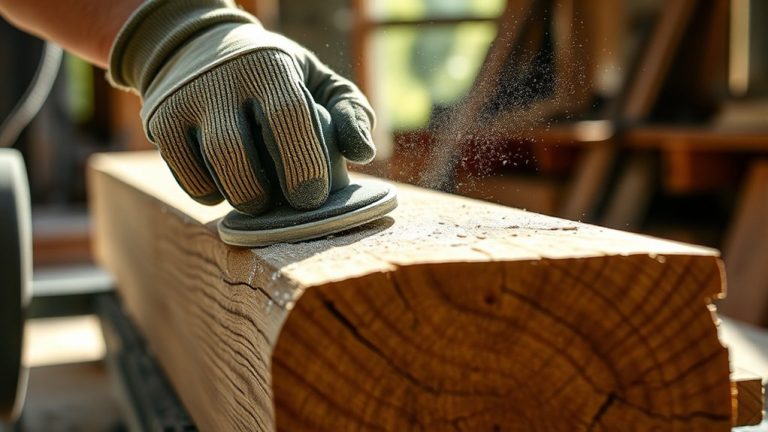
Your surface preparation impacts durability, so sand and clean well.
Environmental factors like sun and moisture shorten lifespan.
Follow maintenance tips, like regular inspections, to prolong protection and decide when to reapply.
Can Waterproofing Prevent Wood From Expanding or Contracting in Humidity?
Think of your wood as a sponge dancing with the seasons. Waterproofing doesn’t stop this dance but limits wood swelling by reducing moisture absorption.
It controls the humidity effects, setting boundaries for expansion limits and aiding contraction prevention.
You won’t freeze wood’s natural movement, but you’ll soften its seasonal changes.
Apply quality sealants regularly to maintain this balance, so your wood stays stable and strong through every shift in weather.
Are There Eco-Friendly Waterproofing Products for Wood Available?
Yes, you can find eco-friendly waterproofing products for wood. Look for natural oils like tung or linseed oil, which penetrate wood while providing moisture resistance.
Biodegradable sealants and plant-based finishes offer sustainable treatments that protect wood without harmful chemicals.
Choose environmentally friendly varnishes and non-toxic stains to minimize your environmental impact.
These options not only preserve wood but also keep your space safer and healthier by avoiding volatile organic compounds.
It’s a smart way to protect your wood and the environment at the same time.
Conclusion
If you skip waterproofing your wood, expect it to soak up water like a sponge. It will warp and rot faster than you can say “rainstorm.” But don’t worry, there’s a way to stop that from happening.
By prepping carefully, choosing the right method, and applying sealants or oils properly, you’ll turn your wood into a fortress against moisture. Follow these steps, and your wood will stand strong and beautiful through every downpour, muggy summer, and icy winter. It will last for years without a crack or peel in sight.