Can You Use Clorox Wipes On Wood: Safety Tips And Risks
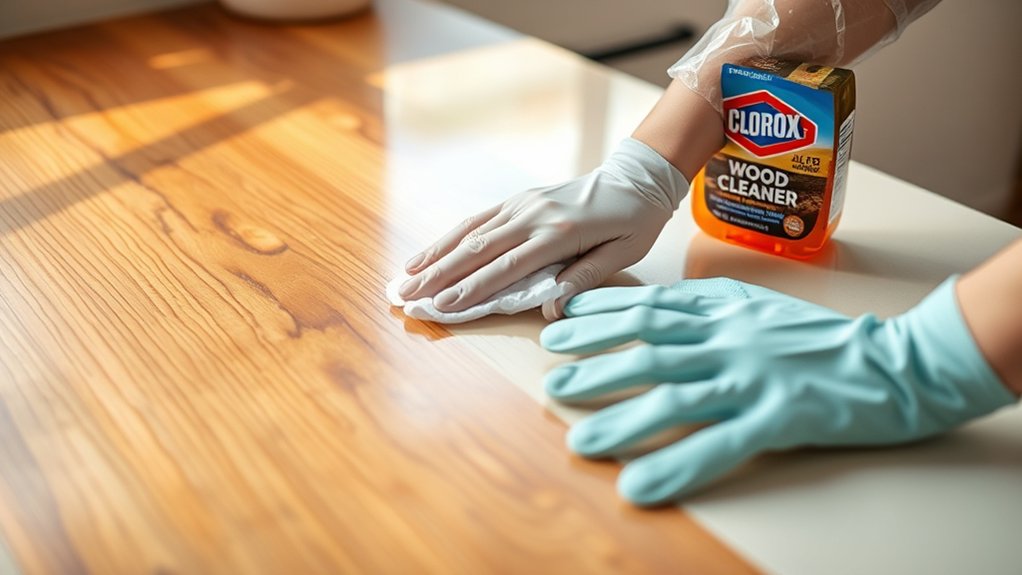
You can use Clorox Wipes on sealed wood surfaces with durable finishes like polyurethane, but you should proceed cautiously. Avoid using them on shellac, wax, varnished, or unfinished wood. The alcohol and moisture can damage finishes, cause dullness, or weaken the wood structure.
Always test wipes on a small, hidden area first. And make sure to dry the surface immediately after use.
Understanding these precautions helps protect your wood’s integrity and longevity. Keep exploring to learn how to clean wood safely and maintain its finish.
Are Clorox Wipes Safe to Use on Wood?
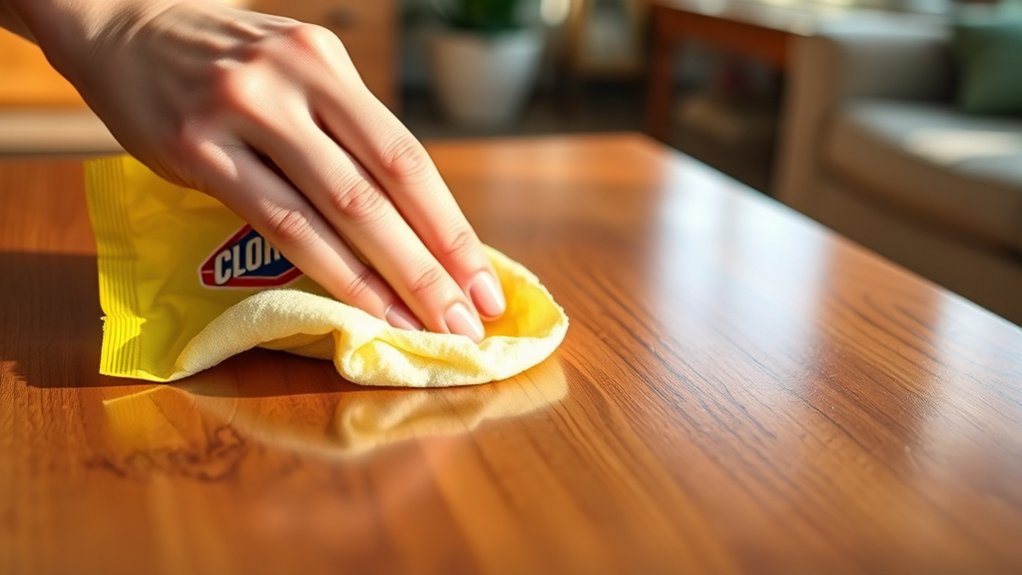
How safe are Clorox wipes for cleaning wood surfaces? Clorox Wipes can be used cautiously on sealed wood, especially surfaces protected with polyurethane.
However, you need to be careful with other finishes like shellac or wax since the alcohol in these wipes on wood may strip the protective coating or leave a haze.
Excess moisture from wipes on wood can accumulate in seams or edges, risking dullness, swelling, or warping over time. Frequent use increases the chance of damaging the finish or causing cracks.
To protect your wood, always identify the finish before applying Clorox Wipes. Using them sparingly and avoiding soaking the surface helps maintain the integrity that protects wood from premature wear or damage.
Which Wood Finishes Can Handle Clorox Wipes Safely
Knowing which wood finishes can tolerate Clorox Wipes helps you protect your furniture from damage.
Polyurethane finishes are generally resistant to disinfecting wipes, as they form a durable, moisture- and chemical-resistant barrier. You can carefully use Clorox wipes on these surfaces without immediate harm.
Polyurethane finishes withstand disinfecting wipes well, offering a strong, moisture- and chemical-resistant protective layer.
However, avoid using disinfecting wipes on shellac or wax finishes, since the alcohol content in Clorox wipes can dissolve or degrade these coatings.
Varnished wood is more sensitive; frequent use of wipes may cause hazing or finish stripping.
Never apply Clorox wipes to unfinished or oil-treated wood, as moisture absorption can lead to warping or dullness.
Always identify your wood’s finish before using Clorox wipes to guarantee safe and effective cleaning without compromising the surface integrity.
What Happens When You Use Clorox Wipes on Wood
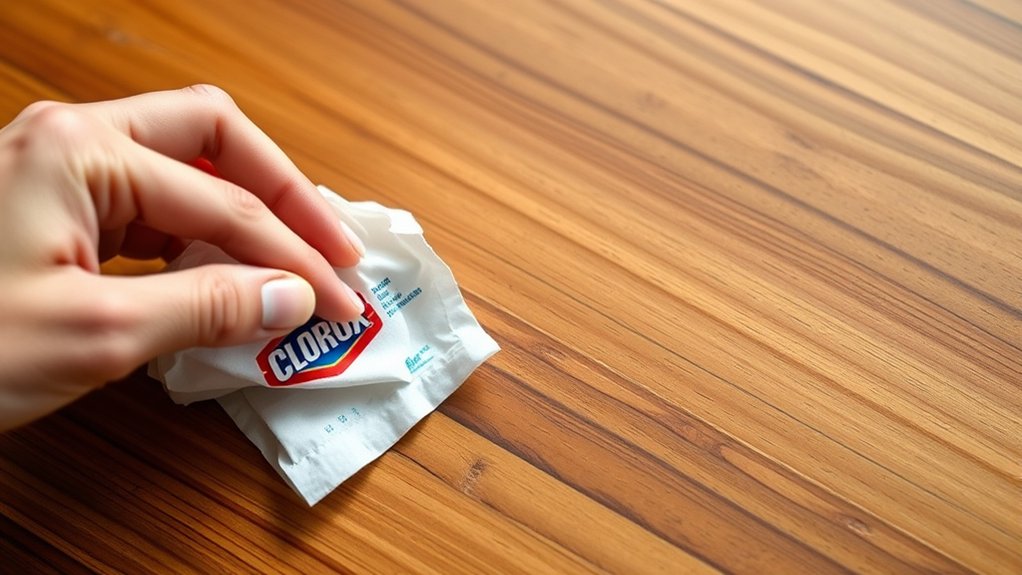
While Clorox wipes offer convenient disinfection, using them on wood surfaces can lead to unintended damage because of their alcohol content and moisture levels.
When you clean wood with these wipes, the alcohol might strip protective coatings like shellac, wax, or certain varnishes. This can cause dullness and surface wear.
Polyurethane finishes handle these wipes better, but using them often can still leave chemical residues. Those residues might dull the finish and make cleaning look uneven.
Plus, the extra moisture from the wipes can get into wood seams or edges, which raises the risk of structural damage.
If you don’t know the exact finish on your wood furniture, you could accidentally harm its look and strength.
How Moisture From Clorox Wipes Affects Wood
When you use Clorox wipes on wood, the moisture can soak into the porous surface. This causes the wood to expand and might even lead to warping over time.
Plus, the moisture can build up in seams or edges, which increases the chance of structural damage.
On top of that, if you keep using these wipes regularly, the finish on the wood can start to break down.
That means the protective coatings get weaker, and the wood might lose its shine and look dull.
Wood Expansion From Moisture
Because wood is porous, it readily absorbs moisture from cleaning products like Clorox wipes. This can cause the material to expand and weaken over time. Understanding wood moisture dynamics is essential, as absorbed moisture changes how the wood grain behaves.
This leads to swelling and potential deformation. Humidity effects from trapped water, especially around seams and edges, can make expansion even worse. When moisture gets into the wood fibers, they swell, which compromises structural integrity and makes the wood more vulnerable to warping.
Even though finished wood surfaces have protective coatings, these layers aren’t completely impervious. They can wear down with repeated exposure to wet wipes. Using Clorox wipes that are too damp can speed up moisture buildup and make these problems worse.
To keep your wood in good shape, try to minimize moisture contact. And if you do get any wetness on the wood, dry it off quickly. This helps maintain stability and prevents damage caused by expansion.
Finish Degradation Risks
Although Clorox wipes effectively clean surfaces, their moisture content and chemical ingredients can gradually degrade wood finishes. Moisture accumulates in seams, causing swelling or warping. Alcohol and surfactants dissolve delicate finishes like shellac and wax.
Frequent use strips protective coatings, dulling surfaces and reducing lifespan. To protect your wood, consider alternative cleaning solutions and implement preventive maintenance strategies. If damage occurs, apply finish restoration techniques promptly.
| Risk Factor | Effect on Wood Finish |
|---|---|
| Moisture accumulation | Swelling, warping |
| Chemical ingredients | Dissolution of shellac, wax |
| Frequent wipe use | Protective layer degradation |
Using dry or slightly damp cloths minimizes risks and helps preserve wood integrity longer. It’s a simple step that can really make a difference.
Risks of Using Clorox Wipes on Unsealed or Delicate Wood
You should be careful when using Clorox wipes on unsealed or delicate wood. The moisture in the wipes can cause the wood to swell or even warp.
Plus, the chemicals and alcohol they contain might strip away the wood’s finish or leave behind residues that damage its protective coating.
Over time, this can make the surface look dull and raise the chances of permanent damage or discoloration.
Moisture Damage Risks
When you use Clorox wipes on unsealed or delicate wood, the porous nature of the material lets moisture seep in. This can cause swelling or warping. Moisture absorption messes with the wood’s structural integrity, leading to swelling that mightn’t go away even after drying.
On top of that, the chemicals in Clorox wipes can strip protective coatings from wood finishes. That means the wood becomes less able to repel moisture, making it more prone to stains and damage. Excess moisture can build up in seams and edges, which encourages mold growth and long-term deterioration.
Delicate woods often have finishes like shellac or wax that don’t react well to alcohol-based ingredients. So, using Clorox wipes without being careful can make moisture-related damage worse.
It’s always a good idea to check the wood’s finish before you start cleaning to help avoid these moisture damage risks.
Chemical Impact Concerns
Beyond moisture concerns, the chemical components in Clorox wipes pose additional risks to unsealed or delicate wood surfaces. The alcohol and ammonium compounds can degrade finishes, causing dullness and stripping protective layers. You should be aware of these disinfectant interaction risks to prevent lasting damage.
Chemical residue effects may also accumulate, leaving a haze on delicate woods. To minimize harm, consider these points:
Alcohol can dry out wood finishes, increasing cracking risk. Ammonium compounds might strip wax or shellac coatings irreversibly.
Residual chemicals may build up with repeated use, dulling the surface. Alternative cleaning methods, such as mild soap and water or specialized wood cleaners, are safer options.
Understanding these factors helps you protect your wood’s integrity while maintaining cleanliness.
Finish Degradation Effects
Although Clorox wipes offer convenience, their chemical composition can degrade finishes on unsealed or delicate wood surfaces. The alcohol and moisture in these wipes may strip protective coatings, especially on shellac, wax, and certain varnishes. This can lead to dullness or even the dissolution of stains.
Different wood finish types react uniquely. While polyurethane might tolerate Clorox wipes, others are at risk of damage.
Plus, excess moisture can build up in seams or edges, causing swelling, warping, or cracking.
Using these wipes frequently might also create uneven, patchy cleaning effects.
Safe Cleaning Tips for Wood With Clorox Wipes
You should limit the use of Clorox wipes to sealed wood surfaces, like those coated with polyurethane. Other finishes might get damaged if you’re not careful.
For proper wood care, use these wipes sparingly and avoid routine cleaning to keep the finish looking good.
Here are some tips to protect your wood: Use Clorox wipes only for quick clean-ups of fresh spills, not for regular cleaning. Make sure to dry the surface right after wiping to stop moisture from settling into seams.
Also, avoid using too much moisture because it can make the wood dull and cause swelling over time.
For your regular cleaning, try using a dry or just slightly damp cloth instead. It’s usually gentler and safer for your wood surfaces.
Testing Clorox Wipes Safely on Wood Furniture
When testing Clorox wipes on wood furniture, start by identifying the finish type. Polyurethane tolerates them better than shellac, wax, or many varnishes. It’s good to know what you’re working with before you begin.
To test safely, pick a discreet spot and apply a single wipe. Watch closely for any immediate changes like dullness or discoloration. Don’t soak the surface—too much moisture can seep into seams and cause swelling or warping.
If you notice any damage, stop using the wipes right away. Instead, consider cleaning with a dry or slightly damp cloth to keep the wood safe.
Just remember, using Clorox wipes often can wear down protective coatings over time.
Being cautious when testing helps protect the finish and keeps your furniture looking great and lasting longer. It’s all about maintaining that durability and appearance effectively.
Maintaining Wood Finish After Using Clorox Wipes
Since Clorox wipes contain alcohol that can degrade certain wood finishes, you’ll need to take careful steps to preserve your furniture’s protective layers after use.
Understanding wood care techniques is essential to maintain the finish and avoid damage.
To protect your wood surfaces, consider these tips:
- Identify the type of finish before using Clorox wipes; polyurethane is usually safe, shellac or wax is not.
- Use alternative cleaning methods like dry or slightly damp cloths to minimize alcohol exposure.
- Apply protective coatings such as wax or oil periodically to restore and shield the finish.
- Always dry the surface immediately after cleaning to prevent moisture absorption and warping.
Following these precise steps will help you maintain your wood’s appearance while ensuring safety and longevity.
It’s all about being gentle and consistent with your care routine.
Frequently Asked Questions
Can Clorox Wipes Remove Mold From Wood Surfaces?
Clorox wipes alone won’t effectively remove mold from wood surfaces because they can’t penetrate porous material well.
For proper mold removal techniques, you need solutions designed for porous surfaces that address moisture beneath the wood.
When caring for wood surfaces, it’s best to avoid harsh chemicals like those in Clorox wipes since they might damage the finish.
Instead, try alternative cleaning solutions specifically made for wood.
And remember, always test any cleaner in a small area first to make sure it won’t cause any harm.
This way, you can keep your wood looking great without any unexpected damage.
Are Clorox Wipes Effective Against Allergens on Wood?
Don’t bet the farm on Clorox wipes for allergen removal on wood. Their cleaning effectiveness is limited because they can’t penetrate wood grain, so allergens often remain trapped beneath the surface.
Plus, frequent use risks damaging your wood’s finish, which can compromise its safety.
Instead, rely on a damp microfiber cloth to gently capture allergens without harming the surface.
This approach balances effective cleaning with preserving wood integrity. It’s a safer bet for keeping your wood both clean and looking great.
How Often Can I Disinfect Wood With Clorox Wipes Safely?
You should limit disinfecting frequency on wood to about once a month to protect finishes.
Different wood surface types react variably; shellac or wax finishes are more sensitive. Always test a small area first.
To avoid damage, wipe the surface dry promptly after cleaning.
Consider alternative cleaners specifically designed for wood to maintain integrity while disinfecting.
Following manufacturer guidelines guarantees safe and effective maintenance without compromising your wood’s finish.
Can Clorox Wipes Be Used on Outdoor Wooden Furniture?
Think of using Clorox wipes on outdoor wooden furniture like walking a tightrope. You need balance. Yes, you can use them cautiously, especially on polyurethane-finished wood, but avoid oversaturation to prevent warping.
Use gentle cleaning techniques and test a small area first. For the best wood care and outdoor maintenance, limit frequent use since disinfectants can degrade finishes over time.
It’s a good idea to consider specialized products to preserve your furniture’s quality and appearance safely. That way, you keep your outdoor pieces looking great without any damage.
Do Clorox Wipes Leave a Residue That Attracts Dust on Wood?
Yes, Clorox wipes can leave a residue buildup on wood surfaces that attracts dust. When you use them, the surfactants and alcohol may not fully evaporate, causing a sticky film.
For effective wood surface care, you should consider cleaning alternatives like mild soap and water or specialized wood cleaners.
These options reduce residue buildup and help maintain your wood’s finish without increasing dust attraction or dulling the surface.
Conclusion
You should use Clorox wipes cautiously on wood, as 70% of wood finishes can be damaged by harsh chemicals or moisture. While sealed finishes may tolerate occasional use, unsealed or delicate wood risks discoloration and warping. Always test a small area first and avoid excessive moisture.
By understanding these risks and following safe cleaning tips, you can protect your wood’s integrity while maintaining hygiene effectively and responsibly. Just take it slow and be mindful, and your wood surfaces will thank you!