How Long Does A Chainsaw Chain Last – Lifespan And Wear Signs
You can expect your chainsaw chain to last between 25 and 60 hours, depending on the type and how well you maintain it. Full-chisel chains cut fast but wear out quicker, while semi-chisel chains last longer.
Watch for dull teeth, fine sawdust, cracks, or stretching as signs it’s time to sharpen or replace your chain. Proper upkeep and choosing the right chain for your conditions optimize lifespan and safety.
Understanding these details will help you manage your chainsaw more effectively. Just a little care goes a long way in keeping your chain sharp and ready to work.
How Long Does a Chainsaw Chain Last?
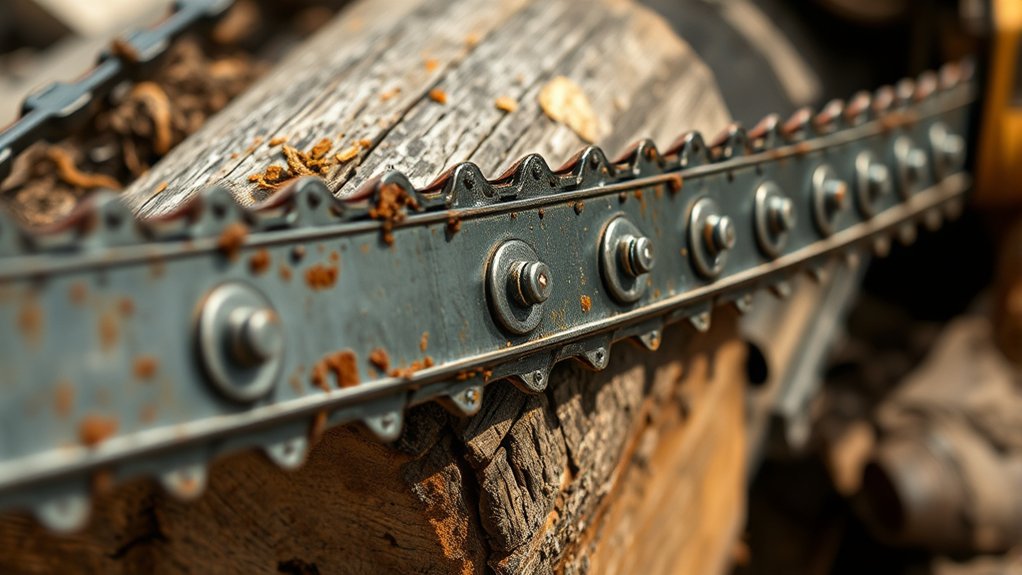
How long your chainsaw chain lasts depends largely on the type of chain and how you maintain it. Typically, a chainsaw chain’s lifespan ranges from 25 to 60 hours, influenced by cutting conditions and maintenance practices.
Full-chisel chains wear faster, around 25 to 40 hours, especially on hardwood, while semi-chisel chains last longer, up to 60 hours. Properly sharpening your chain 5 to 10 times extends its service.
But once wear signs appear, such as dull teeth producing fine sawdust instead of chips, visible cracks, or excessive stretching, it’s time to replace the chain. Monitoring these indicators guarantees peak cutting performance and safety.
Regular maintenance, including cleaning, tension adjustments, and sharpening, directly affects how long your chainsaw chain remains effective under varied usage. So, keep an eye on your chain and take good care of it!
Types of Chainsaw Chains and Their Lifespans
Although chainsaw chains share a common purpose, their designs vary considerably, affecting both performance and lifespan.
Full-Chisel Chains, with square-cornered teeth, cut fast but have a shorter lifespan of 25-40 hours, especially on hardwood.
Full-Chisel Chains deliver fast cuts but wear out quickly, lasting only 25-40 hours, especially on hardwood.
Semi-Chisel Chains use rounded teeth that resist damage, extending their lifespan to 40-60 hours, making them ideal for tough conditions.
Skip Tooth Chains, designed for heavy-duty tasks, offer reduced drag and potentially longer lifespan but sacrifice cutting precision.
Ripping Chains specialize in milling along the grain, resulting in a shorter lifespan due to specific wear patterns.
Standard chains typically last 30-50 hours for general use.
It’s important to keep an eye on wear markers on these chainsaw chains. That way, you’ll know when it’s time for a replacement to maintain safe, efficient cutting performance.
Parts of a Chainsaw Chain That Affect How Long It Lasts
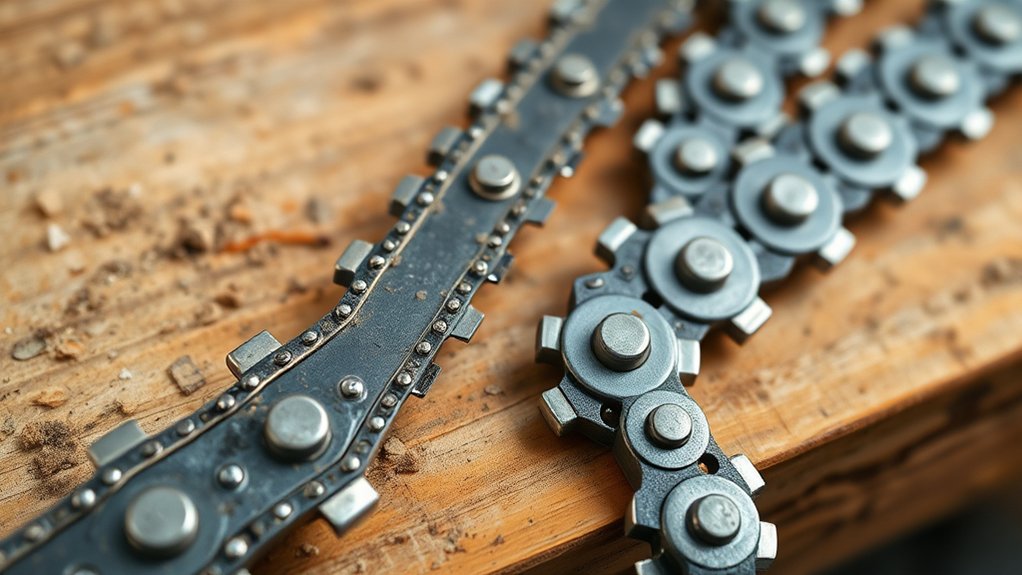
Since each component of a chainsaw chain contributes to its overall durability, understanding their roles helps you maximize lifespan.
The cutting teeth are essential; keeping them sharp minimizes wear and guarantees efficient cutting. Drive links guide the chain smoothly along the guide bar.
Worn or damaged drive links risk improper engagement, which can lead to chain failure. Tie straps hold the chain’s parts together. Any deformation or breakage compromises integrity and reduces lifespan.
Rivets provide necessary flexibility. If they’re loose or damaged, they cause tension loss and increase cutting teeth wear.
Finally, the chain’s fit within the guide bar groove is critical. Poor fit results in uneven cuts and speeds up wear and damage.
Keeping an eye on these parts helps prevent premature chain failure and extends the chain’s operational life. It’s worth the effort to check regularly!
How Usage and Conditions Affect Chainsaw Chain Life
Because usage patterns and environmental conditions directly impact wear, you’ll find that the lifespan of a chainsaw chain varies widely. If you use your chainsaw professionally, expect chains to last only 30 to 50 hours before needing sharpening or replacement.
Casual users, on the other hand, may extend chain life for years with proper maintenance.
Cutting hardwoods accelerates wear considerably compared to softwoods. That means you’ll need to sharpen your chain more often to keep it working efficiently.
Also, exposure to dirt, moisture, and frequent strikes against rocks or metal can shorten chain life even more.
These factors cause damage that often demands immediate chain replacement. Selecting the right chain type matters too. Semi-chisel chains generally last longer under harsh conditions than full-chisel versions.
Regular maintenance and inspections are essential. They help you monitor wear and guarantee your chainsaw chain performs effectively over time.
Warning Signs Your Chainsaw Chain Needs Replacement
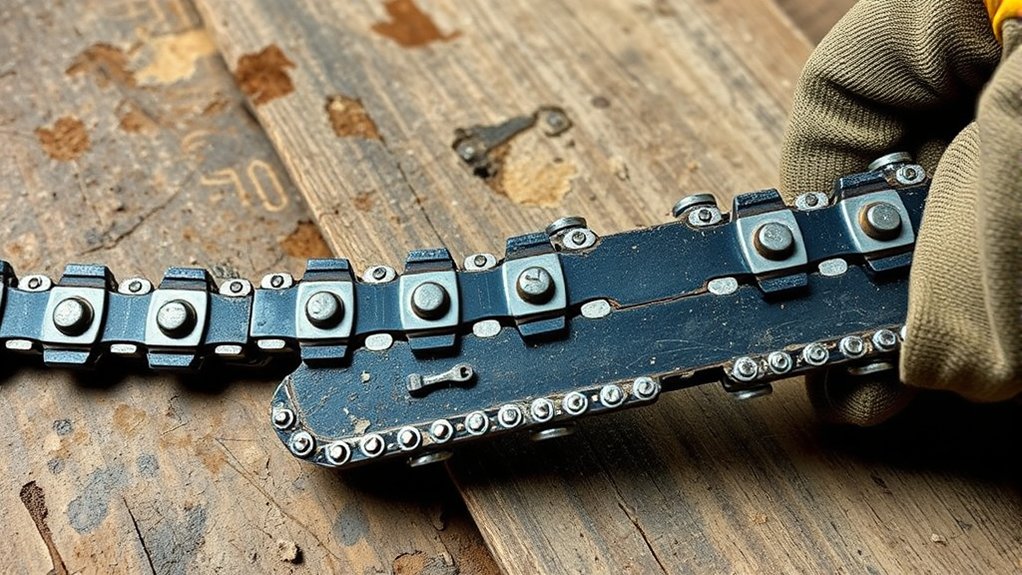
When your chainsaw chain starts producing fine sawdust instead of chunky wood chips, it’s a clear sign that sharpening or replacement is necessary. A chain is dull when it no longer cuts efficiently, signaling you to check for other warning signs to replace it.
Frequent sharpening can wear down the chain, especially if you file beyond the wear markers. Also, make sure to inspect for any damaged components or excessive stretching.
Key warning signs to replace your chainsaw chain include:
- Cracks or deformation in tie straps or cutting teeth
- Missing or broken teeth causing imbalance
- Wear markers filed down past their limits
- Excessive chain stretching limiting adjustment
Ignoring these signs can compromise safety and cutting performance.
How to Sharpen and Maintain Your Chainsaw Chain
Keep your chainsaw chain sharp and well-maintained by regularly filing each tooth to the proper angle using a sharpening guide or file. Sharpen your chain after every 3-5 uses to keep cutting efficiency high and extend its lifespan.
Always check the chain for signs of dullness. If it produces fine sawdust instead of large wood chips, it’s definitely time to sharpen it.
After each use, clean the chain and guide bar thoroughly to remove debris and sawdust. This helps prevent rust and wear.
Also, be sure to apply high-viscosity bar and chain oil consistently. This minimizes friction and keeps the chain running smoothly.
Proper maintenance of the chain and bar, including sharpening and lubrication, reduces wear and preserves performance.
It’s the best way to ensure your chainsaw operates reliably and safely over time. Taking these simple steps really makes a difference in how well your saw works.
When to Replace Chainsaw Chain Sprocket and Guide Bar
How do you know it’s time to replace your chainsaw’s chain sprocket and guide bar? Regular inspection is key. If wear marks on the chain sprocket reach a depth of 0.5mm, you must replace it to prevent accelerated wear on the chain and guide bar.
For the guide bar, keep an eye on the groove depth and overall condition. Replace it if worn rails cause improper chain movement or if you notice bending or pinching.
Key signs to replace the chain sprocket and guide bar include:
- Wear marks on sprocket reaching 0.5mm depth
- Guide bar groove depth below minimum specifications
- Visible bending, pinching, or uneven wear on guide bar
- Reduced cutting efficiency due to improper chain movement
Keeping these parts in good shape guarantees ideal cutting efficiency and helps your chainsaw last longer.
How to Store and Handle Your Chainsaw Chain
Properly storing and handling your chainsaw chain involves several essential steps to maintain its performance and extend its lifespan.
First, always clean chains thoroughly to remove debris and moisture that cause rust and corrosion. After cleaning, make sure the chains are thoroughly dry before storage. Any leftover moisture can speed up rust formation.
To prevent rust, apply a rust-preventive spray or light oil. This creates a protective barrier against moisture and keeps the chain in good shape.
When storing chains, pick a cool, dry spot. Avoid damp places like basements because they promote corrosion.
It’s also a good idea to use a protective case or wrap the chain in cloth. This helps protect it from bending, scratches, and other physical damage.
Following these simple steps will help you keep your chainsaw chain in top condition for reliable use and a longer lifespan.
Frequently Asked Questions
Can I Use Any Brand of Chain With My Chainsaw?
You shouldn’t use just any brand of chain with your chainsaw. Chain compatibility matters because brand differences affect fit, tension, and performance factors.
Always match chain features like pitch, gauge, and drive link count to your saw’s specs.
Check user reviews for reliability and follow maintenance tips to extend lifespan. Replacement frequency depends on usage, but using the right chain guarantees safety and peak cutting efficiency.
It’s always worth taking the time to find the perfect match for your saw.
How Do I Choose the Right Chainsaw Chain Pitch?
Picking the right chainsaw chain pitch is like fitting a key to a lock: chain compatibility is vital.
Start by checking your saw’s pitch measurement, which is commonly 1/4″, .325″, or 3/8″. Make sure to match it to your bar length and chain types.
This guarantees peak cutting efficiency and helps prolong your saw’s life.
Always consult your manual, keep an eye on performance factors, and follow maintenance tips to keep your chain sharp and running smoothly.
Are There Eco-Friendly Chainsaw Chains Available?
Yes, you can find eco-friendly chainsaw chains made from materials like recycled steel.
Sustainable brands often offer biodegradable options for lubricants, which helps reduce environmental impact during use.
When you compare performance, these chains generally match traditional ones, as user reviews confirm.
Some chains focus on recycling and sustainable sourcing to lower carbon footprints.
Choosing these options helps you minimize ecological harm without sacrificing cutting efficiency or durability.
It’s a great way to stay green while still getting the job done well.
What Safety Gear Is Recommended When Changing a Chainsaw Chain?
Wear safety gloves, eye protection, and hearing protection when changing a chainsaw chain. Add a hard hat to guard against falling debris and chainsaw chaps for leg safety. Don’t forget a respiratory mask to prevent inhaling dust and particles.
Always prioritize tool maintenance by ensuring the chainsaw is off and stable. Using this gear keeps you protected from sharp teeth, loud noise, flying debris, and potential respiratory hazards during chain replacement.
It’s all about staying safe and making sure the job gets done without any accidents. So, gear up properly before you start!
Can a Dull Chainsaw Chain Damage the Chainsaw Motor?
Yes, a dull chainsaw chain can damage the chainsaw motor by increasing motor stress because it reduces cutting efficiency.
When the chain isn’t sharp, the motor has to work harder to get the job done, which can lead to overheating.
Poor chain maintenance, like neglecting to sharpen or lubricate the chain, speeds up wear on the motor.
Over time, this causes problems that could have been avoided with simple care.
To keep your chainsaw running smoothly, regularly check the chain for dullness.
Make sure it’s properly lubricated and replace it when needed.
This way, you’ll keep your motor performing at its best and extend the life of your chainsaw.
Conclusion
By understanding your chainsaw chain’s lifespan and recognizing subtle signs of wear, you can keep your cutting edge sharp and efficient. Remember, a well-maintained chain is like a well-tuned instrument. It performs smoothly, safely, and reliably.
Don’t wait for the dull whispers of wear to turn into loud warnings. With proper sharpening, timely replacements, and careful handling, you’ll extend your chain’s life and keep your work seamless and precise.