Can You Use Wood Chips As Mulch: Benefits And Tips
You can use wood chips as mulch to effectively suppress weeds, retain soil moisture, and regulate soil temperature. Plus, they help enhance soil health by cycling nutrients and supporting beneficial microbes.
Opt for arborist chips because they create a balanced, organic layer that mimics natural forest conditions. Apply a 3-4 inch layer, but make sure to keep the mulch away from plant stems to prevent rot.
Also, keep an eye on moisture levels and be aware that nitrogen depletion can happen during decomposition. There are plenty of techniques to maximize the benefits and avoid common pitfalls, so it’s worth exploring those too.
What Exactly Are Wood Chips?
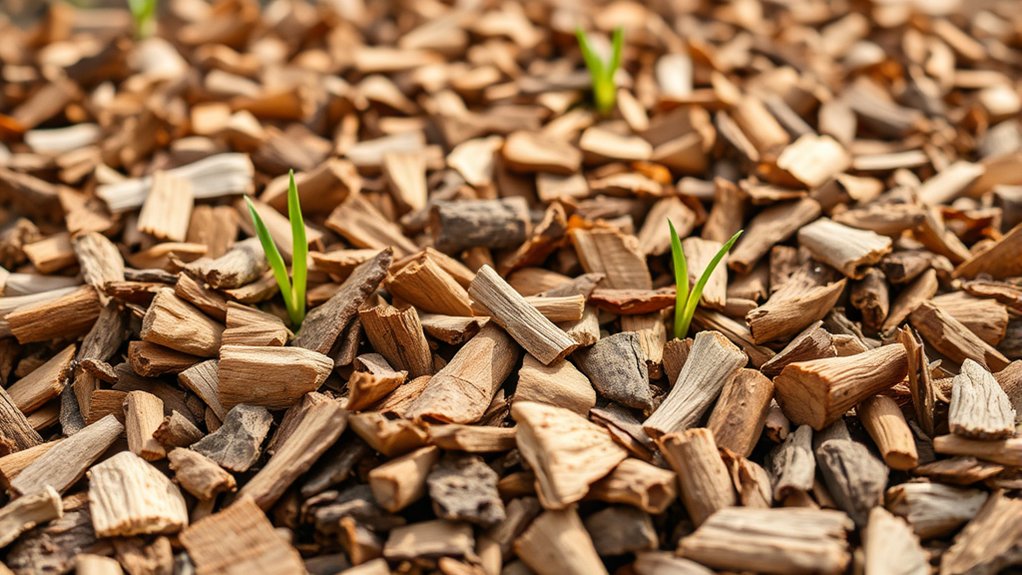
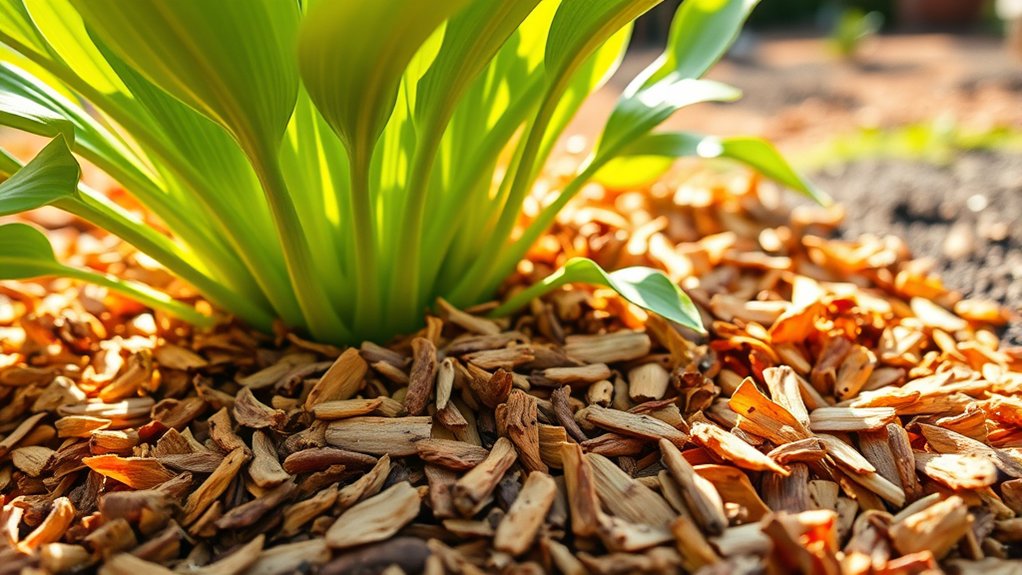
Wood chips are small pieces of wood produced by chipping or grinding tree limbs, trunks, and other woody debris. They usually come from local tree maintenance operations. You’ll often hear about arborist chips, which are a common type of wood chip used as organic mulch.
When you apply a proper layer of mulch, about 3 to 4 inches thick, wood chips do a great job at controlling weeds and keeping moisture in the soil. As they break down over time, they release essential nutrients that enrich soil health and support beneficial microbial activity.
The type of wood used can affect how the mulch looks and how fast it decomposes.
Best Wood Chip Types for Mulching
When you’re picking out wood chips for mulch, arborist chips are a great option. They offer a nice balance of green and brown materials, which helps improve soil health by mimicking the layers you’d find in a natural forest.
You might also want to consider modified wood chips. These have some added benefits like being pest-resistant and less flammable than natural chips.
Knowing these differences can really help you decide which type works best for your garden’s unique needs and safety concerns.
Arborist Chip Advantages
Arborist chips offer a nutrient-rich mulch option that closely replicates natural forest floor conditions by providing a balanced mix of green and brown organic matter.
When you use arborist wood chips, you introduce essential nutrients to your soil as they decompose, enhancing soil health effectively. The larger chip pieces improve aeration and maintain soil moisture, reducing irrigation needs.
Applying a 3-4 inch layer of wood chips guarantees ideal weed suppression by blocking sunlight from reaching weed seeds.
Plus, sourcing arborist chips locally supports sustainable practices and minimizes transportation emissions, making this mulch choice environmentally responsible.
Modified Versus Natural
Although both modified and natural wood chips serve as effective mulches, their differences greatly impact soil health and garden safety.
Modified wood chips undergo treatment to reduce pests and flammability but may introduce harmful substances and lower nitrogen levels in the soil.
Natural wood chips, like arborist chips, decompose organically, enhancing nutrients and microbial activity within the mulch layer.
When choosing between modified and natural tree mulch, consider these factors:
- Modified wood chips offer pest resistance but can compromise soil nitrogen levels.
- Natural wood chips improve soil nutrients through steady decomposing organic material.
- Both types aid moisture retention and weed suppression, but natural chips better mimic forest floor conditions.
- Frequent replenishment may be necessary with shredded wood mulch due to faster decomposition.
Benefits of Using Wood Chip Mulch
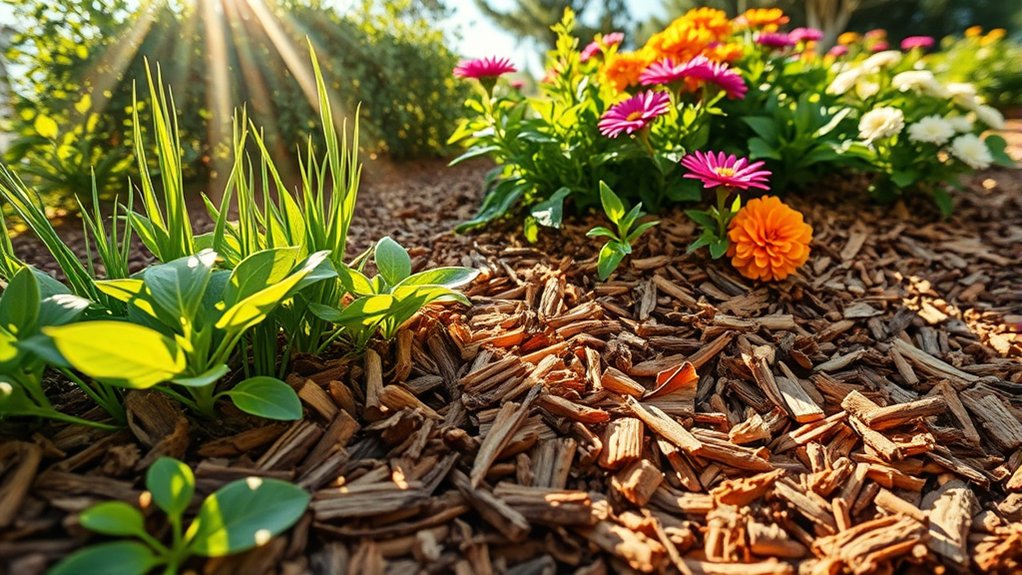
You’ll notice that wood chip mulch really boosts soil nutrients as it breaks down, making the soil richer and healthier.
It also helps the soil hold onto moisture better by cutting down evaporation, so you don’t have to water as often and your plants stay nicely hydrated.
On top of that, wood chips help keep the soil temperature steady, protecting roots from getting too hot or too cold.
Soil Nutrient Enhancement
When wood chip mulch breaks down, it actively enriches your soil by adding organic matter that boosts nutrient availability and enhances overall soil health.
As wood chips decompose, they release essential nutrients like nitrogen, phosphorus, and potassium. This creates a fertile environment for plants.
Applying a 3-4 inch layer of mulch, especially using arborist wood chips, improves soil structure and supports beneficial microbial activity.
To maximize soil nutrient enhancement, focus on these key points:
- Use arborist wood chips for a balanced nutrient profile during decomposition.
- Maintain a consistent 3-4 inch mulch layer to improve soil structure.
- Allow slow nutrient release as wood chips break down to sustain plant growth.
- Replenish mulch regularly to enhance long-term nutrient retention and soil health.
Moisture Retention Benefits
Beyond enriching soil nutrients, wood chip mulch plays an essential role in conserving soil moisture, which directly supports plant health. By forming a protective layer, wood chips reduce water evaporation, enhancing moisture retention and water retention in the soil.
As wood chips decompose, they release moisture gradually and add organic matter, further benefiting plants. A layer of fresh wood chips also promotes earthworm activity, improving soil structure and water-holding capacity.
| Benefit | Explanation |
|---|---|
| Protective Layer | Minimizes water evaporation, preserving soil moisture |
| Gradual Moisture Release | Decomposing wood chips act like sponges, feeding plants |
| Soil Health Enhancement | Organic matter boosts water retention and nutrients |
Using wood chips as mulch, you optimize moisture retention for healthier, more resilient plants. It’s a simple way to give your garden a real boost!
Temperature Regulation Effects
Although soil temperature often goes unnoticed, it plays a critical role in plant health. Wood chip mulch effectively moderates these temperatures. It insulates soil, keeping it cooler in summer and warmer in winter, which supports healthier roots and ideal root development.
This temperature regulation prevents extreme fluctuations that stress plants. Using a 3-4 inch layer will:
- Reduce soil temperature by several degrees, enhancing microbial activity and root growth.
- Retain moisture, minimizing soil overheating through evaporation.
- Generate heat from decomposing wood, warming soil during early spring.
- Promote air circulation by preventing soil compaction, maintaining a loose structure for better root oxygenation.
These processes enrich soil organic matter and foster an environment conducive to sustained plant health.
It’s a simple way to keep your plants happy and thriving all year round.
Watch Out for These Wood Chip Mulch Problems
If you choose to use wood chips as mulch, you need to be aware of several potential problems that can affect both plant health and structural integrity. Wood chips can cause nitrogen depletion as they decompose, stressing your plants unless you replenish nitrogen-rich soil amendments. Excessive moisture retention, especially in clay soils, may lead to root rot.
Improper placement of mulch close to trunks can cause decay or disease by trapping moisture. Moreover, some wood chips attract pests like termites, posing risks near home foundations.
| Problem | Impact |
|---|---|
| Nitrogen depletion | Reduced soil fertility |
| Moisture retention | Root rot risk |
| Improper placement | Trunk decay and disease |
| Pests | Structural damage potential |
Managing these issues guarantees effective mulch and soil enhancement. So, keep an eye on these factors to get the best results from your wood chip mulch.
How to Apply Wood Chip Mulch the Right Way
When applying wood chip mulch, you should spread it evenly in a 3-4 inch layer to suppress weeds, retain soil moisture, and regulate temperature without suffocating roots.
To apply wood chips correctly, follow these key steps:
- Maintain a layer of 3-4 inches thickness to optimize weed suppression and moisture retention.
- Keep mulch 2-3 inches away from plant stems to prevent trunk damage and encourage healthy growth.
- Use a balanced mix of green and brown materials in your wood chip mulch to support nutrient cycling.
- Regularly check moisture levels beneath the mulch to avoid excess water retention, especially in clay soils.
Proper application guarantees effective soil protection and plant health.
Correct mulch application ensures healthy plants and well-protected soil for thriving gardens.
This sets the stage for successful annual maintenance and replenishing the mulch.
Maintaining and Replenishing Wood Chip Mulch
Since wood chip mulch naturally breaks down over time, you’ll need to replenish it regularly to keep its protective benefits. To maintain the right depth and make sure it holds moisture and keeps weeds at bay, add about an inch of fresh wood chips each year.
Aim for a layer that’s 3-4 inches thick. This thickness helps optimize those benefits without holding too much moisture, which could lead to root rot.
Don’t mix fresh chips into the soil because that can drain nitrogen levels. Instead, keep the mulch on the surface where it can slowly improve soil health.
Keep an eye on the mulch layer to see how much has decomposed, and adjust how much you add accordingly.
When spreading new mulch, do it evenly but make sure to keep it away from plant stems to avoid choking them.
This way, your plants stay healthy, and your garden continues to thrive.
Where Not to Use Wood Chip Mulch and Safety Tips
Although wood chip mulch offers many benefits, you should avoid using it directly against tree trunks or plant stems. This helps prevent moisture buildup that leads to rot and damage.
To guarantee safe and effective use, consider these points:
- Avoid using wood chip mulch in vegetable gardens, especially treated varieties. They may introduce chemicals that inhibit seed germination.
- Keep wood chip mulch at least two feet away from home foundations to deter termites and pests.
- In clay soils, monitor moisture levels carefully since excessive moisture from mulch can cause root rot and disrupt nitrogen levels.
- Avoid large wood chips in high-traffic areas, as they pose safety risks and can be uncomfortable when walked on barefoot.
Following these safety tips guarantees you maximize benefits while minimizing risks associated with wood chip mulch.
Frequently Asked Questions
Can Wood Chip Mulch Attract Pests Like Termites or Rodents?
Yes, wood chip mulch can attract pests like termites and rodents because it provides an insect habitat and organic matter, especially while the wood chips are decomposing.
The moisture it holds and its ability to suppress weeds also create conditions that pests find favorable.
But don’t worry too much—by managing how thick you lay your mulch and keeping it away from your home’s foundation or other structures, you can really cut down on pest problems.
When used properly, wood chip mulch not only helps regulate soil temperature and protect plant roots but also releases nutrients and keeps your garden looking great.
How Long Does Wood Chip Mulch Typically Last Before Needing Replacement?
Wood chip mulch typically lasts 1 to 3 years before needing replacement, depending on how fast it decomposes and the environmental conditions.
You can make your wood chips last longer by applying a thicker layer, about 3 to 4 inches. This helps with moisture retention, weed suppression, soil insulation, and nutrient release.
Choosing harder wood chips also makes a difference because they tend to be more durable.
Keep an eye on your mulch regularly to maintain its look and keep costs down.
Using the right application methods helps you balance these factors and get the best performance from your mulch.
Is It Safe to Use Wood Chips From Treated or Painted Wood?
You shouldn’t use wood chips from treated or painted wood due to treated wood safety and painted wood concerns.
Chemical leaching risks from preservatives and pigments can harm garden health, affecting soil organisms and plant growth. Mulch decomposition effects worsen soil quality.
The type of wood also impacts pest problems, and treated or painted wood can attract insects.
For landscaping aesthetics and sustainability practices, it’s better to choose untreated wood or other mulch options. This way, you can guarantee a safe, thriving garden environment.
Can Wood Chip Mulch Affect Soil pH Levels Over Time?
Yes, wood chip mulch can affect soil pH levels over time due to microbial activity during decomposition. This process influences soil acidity and nutrient availability. Because of this, pH can fluctuate depending on how fast the wood breaks down and the type of wood used.
Adding organic matter like wood chips improves soil structure, which is great for plants. But you’ll want to keep an eye on soil acidity, especially when planning what to plant.
Over the long term, wood chip mulch might change soil chemistry and even have some environmental effects. So, it’s a good idea to test your soil regularly and make any needed adjustments. That way, you can keep the pH balanced and your plants happy.
Are Wood Chips Suitable for Vegetable Garden Beds?
Yes, wood chips are suitable for vegetable garden beds because they help retain moisture, suppress weeds, and regulate soil temperature.
Applying them properly, about 3 to 4 inches thick, can boost root development and support pest control.
They release nutrients slowly as they break down, so they work well with composting, but you might need to add some extra nitrogen.
Besides these practical benefits, wood chips also make your garden look nicer.
Just remember not to mix wood chips directly into the soil, as this can tie up nutrients and reduce the benefits for your vegetables.
Keep them on the surface to get the best results.
Conclusion
Using wood chips as mulch offers excellent soil moisture retention, weed suppression, and nutrient cycling. You might worry about nitrogen depletion, but if you apply a balanced fertilizer beforehand and avoid piling chips too thickly, you’ll prevent that issue.
Picture a well-mulched garden bed with rich, dark soil beneath. This vibrant ecosystem thrives because you’ve applied wood chips correctly. With proper use, wood chip mulch becomes a sustainable, efficient tool for healthy, productive gardening.