Can You Use Mineral Oil On Wood: Benefits Explained
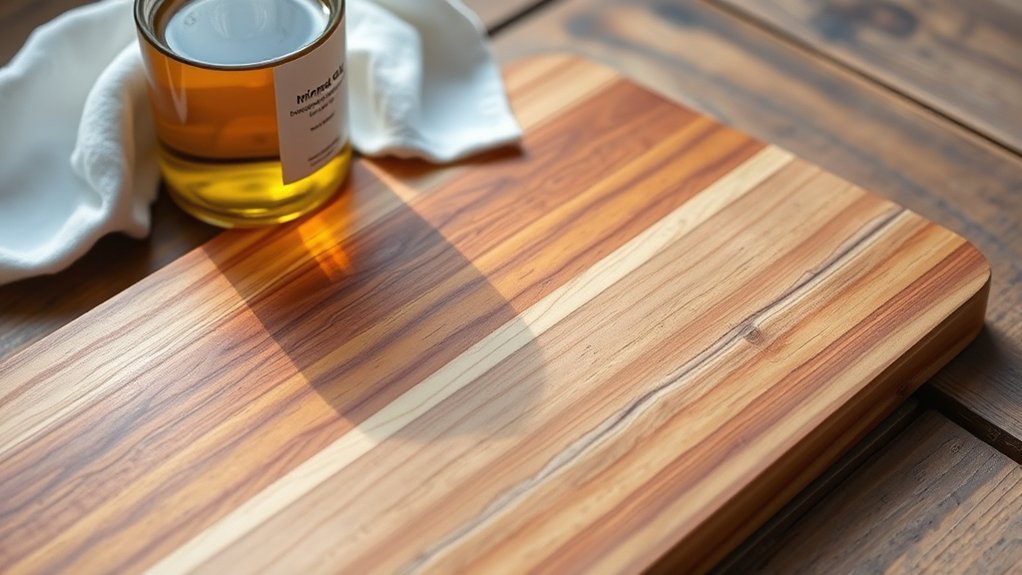
You can use mineral oil on wood to protect and hydrate it, especially for kitchen items like cutting boards and utensils. It’s food-safe and creates a moisture barrier that prevents warping and cracking. Plus, it enhances the natural wood grain without changing its color.
Applying mineral oil is easy—just use a soft cloth. Keep in mind, it needs to be reapplied often, but that also means quick maintenance whenever you want to freshen things up.
If you’re curious about how mineral oil stacks up against linseed oil or want some tips for the best results, keep reading. There’s plenty more to learn!
What Is Mineral Oil and Why Use It for Wood Finishing?
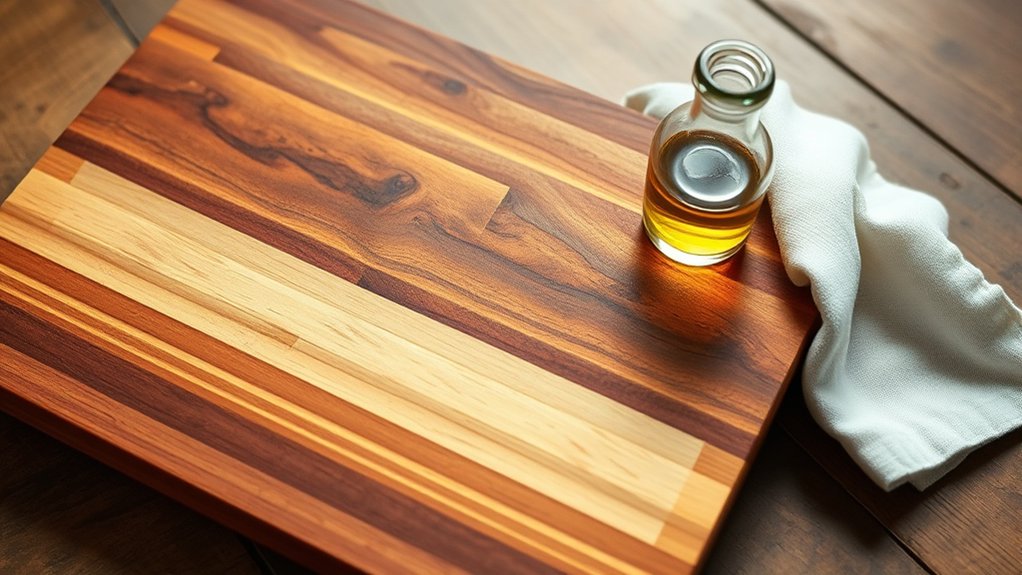
Mineral oil, a clear and colorless petroleum-derived substance, offers an affordable and food-safe solution for wood finishing. You’ll find mineral oil especially suitable for kitchen items like cutting boards and wooden utensils, where hygiene is critical. It creates a protective barrier that conditions the wood, though its penetration is shallower compared to oils like linseed oil.
Because mineral oil is less durable, you’ll need to apply it more frequently to maintain protection. Its versatility extends beyond finishing wood; you can also use mineral oil as a natural cleanser and protectant for various surfaces.
Choosing mineral oil means opting for a readily available, inexpensive product that balances safety and functionality. This makes it a practical choice for maintaining and conditioning wood surfaces in food-related environments.
Plus, it’s easy to get your hands on, so you won’t have trouble finding it when you need to refresh your wooden items. Overall, mineral oil keeps things simple and safe for your kitchen wood care.
How Mineral Oil Keeps Your Wood Looking Great
When you apply mineral oil to wood, it forms a moisture barrier that helps prevent warping and cracking over time. This protective layer maintains the wood’s structural integrity while enhancing its natural grain without altering color or texture.
Mineral oil is also food-safe, making it especially suited for kitchenware. Applying it is straightforward and requires minimal effort, allowing for easy maintenance.
Mineral oil is food-safe and easy to apply, perfect for maintaining kitchenware with minimal effort.
Regular treatments with mineral oil also reduce bacterial buildup, keeping surfaces hygienic.
Here’s how mineral oil keeps your wood looking great:
- Creates a moisture barrier to prevent damage
- Enhances natural wood grain without discoloration
- Safe for food-contact surfaces
- Simple application and reapplication process
- Inhibits bacterial growth for cleaner wood surfaces
Using mineral oil guarantees your wood stays durable and visually appealing.
Best Wood Items for Mineral Oil Treatment
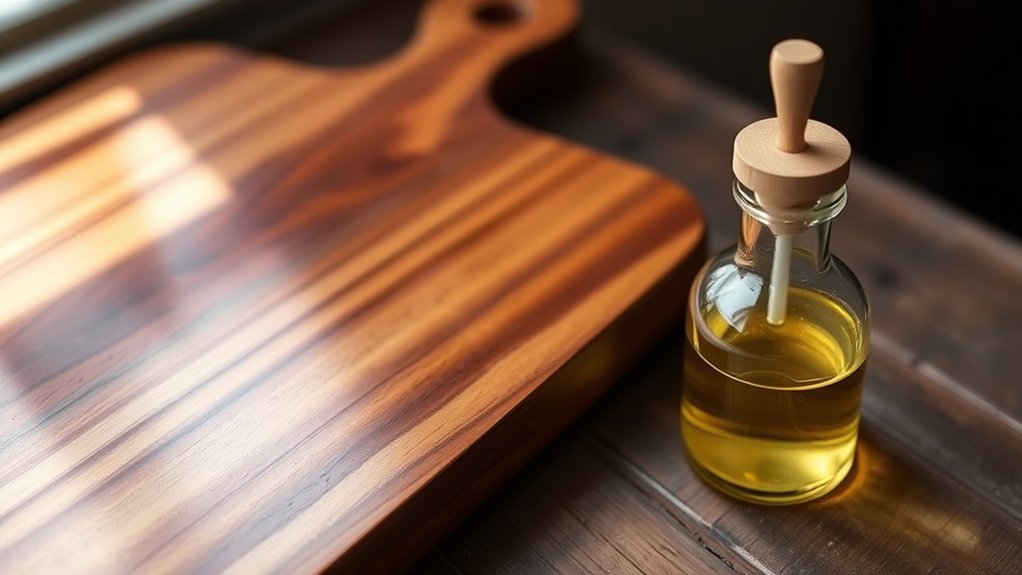
You’ll find mineral oil works best on five key types of wood items commonly used in kitchens and furniture. Mineral oil conditions cutting boards, butcher block countertops, wooden utensils, kitchen appliances, and furniture. It enhances durability and appearance while preventing damage like cracking or bacterial buildup.
| Wood Item | Primary Benefit | Mineral Oil Effect |
|---|---|---|
| Cutting Boards | Food-safe protection | Seals surface, prevents bacteria |
| Butcher Block Countertops | Surface revival and protection | Enhances appearance, adds barrier |
| Wooden Utensils | Longevity | Prevents drying, cracking |
| Kitchen Appliances | Aesthetic maintenance | Maintains sheen, keeps wood fresh |
Using mineral oil on these items guarantees long-term preservation and improved functionality. It’s a simple step that really makes a difference in keeping your wood items looking and working great.
How to Apply Mineral Oil on Wood for the Best Results
Although wood must be clean and dry before treatment, applying mineral oil correctly guarantees deep penetration and effective protection.
Properly applying mineral oil ensures deep wood protection, but the surface must be clean and dry first.
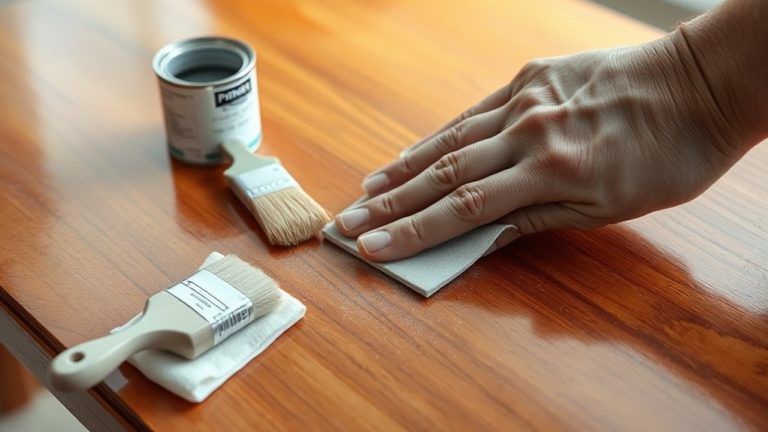
Start by using a soft cloth or sponge to spread mineral oil evenly, following the wood grain. Let the oil soak for 20–30 minutes, then wipe off any excess to avoid a greasy surface.
For enhanced durability, consider a mineral oil and beeswax blend that adds a smooth, protective finish.
Key steps include:
- Confirm wood is clean and completely dry
- Apply mineral oil evenly along the grain with a soft cloth
- Allow 20–30 minutes for absorption
- Remove excess oil thoroughly to prevent residue
- Use mineral oil and beeswax blends for added protection and sheen
This method optimizes mineral oil’s effectiveness and preserves your wood’s longevity.
Give it a try, and your wood will look great and last longer!
How Often to Reapply Mineral Oil on Wood
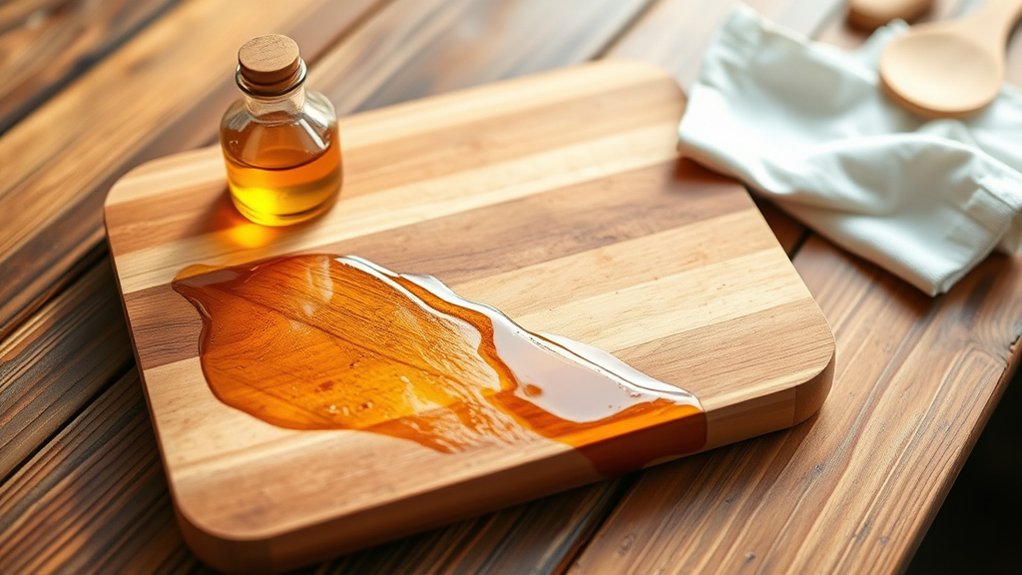
Regularly reapplying mineral oil on wood guarantees continued protection and ideal appearance. Typically, you should reapply mineral oil every 1 to 3 months, depending on the wood’s exposure to moisture and how often you use it.
For high-use items like cutting boards, reapplying every 2 to 4 weeks is best to prevent drying and cracking. The wood soaks up the mineral oil over time, which is a sign it needs more.
The process is simple: clean the surface thoroughly, then apply a thin, even layer of mineral oil with a cloth. Since mineral oil doesn’t dry hard, you can easily reapply it without sanding or stripping.
Keeping up with this routine helps your wood stay nourished, protected, and looking great for a long time.
Mineral Oil vs. Linseed Oil: Which Is Better for Wood?
When you’re deciding between mineral oil and linseed oil, it helps to think about how deeply each one soaks into the wood and how well they protect against moisture.
Linseed oil tends to be more durable, but keep in mind it takes longer to dry and usually needs several coats.
On the other hand, mineral oil goes on quickly, which is great if you’re short on time, but you’ll have to reapply it more often.
Cost is another thing to consider.
Mineral oil is generally easier on the wallet upfront, but since it doesn’t last as long as linseed oil, you might end up spending more over time.
Penetration and Protection
Since mineral oil penetrates wood more shallowly than linseed oil, it offers less effective long-term moisture protection and preservation.
Linseed oil soaks deeper into the wood fibers, creating a robust barrier against environmental factors and extending the wood’s lifespan. When you choose between these oils, consider their protective capabilities carefully.
Linseed oil provides superior penetration and durability.
Mineral oil is easier to apply and renew but less protective. Deeper penetration by linseed oil enhances wood grain appearance.
Mineral oil suits quick maintenance but lacks long-term defense.
Linseed oil is preferred for high-quality, lasting finishes.
Ultimately, if protection and longevity matter most, linseed oil outperforms mineral oil in penetration and preservation of wood.
Drying Time Differences
Although mineral oil dries quickly and requires minimal curing time, linseed oil demands a longer drying period that can span several days and often needs multiple coats to achieve ideal protection.
You’ll find mineral oil’s rapid drying advantageous for quick applications and routine maintenance, as it doesn’t hinder your project timeline.
On the other hand, linseed oil’s slow curing allows deeper penetration into the wood fibers, enhancing long-term durability and aesthetic appeal.
While mineral oil sits more superficially and requires frequent reapplication, linseed oil forms a robust, lasting finish once fully cured.
If you prioritize speed and ease, mineral oil is the practical choice.
But if you want a finish that really brings out the wood grain and lasts longer, be prepared to invest the extra drying time that linseed oil needs.
Cost and Maintenance
Choosing between mineral oil and linseed oil means balancing application time with ongoing costs and maintenance demands.
Mineral oil is pretty inexpensive and quick to apply, which makes it great for budget-conscious projects. But keep in mind, it needs more frequent reapplication, so maintenance adds up over time.
Linseed oil, on the other hand, soaks in deeper and offers better protection. It does take longer to dry, though, so you’ll need a bit of patience and effort when applying it.
Here are some things to consider when making your choice:
- Mineral oil costs less upfront but needs regular upkeep
- Linseed oil provides a durable finish, cutting down on long-term maintenance
- Mineral oil works well for quick, utilitarian treatments
- Linseed oil enhances the wood grain with a premium look
- Frequent mineral oil applications might increase total labor and material costs
Knowing these trade-offs will help you pick the best oil for your wood’s needs.
Mistakes to Avoid When Using Mineral Oil on Wood
When applying mineral oil to wood, you want to avoid putting on too much. Excess oil can leave a sticky residue that takes a lot of buffing to get rid of. It’s best to use only food grade mineral oil, especially if you’re treating cutting boards—that way, you know it’s safe.
Also, don’t apply mineral oil on unfinished or raw wood. It won’t seal or protect against moisture very well on surfaces like that.
And mixing mineral oil with other finishes or treatments is a no-go because it can cause uneven absorption and make the finish look patchy.
Before you start, make sure the wood surface is clean. Trapping dirt or grime under the oil just ruins how well it works.
Keep in mind, mineral oil doesn’t last as long as linseed oil and needs to be reapplied more often. Following these tips will help keep your wood items protected and looking great for longer.
Frequently Asked Questions
Is Mineral Oil Safe for Wooden Baby Toys?
Yes, mineral oil is safe for wooden baby toys and supports toy safety effectively. It’s food-safe and non-toxic, so it won’t harm your child if mouthed.
You can apply it regularly to condition the wood, preventing moisture damage and bacterial buildup.
Mineral oil maintains the natural appearance of the wood without altering it. It creates a protective barrier that enhances durability while meeting essential toy safety standards.
Can Mineral Oil Prevent Mold on Wood?
You can’t put all your eggs in one basket relying solely on mineral oil to prevent mold on wood. While mineral oil improves mold resistance by creating a moisture barrier, it doesn’t eliminate mold risks entirely.
You’ll need to reapply it regularly and manage environmental humidity to keep wood dry.
Mineral oil helps maintain wood’s moisture balance, reducing damp conditions that encourage mold growth.
But it should complement other mold prevention measures. So, think of it as one part of your overall strategy, not the whole solution.
Does Mineral Oil Darken Wood Permanently?
No, mineral oil doesn’t darken wood permanently. When you apply it, you enhance the wood’s natural color and grain temporarily because it only soaks in a little bit.
For lasting darkening and better wood preservation, you’ll want to use drying oils like boiled linseed or walnut oil.
Mineral oil mostly just adds a slight sheen without changing the wood’s color for good.
Can Mineral Oil Be Mixed With Other Oils?
Think of oil blends like a painter mixing colors to perfect a hue. Yes, you can mix mineral oil with other oils to enhance wood treatment.
Combining it with beeswax creates a protective conditioner. Mixing with drying oils like boiled linseed oil speeds up drying time.
Just make sure all oils are food-safe if you’re using them in the kitchen. It’s a good idea to test your blend on a small wood area first to check compatibility and finish before applying it more broadly.
How to Remove Mineral Oil From Wood Surfaces?
To remove mineral oil from wood surfaces after oil application, start with warm water and mild dish soap to break down the oil.
Gently scrub using a soft cloth, preserving the wood grain.
If you find some stubborn residue, try applying rubbing alcohol or white vinegar cautiously.
Just make sure to test a small area first to avoid any damage.
Rinse the area thoroughly with clean water and dry it immediately to prevent moisture damage.
Finally, if needed, reapply a wood finish or conditioner to restore protection.
Conclusion
You might think mineral oil is just a simple wood finish, but it’s more. It both protects and revitalizes your wood. By regularly applying it, you not only preserve your wooden items but also extend their lifespan.
This can save you time and money on replacements. So, when you care for your wood with mineral oil, you’re investing in durability and beauty. It just goes to show that a small action can lead to significant, lasting benefits.