Can You Clean Wood Floors With Vinegar: Pros And Cons
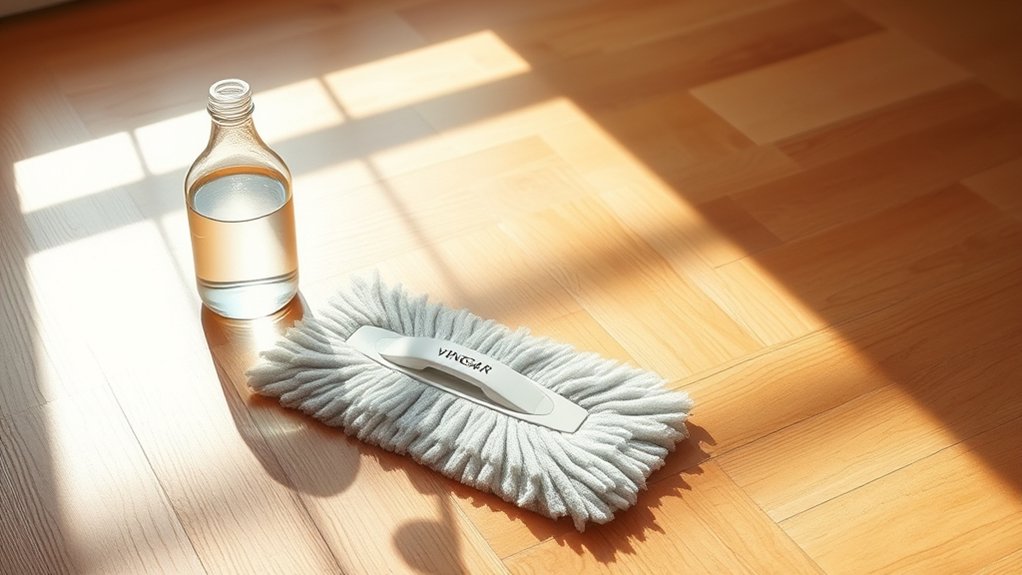
You can clean wood floors with vinegar, but you need to be cautious. Vinegar’s acidity can dull or damage your floor’s protective finish over time, especially with frequent use or on unsealed wood. Using a well-diluted solution and testing it on a hidden spot helps minimize risks.
It’s cost-effective and non-toxic but not ideal for all floor types. Safer, pH-neutral cleaners usually work better to preserve your floor’s shine and durability. To learn how to clean safely and protect your floors long-term, keep exploring these tips.
How Does Vinegar Affect Wood Floors?
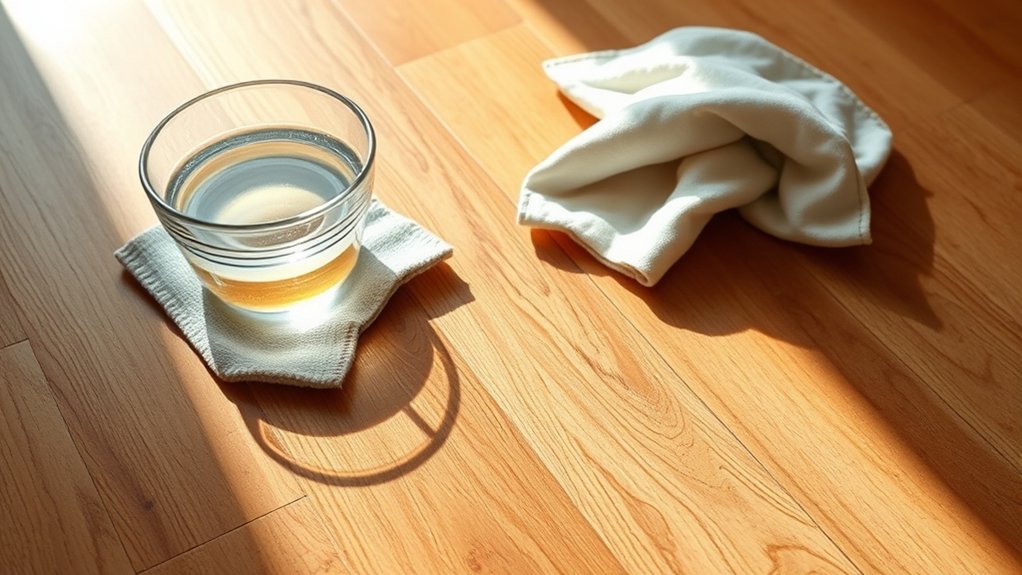
Although vinegar is a popular natural cleaner, you should avoid using it on wood floors because its acetic acid can damage the protective finish.
When you apply a vinegar-based cleaning solution to hardwood, the acid can etch and dull the surface, gradually weakening the floor’s sealant. Over time, this leads to a loss of shine and increases the chance of discoloration.
Plus, excess moisture from vinegar solutions can cause wood to swell or warp, further compromising your floor’s integrity.
While a mild vinegar mix might remove surface dirt temporarily, repeated use poses long-term risks to hardwood’s appearance and durability.
Flooring manufacturers recommend pH-neutral cleaners instead.
This way, you protect your floors’ finish and keep them looking beautiful for years to come.
It’s really worth sticking to gentler products that won’t harm your investment.
Is It Safe to Use Vinegar on Hardwood Floors?
You might be tempted to use vinegar on your hardwood floors because it’s a natural cleaner and easy to find. However, vinegar is an acid, which means it can damage the protective finish on your floors.
Vinegar is a natural cleaner but its acidity can harm the protective finish on hardwood floors.
It’s important to remember that repeated use may dull the sealant and lead to costly refinishing.
Vinegar isn’t safe for unsealed, oiled, or wax-finished floors, as it can cause significant harm.
While a weak vinegar solution might clean wood floors without immediate issues, long-term use poses risks to their integrity.
To avoid damage, testing a diluted vinegar solution in a hidden spot is essential before cleaning.
This simple step guarantees your floors stay beautiful and protected without unnecessary wear.
How to Spot Test Vinegar on Your Wood Floor
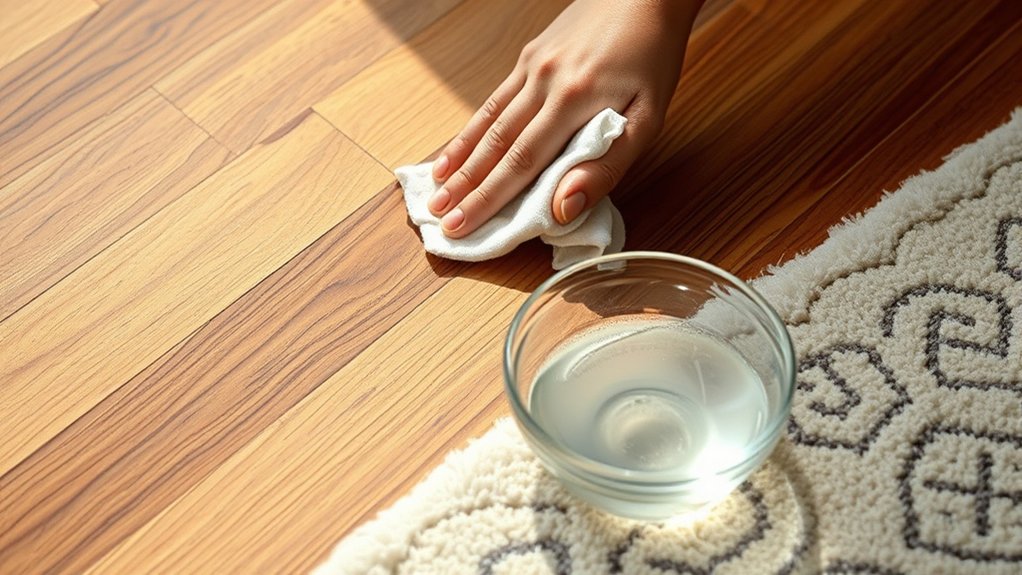
Start by mixing one tablespoon of vinegar with two cups of water to create a gentle cleaning solution.
Then, take a barely damp microfiber cloth and apply it lightly to a hidden spot on your sealed hardwood floor.
After that, buff the area dry and wait.
Check back in 24 hours to make sure there’s no damage before you clean larger sections.
Preparing The Vinegar Solution
One essential step before cleaning your wood floors with vinegar is performing a spot test to confirm the solution won’t damage the finish.
To prepare the vinegar solution properly for testing, follow these steps:
- Mix 1 tablespoon of distilled white vinegar with 2 cups of water to create a diluted vinegar solution.
- Use a barely damp microfiber cloth to apply the mixture to a small, hidden area of your sealed wood floor.
- Buff the area dry immediately after application to avoid excess moisture.
- Wait 24 hours and inspect the spot for any discoloration, dullness, or damage.
This careful preparation guarantees your cleaning solutions are safe and effective without risking harm to your wood floors.
It’s always better to be safe than sorry when it comes to maintaining your floors!
Conducting The Spot Test
After preparing the vinegar solution, the next step involves conducting a spot test on an inconspicuous area of your wood floor.
Use a highly diluted vinegar solution, mixing 1 tablespoon of vinegar with 2 cups of water. Apply it lightly with a barely damp microfiber cloth.
Immediately buff the area dry to prevent moisture damage. Then, wait 24 hours to assess any changes or damage to the protective finish on your hardwood floors.
If you see no adverse effects, you can proceed with cleaning.
Just remember to use the vinegar solution sparingly and avoid excessive moisture.
Repeated use of vinegar, even diluted, can eventually dull or etch the protective finish.
Doing this spot test helps you protect your floors while safely checking how vinegar affects them.
Step-By-Step Guide: Cleaning Wood Floors With Vinegar Safely
To clean your wood floors safely with vinegar, start by mixing one tablespoon of vinegar with two cups of water.
Before you dive in, test this solution on a hidden spot to make sure it won’t cause any damage.
When you’re ready, use a barely damp microfiber cloth or mop to apply the mixture.
Just be careful not to soak the floor—it’s important to keep it as dry as possible.
By following these simple steps, you’ll protect your wood floors while keeping them clean and fresh.
It’s an easy way to maintain that beautiful shine without any worries.
Preparing Vinegar Solution
Start by mixing 1 cup of white vinegar with 6 cups of warm water to create a gentle cleaning solution for your wood floors. This vinegar and water blend is effective for wood floor cleaning without harsh chemicals.
Follow these steps for safe preparation:
- Combine vinegar and warm water in a bucket, stirring gently.
- Optional: Add a few drops of pet-safe essential oils for fragrance.
- Use a microfiber mop to apply the solution, as it controls moisture and prevents damage.
- Wring the mop thoroughly until nearly dry to avoid excess water on wood surfaces.
This method guarantees a safe, effective cleaning solution that protects your floors while harnessing vinegar’s natural cleaning power.
Give it a try and see how your floors shine without any harsh stuff!
Spot Testing Floors
Before applying vinegar solution to your entire wood floor, you should always conduct a spot test in an inconspicuous area.
Mix 1 tablespoon of vinegar with 2 cups of water, then lightly apply the diluted solution using a barely damp microfiber cloth. Buff the area dry immediately to avoid soaking the wood.
Wait 24 hours to observe any adverse effects like dullness or discoloration. This step helps guarantee your floor’s finish won’t be damaged by vinegar. If the spot test shows no harm, you can confidently clean the rest of the floor.
Remember, using a microfiber cloth is key because it’s gentle and controls moisture.
Regularly check your floor’s finish after cleaning to catch any gradual damage early on. It’s a simple way to keep your floors looking great for longer!
Proper Mopping Technique
Mastering the proper mopping technique is essential to safely clean your wood floors with vinegar without causing damage. Follow these steps for effective and safe cleaning:
First, dilute vinegar with water (1 tbsp vinegar to 2 cups water) and spot test on a hidden hardwood area to check for any adverse reaction. This little step can save you a lot of trouble later.
Use a damp microfiber mop, but never soak it, to apply the vinegar solution lightly. Mop in the direction of the wood grain to avoid scratches and improve cleaning.
Wring out the mop well and immediately follow with a dry microfiber cloth to remove moisture. This helps prevent swelling or discoloration.
Taking these steps seriously will keep your wood floors looking great!
What Are the Pros and Cons of Using Vinegar?
Although vinegar offers a cost-effective and non-toxic way to clean wood floors, you should weigh its benefits against potential drawbacks.
Vinegar for cleaning works well as a Hardwood Floor Cleaner because it effectively dissolves dirt and grease, making it an affordable choice. It’s safe to use around children and pets since it’s biodegradable and non-toxic.
However, frequent use poses potential damage risks. The acidity can dull or etch your floor’s protective finish over time, especially on unsealed or wax-finished wood. This damage can lead to costly refinishing.
While vinegar is practical for occasional cleaning, you need to be cautious with how often and on which floors you use it to maintain your wood’s appearance and longevity.
Safer Alternatives to Vinegar for Cleaning Hardwood Floors
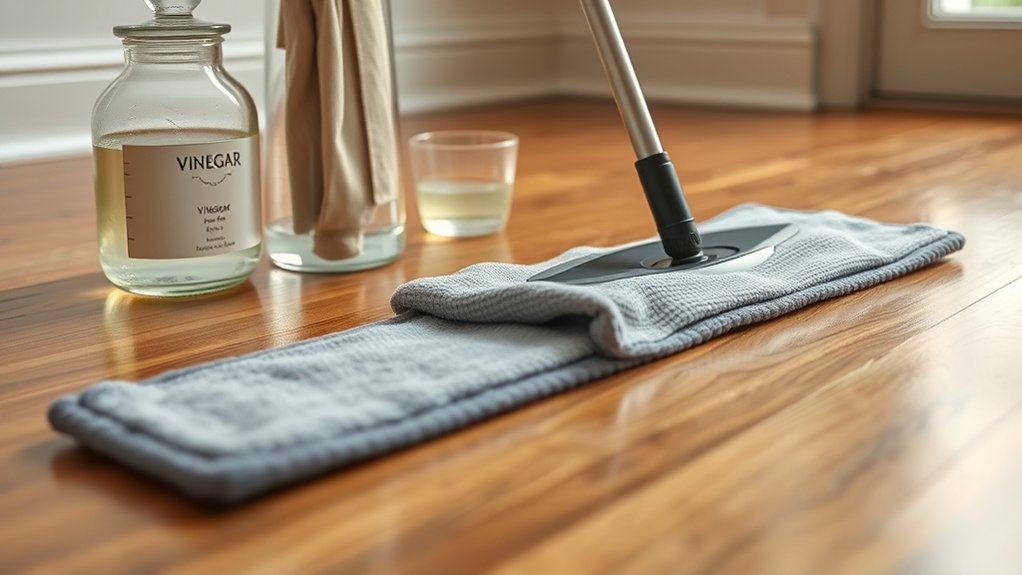
When you want to protect your hardwood floors while keeping them clean, choosing safer alternatives to vinegar is essential. Vinegar’s acidity can damage finishes, so it’s better to go for gentler methods that still get the job done.
Consider these four options:
Use a pH-neutral cleaner like Bona to clean hardwood floors safely without harming their finish. You can also mix a few drops (5-7) of castile soap with warm water for an eco-friendly, gentle solution.
Opt for pH-neutral cleaners like Bona or a mild castile soap mix to protect your hardwood floors.
Another great tip is to use a microfiber mop with minimal moisture to avoid water damage and keep your floors in good shape.
And don’t forget to clean regularly every one to two months to prevent buildup and preserve your floors’ shine.
These alternatives give you practical, trustworthy ways to care for your wood floors without risking damage. It’s all about keeping them clean and beautiful for years to come.
Tips to Maintain Your Wood Floors Without Damage
Choosing safer cleaning methods is just the start to keeping your wood floors looking great. To maintain their beauty, regularly sweep or dust-mop to remove grit that can scratch the surface.
When you clean, avoid harsh chemicals. Use a pH-neutral wood cleaner instead, which preserves the finish better than vinegar, known to be too acidic for frequent use.
If you do choose to use vinegar occasionally, dilute it well and mop with a barely damp microfiber cloth to minimize water exposure.
For routine upkeep, consider a product like Bona Hardwood Floor Cleaner, designed specifically to protect wood finishes. Perform deep cleaning every one to two months, adjusting based on foot traffic, to maintain your floors without causing damage.
These tips will help your wood floors stay stunning longer. Just keep up with regular care, and your floors will thank you by looking beautiful for years to come.
How to Protect Your Floor’s Finish Long-Term
To protect your wood floor’s finish long-term, you’ll want to adopt a consistent cleaning routine that prioritizes gentle care and minimal moisture.
Avoid using vinegar because its acidity can slowly etch the finish, causing dullness and potential damage. Instead, follow these steps:
First, use pH-neutral cleaners designed for wood floors to maintain the protective finish without harm.
Sweep or dust-mop regularly to remove grit that can cause micro-scratches. Cleaning with a microfiber mop lightly dampened with water is best—just avoid excess moisture that can lead to swelling and discoloration.
Also, always spot-test new cleaning solutions to make sure they won’t damage your floor’s finish. It’s a simple step that can save you a lot of trouble down the road.
Taking care of your floors gently really pays off!
Frequently Asked Questions
Can Vinegar Remove Tough Stains Like Pet Urine From Wood Floors?
Yes, vinegar can help with tough stains like pet urine on your wood floors because it’s effective at breaking down organic matter and neutralizing odors.
But, you shouldn’t rely on it as your main cleaner for stain removal.
Always dilute vinegar first and test it on a small, hidden spot to protect your floor’s finish.
Using vinegar cautiously is really important to keep your wood floors looking good while dealing with those stubborn stains.
How Often Can I Safely Clean Wood Floors With Vinegar?
You should limit cleaning frequency with vinegar to avoid damaging your wood floors.
Use a strong vinegar dilution, about 1 tablespoon in 2 cups of water, and test it first.
For regular floor maintenance, rely on alternative cleaners like pH-neutral solutions or mild castile soap mixed with warm water.
Save vinegar for occasional deep cleaning, no more than once a month.
This way, you keep your floors safe and looking great without overdoing it.
Does Vinegar Clean Wood Floors Better Than Commercial Products?
You might find vinegar’s effectiveness comparison a little misleading. It cleans well on the surface but can be harsh beneath. Its acidic ingredient breakdown helps cut grease but risks residue concerns that dull finishes over time.
User testimonials often praise its affordability but warn about long-term damage.
Commercial products, designed specifically for wood, gently clean without harming finishes. They’re a safer, more reliable choice for maintaining your floors’ beauty and longevity.
Can Vinegar Be Mixed With Other Cleaners for Wood Floors?
You shouldn’t mix vinegar with acidic cleaners or bleach, as it harms your wood floors and creates toxic fumes.
Vinegar’s effectiveness is best preserved when diluted properly, typically one cup per gallon of water.
For cleaner compatibility, stick to pH-neutral cleaners like Bona. They safely enhance cleaning without damaging finishes.
If you want alternative solutions, try commercial wood-specific cleaners or homemade blends without harsh chemicals.
These options help protect your floors long-term.
What Should I Do if Vinegar Damages My Wood Floor Finish?
It’s frustrating to see your wood floor finish dulled or etched by vinegar, but don’t panic. Start with finish restoration by applying a quality wood floor polish to brighten it temporarily.
If the damage runs deeper, you might need to explore repair methods like sanding and professional refinishing.
For alternative solutions, try switching to pH-neutral cleaners to avoid future harm.
A good prevention tip is to always test cleaners on hidden spots first. This will help protect your floor’s beauty for the long term.
Conclusion
Using vinegar to clean your wood floors is like walking a tightrope. One wrong step can dull your finish. While vinegar’s natural power can lift dirt, it may also wear down your floor’s protective layer if used too often.
So, make sure to test first, dilute well, and clean gently to keep your floors shining. When in doubt, choose safer alternatives to preserve your wood’s beauty.
Think of your floors like a treasured painting. They deserve gentle care and lasting protection.